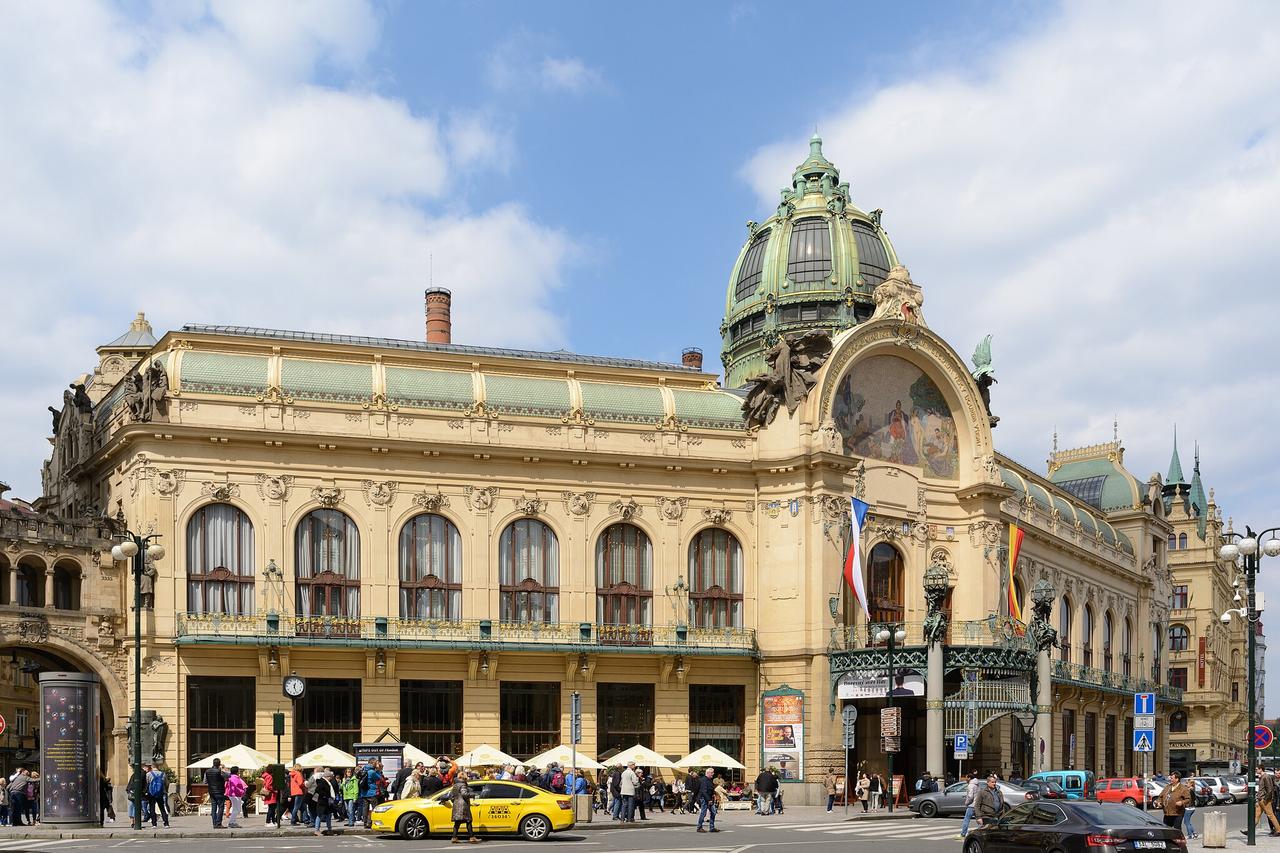
Municipal House
--:--
--:--
Look at this Art Nouveau palace across from you. That massive mosaic above the entrance? Karel Špillar created it. The building opened in 1912, designed by Osvald Polívka and Antonín Balšánek.
Six years later, on October 28, 1918, 5 men gathered inside and signed Czechoslovakia into existence. Antonín Švehla, Alois Rašín, František Soukup, Jiří Stříbrný, and Vavro Šrobár. They became known as the Men of 28 October. Inside these walls, they declared independence from the Austro-Hungarian Empire and created a new republic.
The irony? This spot had been royal ground for centuries. King Wenceslas IV built his palace here in 1380. Czech kings lived here until 1485. Then it got demolished in 1902 to make way for something new.
What the city built instead became one of the largest Art Nouveau buildings in the world. Artists like Alfons Mucha decorated the interiors. The technology was cutting edge: 28 elevators, air conditioning, a pneumatic postal system, even an ice factory.
But nobody expected this. A building meant for concerts and cafés became the birthplace of a nation. That bronze plaque on the corner marks where a republic replaced a kingdom.
Any feedback for this story?