National Monument on Vítkov
--:--
--:--
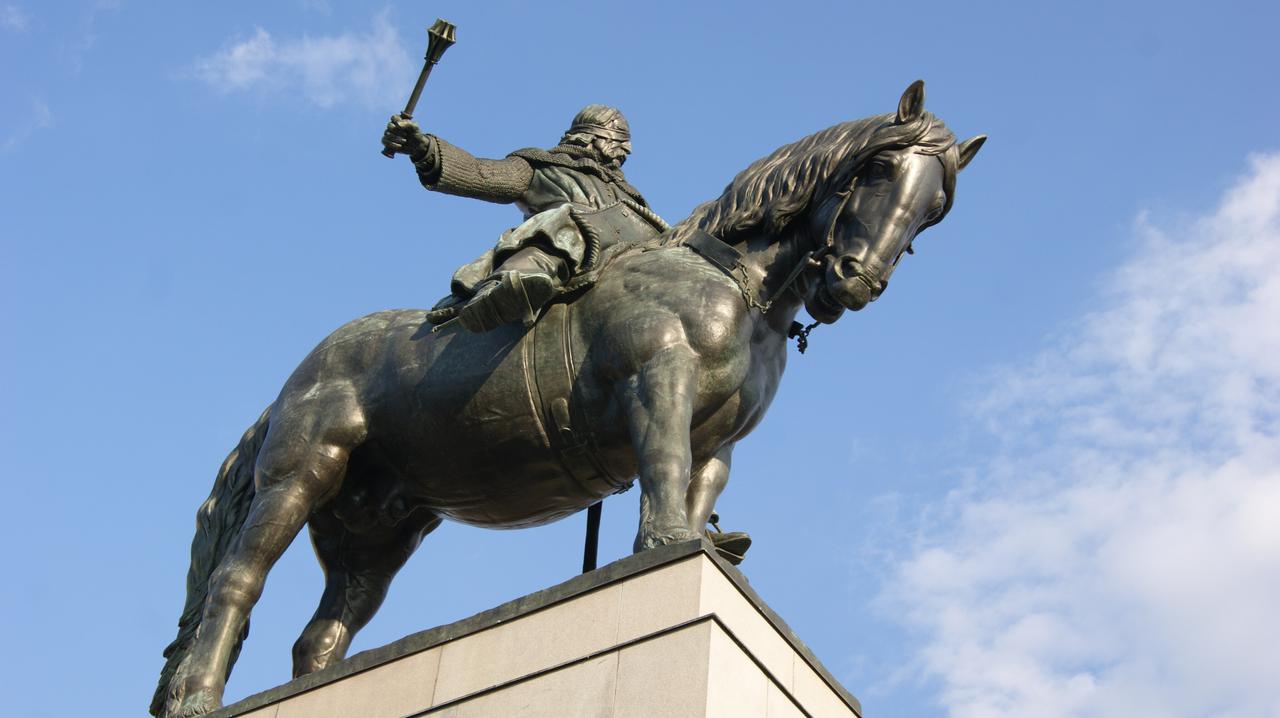
Look up at that massive statue. That's Jan Žižka on horseback, and at 9 meters tall and 16.5 tons, it's the third largest bronze equestrian statue in the world.
Behind you is the National Monument, built between 1928 and 1938 to honor Czechoslovak legionnaires from World War I. But this hill's military history goes back much further. On July 14, 1420, right where you're standing, Žižka led a small Hussite army that defeated a massive crusader force sent by Emperor Sigismund. That victory saved the city and made him a national hero.
The statue has its own dramatic story. Sculptor Bohumil Kafka spent 10 years creating it, even building a special 27 meter high studio just for the project. He used a wrestler as the model for Žižka and a horse named Theseus. Kafka finished the plaster model in November 1941 and died shortly after. He never saw his work in bronze.
During World War II, the Nazis wanted to destroy it. The casts were hidden until liberation. The statue was finally unveiled in 1950, exactly 530 years after the battle.
Here's the twist: from 1954 to 1962, the building behind the statue housed the embalmed body of Communist president Klement Gottwald, displayed in a glass coffin. The monument built to honor independence became a shrine to totalitarian power.
Any feedback for this story?