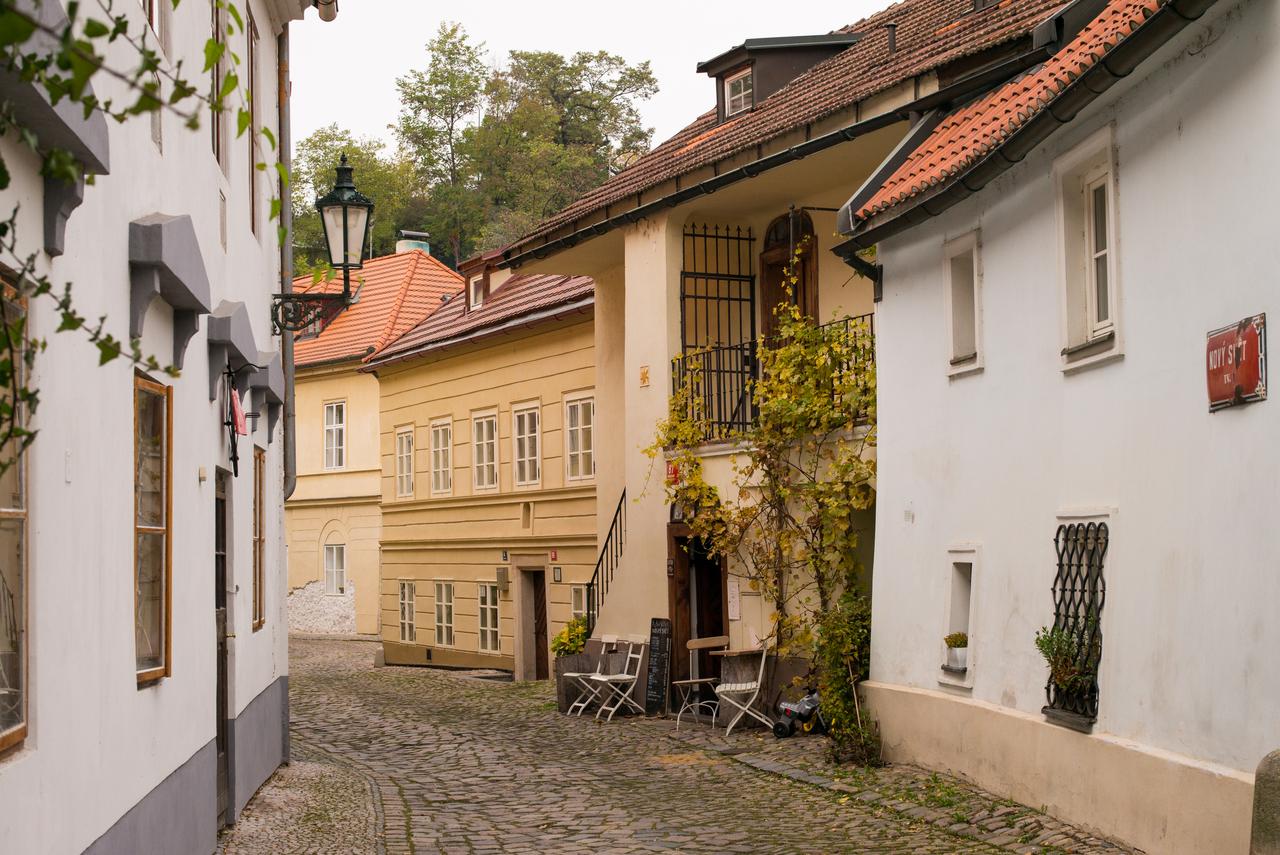
Nový Svět
--:--
--:--
You're standing in a neighborhood that started around 1360 as housing for castle servants. About 200 meters of cobbled lanes near the fortress walls. Nothing fancy. By the early 1900s, things got worse. 6 families crammed into single houses. People lived on top of each other.
But look at the house names. At the Golden Roc. At the Golden Pear. At the Golden Lamb. Golden everything. The residents knew they lived in a slum, so they dressed it up with language. If your house was falling apart, at least you could call it golden.
The street got one famous tenant in 1600. Danish astronomer Tycho Brahe lived at the House at the Golden Roc that year. He worked for Emperor Rudolf II, mapping stars and planets with accuracy nobody had matched before. A year later, he died from a burst bladder after refusing to leave a royal banquet to urinate. Court etiquette killed him.
After 1918, the poverty cleared out and artists moved in. Writers, painters, architects. They saw what the original residents saw: something charming in these crooked streets.
That timber house with the steep roof? U Raka. The last wooden house left in the historic center. The stream it's named after, where people caught crayfish, now runs underneath the street.
Any feedback for this story?