Proclamation of Czechoslovakia
--:--
--:--
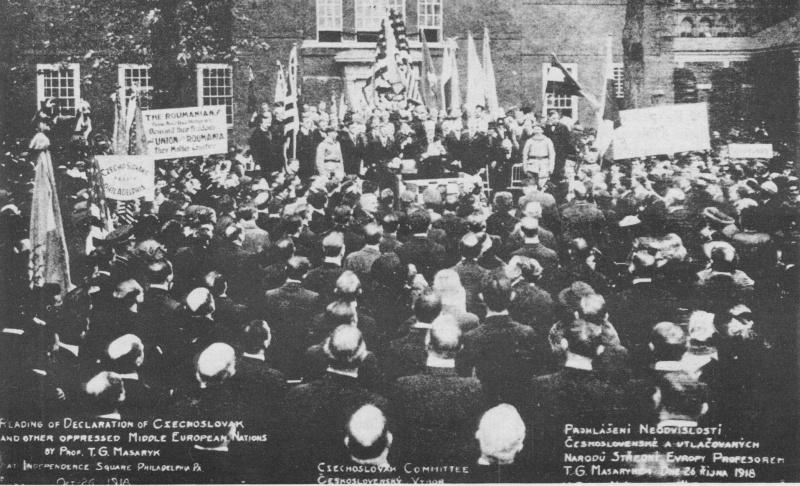
On October 28, 1918, a crowd of thousands filled the long boulevard where you now stand. They gathered at the bronze equestrian statue at the upper end, near the grand National Museum building. There, novelist Alois Jirásek stepped forward and read aloud the words that changed everything: Czechoslovakia was now an independent nation.
For over 300 years, Czech and Slovak lands had been ruled by the Habsburg dynasty within the Austro-Hungarian Empire. That morning, the National Committee seized control and stopped all grain shipments to the Austrian war front. News spread quickly that the empire had accepted surrender terms. By afternoon, people poured into the square, waving red and white flags of Bohemia.
The proclamation was read in front of the statue of Saint Wenceslas, the patron saint of Bohemia. This bronze monument, created by sculptor Josef Václav Myslbek and unveiled in 1913, shows the medieval duke mounted on a warhorse. Four other Czech saints stand at the base. The inscription reads: ""Saint Wenceslas, Duke of Bohemia, our Prince, do not let us die nor those yet to come.""
The date 28.10.1918 is now engraved in the pavement before the statue. This square, once a medieval horse market established in 1348, became the symbolic heart of Czech independence.
Any feedback for this story?