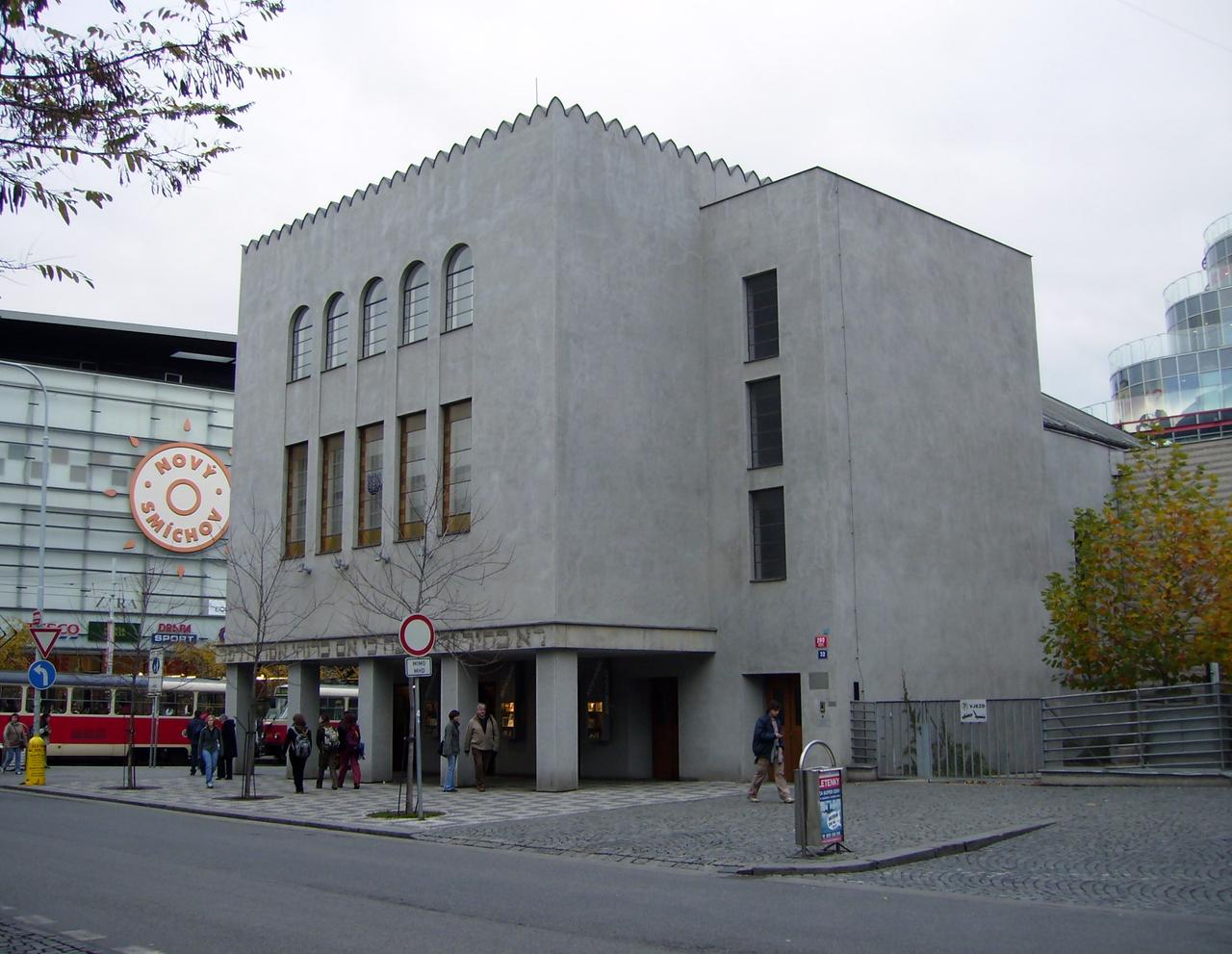
Smíchov Synagogue
--:--
--:--
The grey facade in front of you looks more like a 1930s factory than a house of worship. That's intentional. This is the Smíchov Synagogue, standing in what was once a grimy industrial district west of the Vltava River. Its stark functionalist design from 1931 tells a story of violence and resilience.
The original building went up in 1863, paid for by Franz Ringhoffer II, a Catholic businessman who ran the railway car factory down the street. He funded the entire construction for his Jewish workers and neighbors. They built it in ornate Moorish and Neo Romanesque style.
It lasted three years.
In December 1897, anti German riots tore through the district. The mob targeted Jews, who were seen as pro German. They ransacked the synagogue so thoroughly that it became a ruin. The New York Times covered the violence.
The community spent decades looking for land to build anew. They never found it. So in 1930 they hired architect Leopold Ehrmann to rebuild on the same spot. He stripped away all ornament. Clean lines. Concrete. Functionalist clarity. It became the only synagogue in this style in the entire city.
It served for exactly ten years before the Nazis came.
The Smíchov Jewish community ceased to exist in the Holocaust. The building now houses an archive for the Jewish Museum. The Hebrew inscription above the entrance reads: Not by might, nor by power, but by my spirit.
Any feedback for this story?