The Ethnographic Museum
--:--
--:--
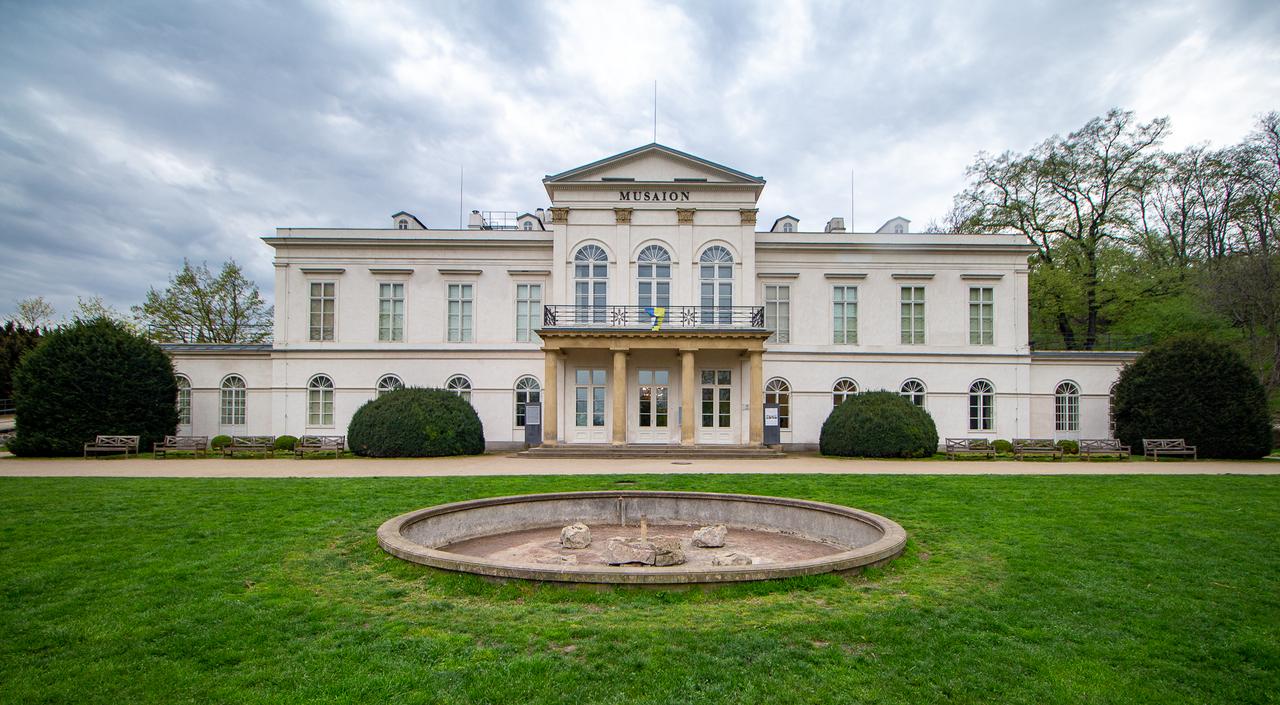
Where royal summer dreams once flourished, 200,000 treasures of Czech folk life now tell their stories. This elegant Classicist palace beneath Petřín Hill in Kinský Garden was built between 1827 and 1831 by architect Heinrich Koch for Prince Rudolf Kinský, a passionate Czech patriot and early supporter of the National Museum who championed Czech language and culture.
When the city purchased this summer residence in 1901, it became home to something extraordinary. Collections from the 1891 Jubilee Exhibition and 1895 Ethnographic Exhibition filled the empty villa, and by 1903 the Ethnographic Museum opened to the public. Inside, visitors discovered authentic folk costumes, traditional crafts, religious artifacts, and everyday objects that preserved the vanishing rural cultures of Bohemia, Moravia, and Silesia.
The palace's elegant Empire style architecture features Ionic columns and a grand entrance, but disaster struck in 1986. Corrosive groundwater from Petřín seeped into the foundations, forcing closure. The building stood abandoned for over a decade until the city donated it to the National Museum in 1999. Extensive reconstruction followed, and in 2005 it reopened as Musaion, meaning Temple of Muses.
The museum now preserves one of Europe's largest collections of Czech folk culture from the 17th to 20th centuries, keeping alive traditions that shaped a nation's identity.
Any feedback for this story?