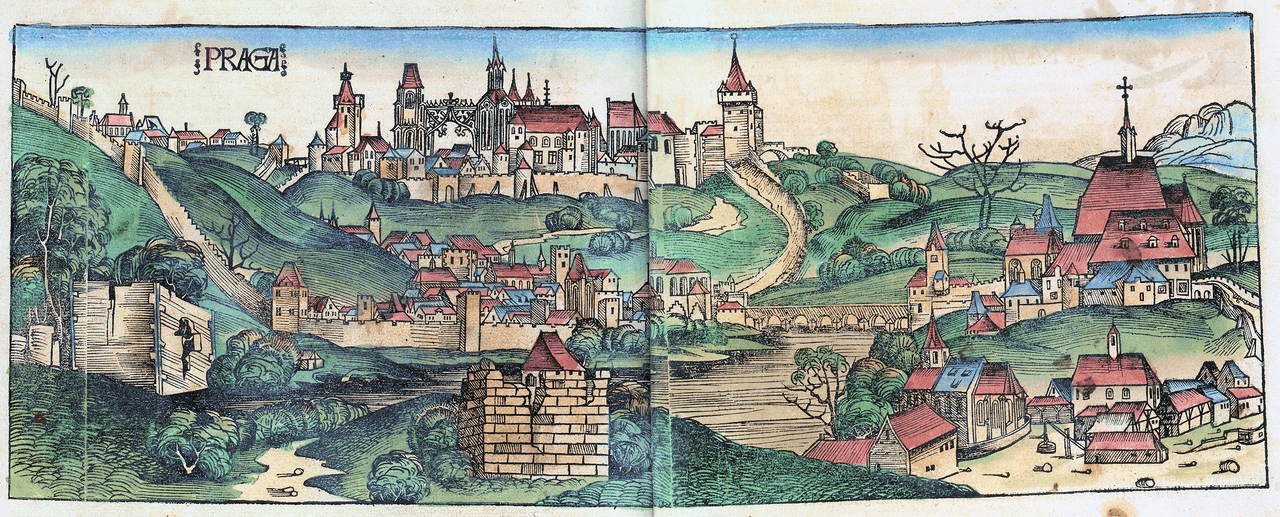
The Growth of Medieval Prague
--:--
--:--
In 1230, merchants on the east bank of the Vltava had a problem. They were rich from trade, but they had no legal status. No walls. No rights. Then King Wenceslas I handed them township privileges, and Staré Město existed as an actual town.
They built 13 gates. Dug a moat. Covered 140 hectares. This became the City of Prague.
Twenty seven years later, King Ottokar II looked across the river and did the same thing. In 1257, he founded Malá Strana at the foot of the castle. He called it the New Town beneath the Castle.
But here's the thing. He didn't just grant privileges to whoever was there. He kicked out the original residents and invited German craftsmen and merchants to move in. Fresh start. New rules.
Both towns exploded with growth. Staré Město added Havelské Město between 1235 and 1253, an entire new district around St Gall Church. Malá Strana became the place for anyone who needed to be close to power: nobles, diplomats, wealthy traders.
Neither stayed new for long. When Charles IV founded another New Town in 1348, the names had to change. The City became Old Town. The New Town beneath the castle became Lesser Town.
Any feedback for this story?