The Old Royal Palace
The building in front of you has been rebuilt so many times that almost nothing from 1212 survives above ground. But what happened here that year shaped everything that came after it, including the very ground you're standing on.
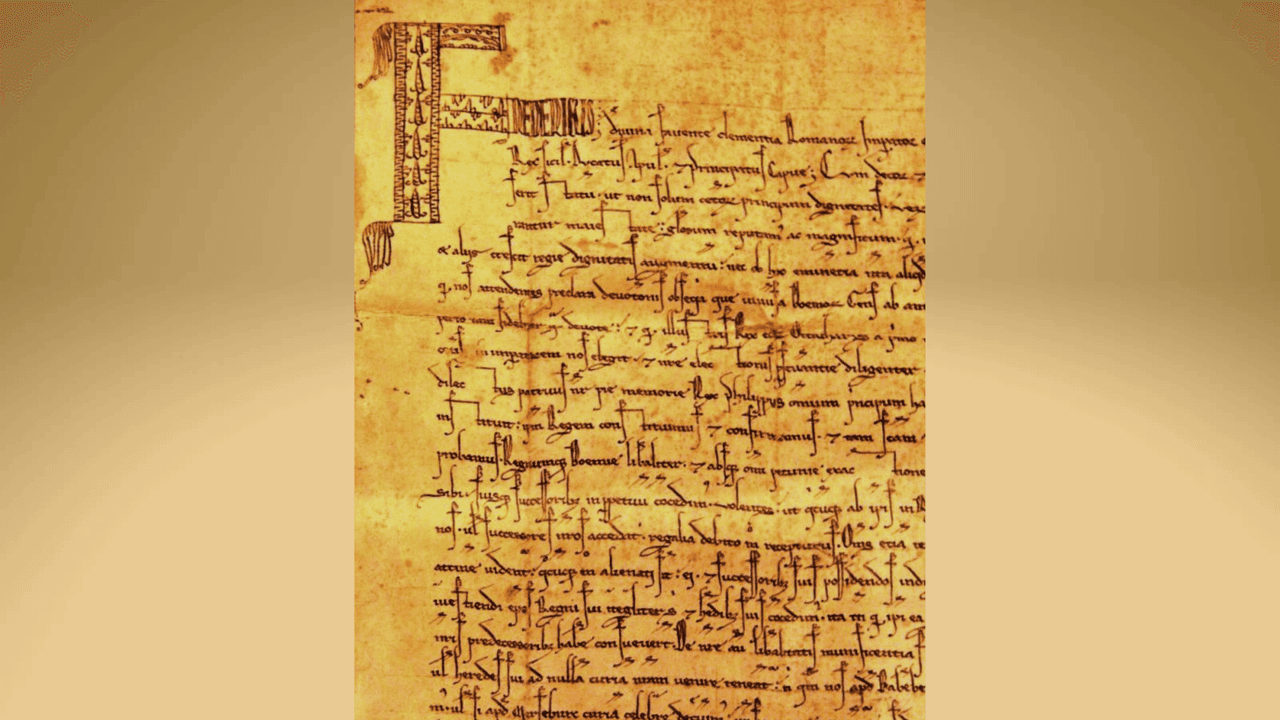
King Ottokar I was in a fortunate position. The Holy Roman Emperor, Frederick II, was fighting for his claim to the imperial throne and needed powerful allies. Ottokar backed him early, when the outcome was far from certain. Frederick rewarded that loyalty with a document that became known as the Golden Bull of Sicily, named after the gold seal pressed into the wax.
That document changed the rules entirely. The Bohemian crown became hereditary, passing from father to son without needing imperial approval. Ottokar also gained the right to appoint bishops, control his borders, and collect taxes on his own terms. These were not small concessions. Most medieval kings spent their entire reigns begging the emperor for exactly these kinds of privileges.
Bohemia became one of the most independent kingdoms in Central Europe, while neighboring rulers kept making the long trip to kneel before the emperor for decisions Bohemian kings made over breakfast.
Any feedback for this story?