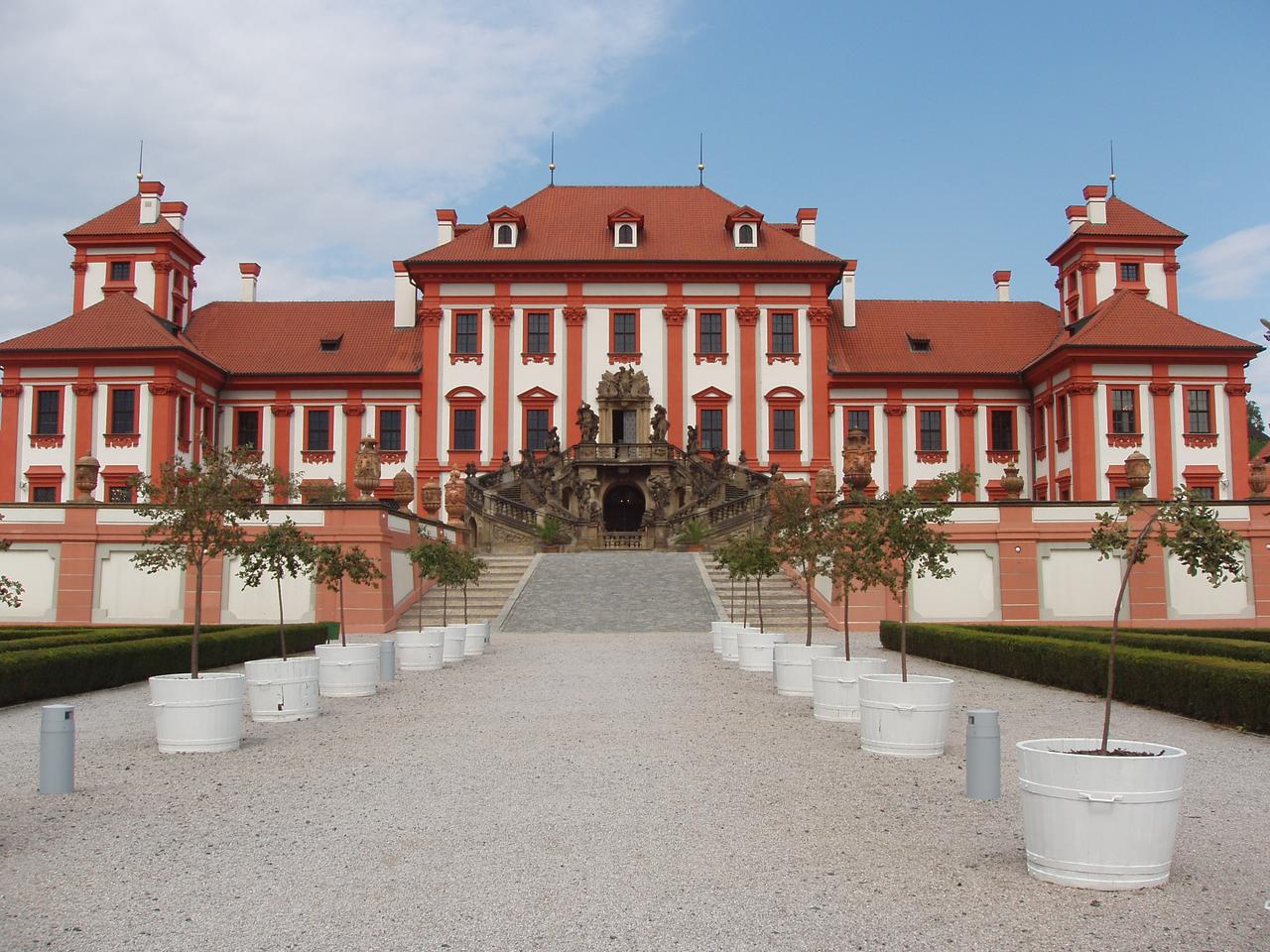
Troja Castle
--:--
--:--
The baroque palace in front of you started as one man's obsession with Italian villas. Count Václav Vojtěch of Sternberg traveled to Rome in the 1670s and fell hard for those sprawling suburban mansions. He came home determined to build his own slice of Italy on the banks of the Vltava River.
Construction began in 1679. French architect Jean Baptiste Mathey designed it, but the real showstopper is the monumental staircase leading up to the entrance. Two sculptors from Dresden, Johann Georg and Paul Heermann, carved dozens of statues depicting the Titans battling the gods of Olympus. Zeus, Hercules, and Athena defeating giants in stone.
People saw those mythological battle scenes and started calling the place Troja, connecting it to the Trojan War. The name stuck and eventually spread to this entire neighborhood.
Inside, there are 4,000 square meters of paintings. The main hall alone has 1,400 square meters of frescoes. Dutch painters Abraham and Izaak Godyn spent years covering the ceiling and walls with scenes glorifying the Habsburg dynasty and their victory over the Ottoman Turks near Vienna.
The count got his noble title. The city got one of the finest baroque palaces north of Italy. Locals still call it Troja today, all because of a staircase full of fighting gods.
Any feedback for this story?