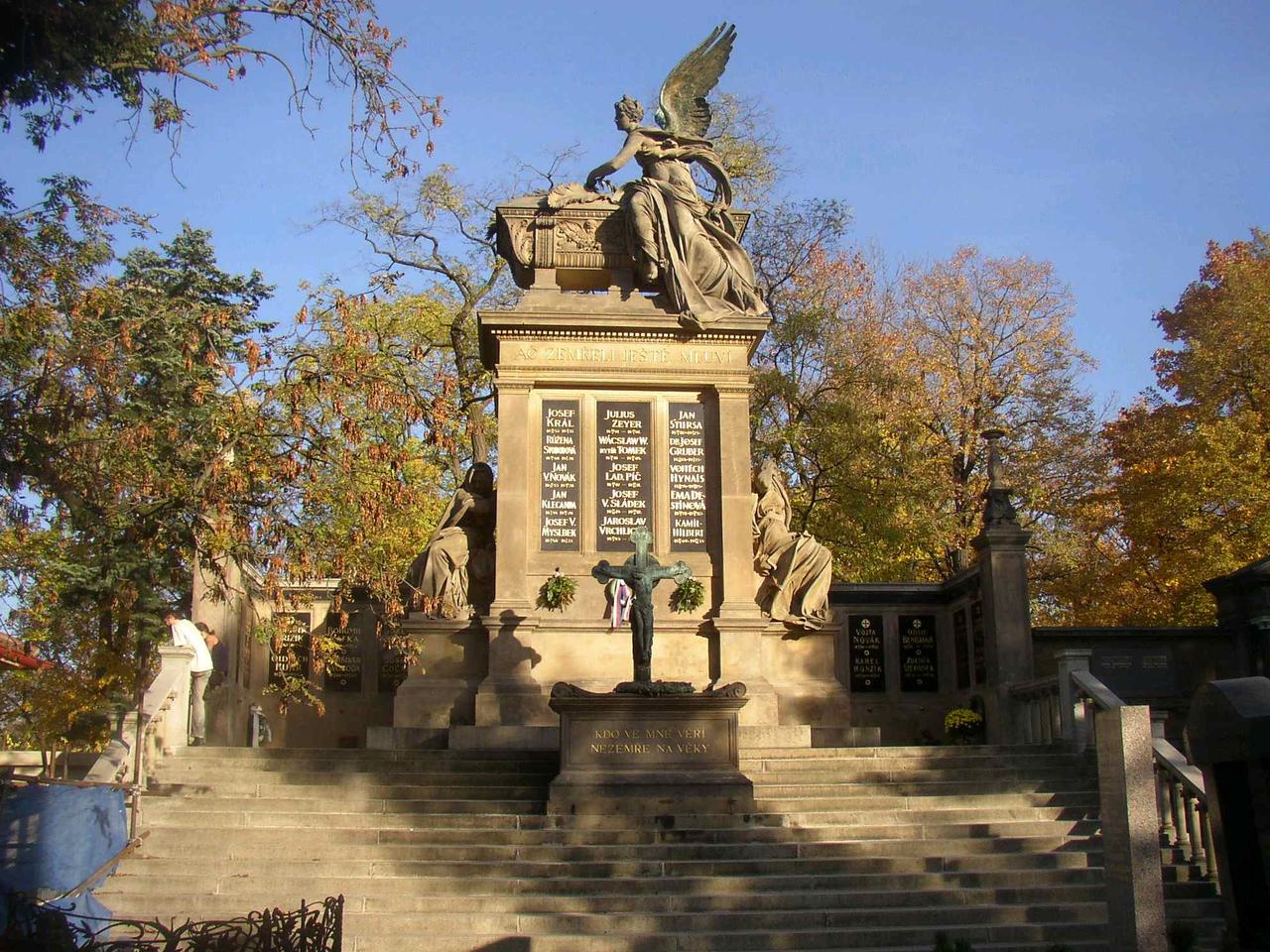
Vyšehrad Cemetery & Slavín
--:--
--:--
Right here is the answer to a question no one asked in 1869: where do you bury an entire culture?
You're standing at the entrance to a national cemetery, built beside the Church of Saints Peter and Paul. When Czech politicians proposed this place, they weren't thinking about kings or generals. They wanted a resting spot for the people who shaped identity through books, paintings, and music.
The cemetery took shape in the 1870s. But look at that massive stone monument on the far side. That's Slavín. Built between 1889 and 1893, it holds 56 of the absolute best. Composer Antonín Dvořák. Painter Alfons Mucha. Writer Karel Čapek.
Poet Julius Zeyer was the first person placed inside in 1901. He wrote the verses carved on the statues flanking Slavín. Above the entrance, you'll find the motto: "Though dead, they still speak."
Getting buried in Slavín requires approval from a 9 member commission. The last person admitted was in 2013. Before that? Decades of waiting. You can be famous, influential, beloved, and still the commission says no.
Walk through and find the tombstone with white skis. That's Josef Rössler Ořovský. He brought football and ice hockey to the country.
Any feedback for this story?