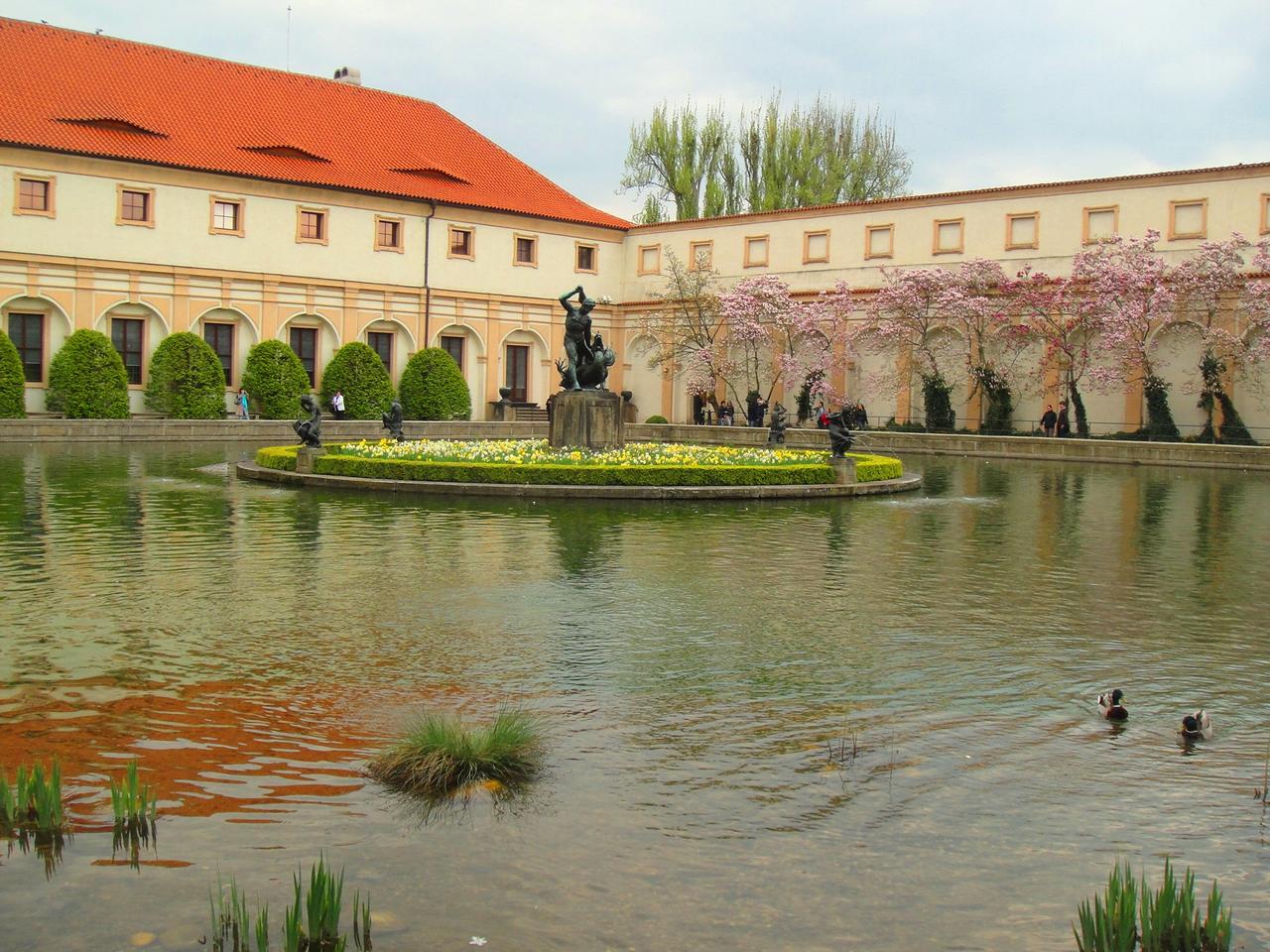
Wallenstein Garden
Albrecht von Wallenstein wanted to outshine a castle. Not just any castle, the one sitting on the hill above you right now. Between 1623 and 1630, he bought and demolished 26 houses, 6 gardens, and 2 brickworks to build this palace and its gardens. When you have that kind of ambition, subtlety is not really on the agenda.
The pond in front of you has seen more than its share of history. In 1625, the Dutch sculptor Adriaen de Vries filled this garden with bronze statues of Greek gods and heroes. By 1648, Swedish forces had carried every single one away during the Thirty Years War. The originals are still in Sweden today, at Drottningholm Palace. What you see here are faithful copies, cast in 1914.
That same pond got a second life in 1816, when inventor Josef Božek used it to test an early steamship prototype. A Baroque garden moonlighting as an engineering laboratory.
Behind you, the grand pavilion known as the Sala Terrena is covered in frescoes of the Trojan War, and the extraordinary grotto wall beside it looks like stalactites slowly melting out of the stone.
Wallenstein himself was assassinated in 1634 on the orders of Emperor Ferdinand II. His widow sold the palace, and it stayed in the family until 1945. He built all of this to rival a king, and never spent a quiet evening in it.
Any feedback for this story?