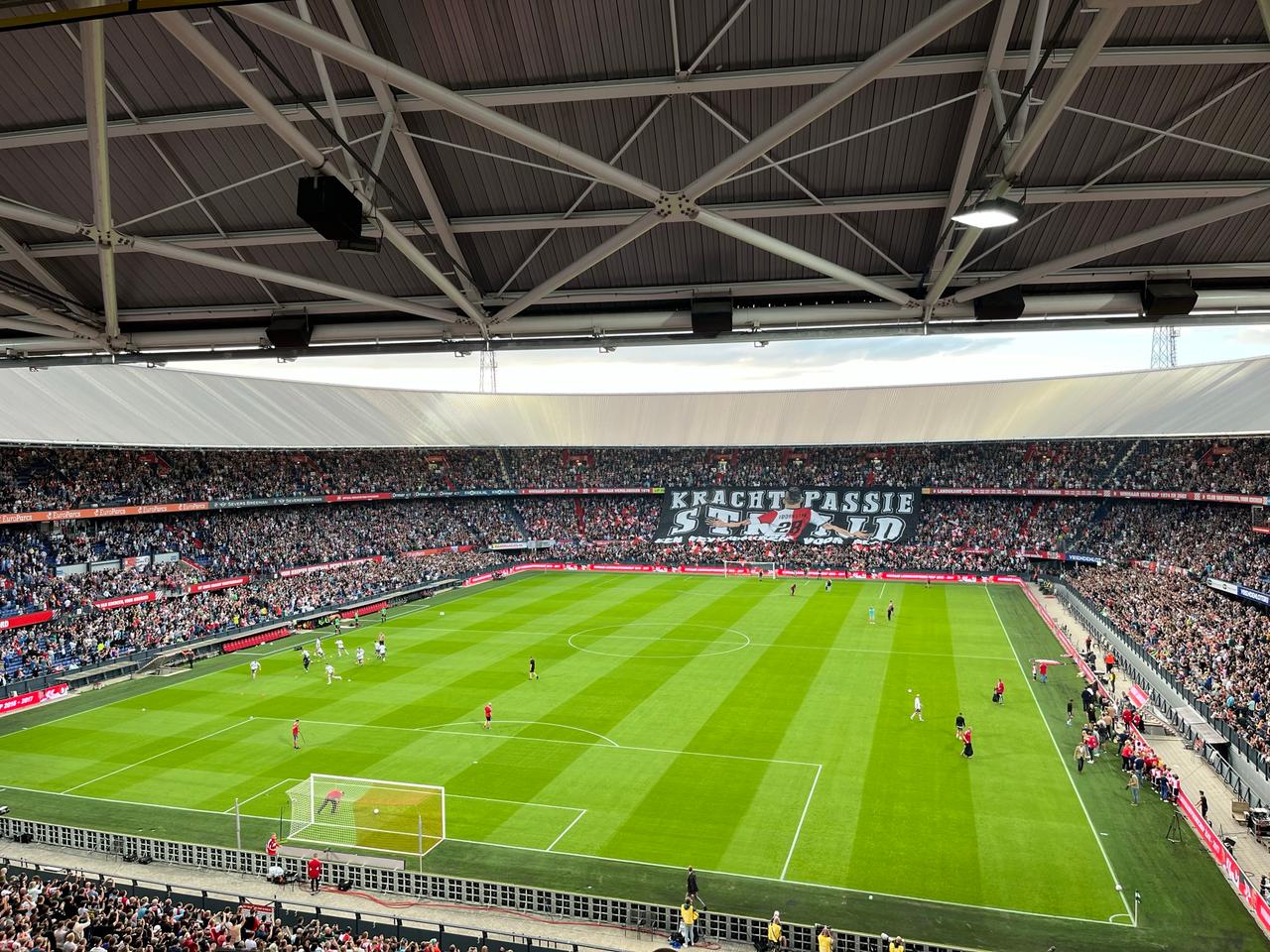
De Kuip Stadium
Stadion Feijenoord, better known as De Kuip, is the iconic football stadium of Rotterdam-Zuid. It’s the home ground of Feyenoord and also regularly hosts the Dutch national team.
Designed by architect Leendert van der Vlugt from the firm Brinkman and Van der Vlugt, construction began in 1935 and De Kuip officially opened on March 27, 1937. To this day, it remains the largest football stadium in the Netherlands after the Johan Cruijff ArenA.
De Kuip has faced its share of challenges. During World War II, it was at risk of demolition due to its steel structure—steel being in high demand at the time. The stadium director reportedly underreported the amount of steel when inspectors came, saving it from destruction.
In 1984, Rotterdam and Amsterdam launched a bid to host the 1992 Olympic Games. Plans included building a new Olympic Stadium on De Kuip’s site, but Barcelona was ultimately selected.
Between 2006 and 2013, plans for a new stadium were seriously considered. In 2016, Feyenoord announced a preference for a new riverside location near De Veranda. Part of the ambitious Feyenoord City project, the idea met with mixed reactions. Many supporters remain emotionally tied to De Kuip.
For now, the club will stay in De Kuip for at least ten more years, focusing on modest renovations. More than just steel and concrete, De Kuip stands as a powerful symbol of football tradition and passion.
Any feedback for this story?