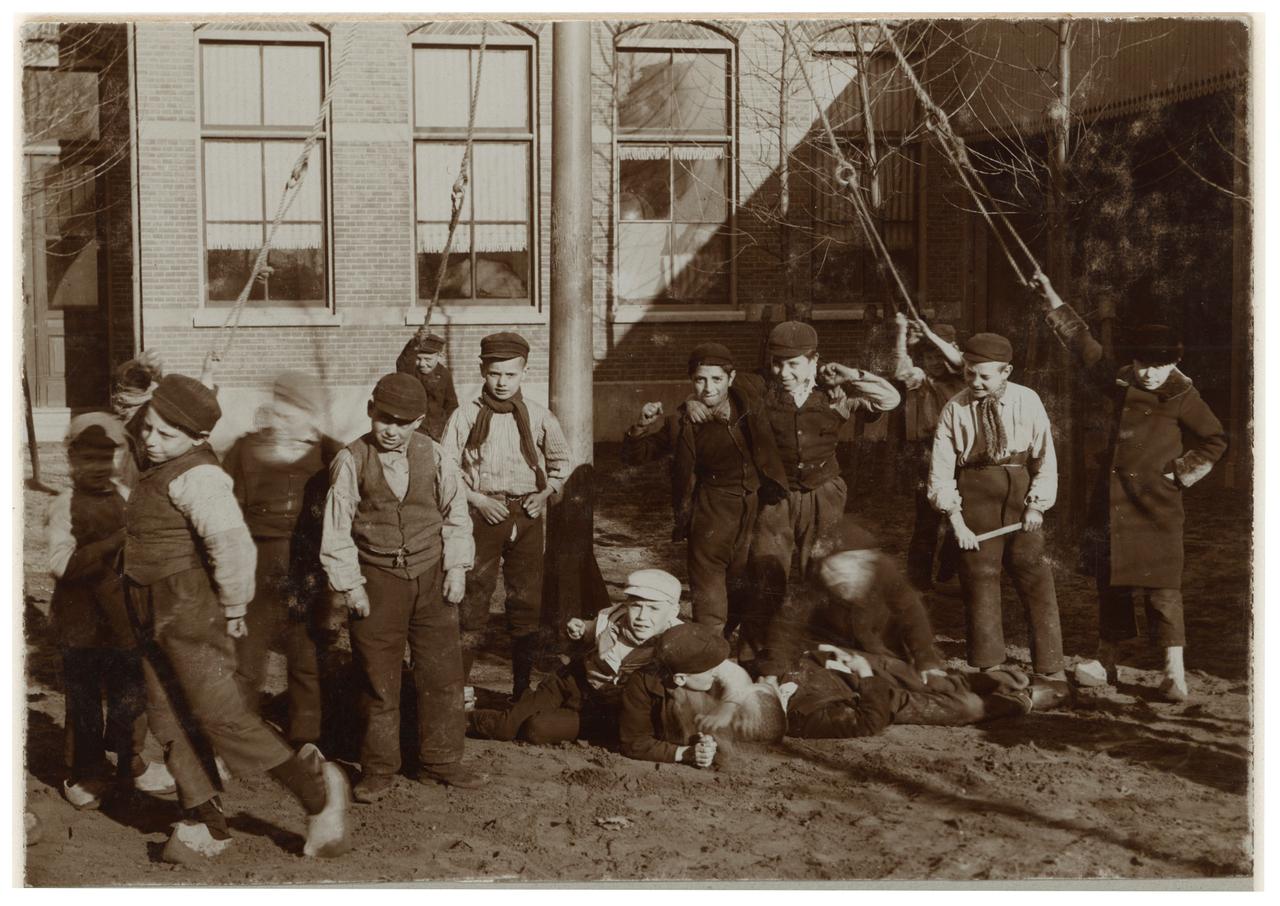
Haveloze school
In 1853 Rotterdam, a growing port city, many children lived on the streets. They often wandered barefoot, begged, or fought for food. Two women, Pietronella Kruijff and Catharina Suermond, saw this while walking along De Boompjes and decided to act.
Here, at Ketelaarsgang on Schiedamsedijk, where you stand now, it began. A simple room, rented for one guilder a week, was the first school space. On Mondays, Wednesdays, and Fridays from ten to twelve, a few children could come. An evangelist taught them, without blackboards or books.
The school grew quickly. The Haveloze School was open to all children, regardless of religion. At its opening, 130 children sang a song together.Besides reading and writing, the children received care. Volunteers washed them, and donors brought clothes and shoes. School days were short with simple lessons. Girls learned knitting and sewing, boys were trained as tailors or shoemakers.
By 1903, there were 350 students and a waiting list. After World War II, numbers declined and the school closed in 1963. Yet its impact remains, with Rotterdam known as the city of ‘schoffies’, but thanks to the school many got a future.
Any feedback for this story?