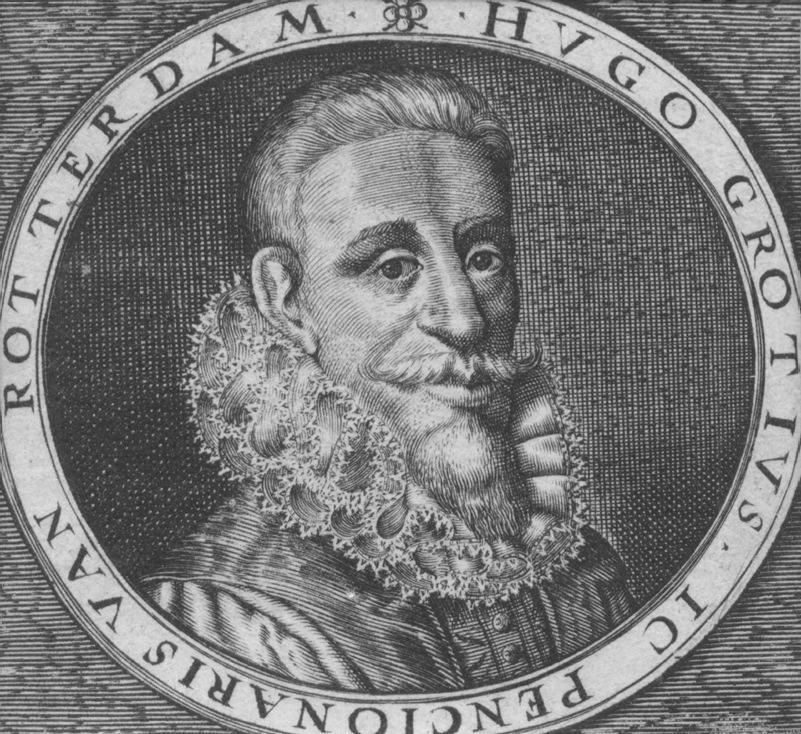
Hugo Grotius
The bronze figure watching over this square is Hugo Grotius, one of the most remarkable minds the Dutch Republic ever produced. Born in Delft in 1583, he was studying law in Leiden by the age of 11 and representing his country on diplomatic missions not long after. Even by the standards of a golden age full of exceptional people, he stood out.
Grotius was not just brilliant, he was principled. He championed religious tolerance at a time when that position came with real consequences. When he sided with the wrong political faction during a power struggle between the Remonstrants and Stadtholder Maurice of Orange, the consequences arrived swiftly. His ally Johan van Oldenbarnevelt was executed. Grotius was sentenced to life imprisonment at Slot Loevestein castle.
He did not stay long. In 1621, his wife Maria smuggled him out in a chest normally used for transporting books. From there, he fled to Paris and began writing his masterpiece, De jure belli ac pacis, which laid out the principles of international law and just war that courts and diplomats still reference today.
The escape in the book chest, it turns out, was entirely fitting for a man whose greatest weapon was always the written word.
Any feedback for this story?