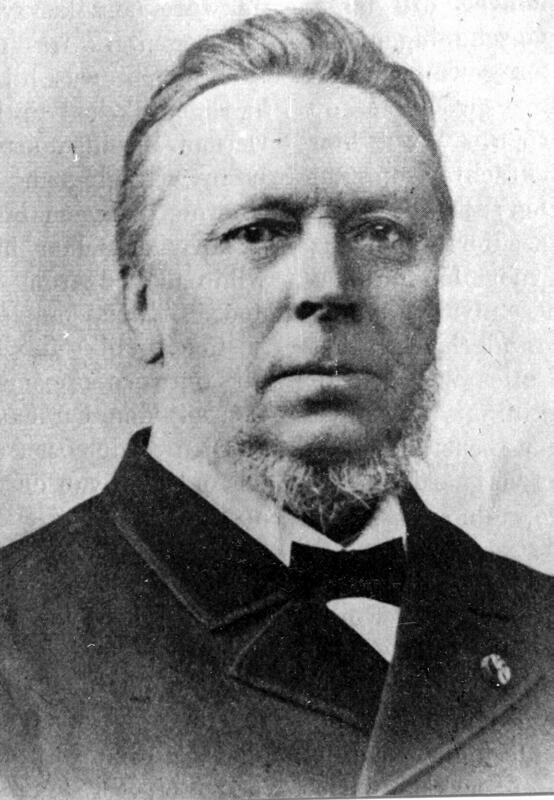
Pieter Caland
Here at the Veerkade stands the monument honoring Pieter Caland—the hydraulic engineer whose vision and perseverance helped shape Rotterdam’s future.
Pieter Caland was born in 1826 in Zierikzee and studied at the Royal Military Academy in Breda. He quickly distinguished himself at Rijkswaterstaat for his technical insight and bold ideas. In the 1860s, Rotterdam struggled with severe access issues due to silting at the river mouth. Caland proposed a radical solution: a new, direct waterway to the North Sea—the future Nieuwe Waterweg. Despite heavy criticism, technical risks, and high costs, his plan was approved in 1863.
Construction began in 1864 and was completed in 1872. The Nieuwe Waterweg transformed Rotterdam into a true world port, and Caland's name became inseparably linked to the city’s success. Still, full recognition for his achievement came only after his death.
The monument to Caland, designed by Henri Evers and Arend Odé, was unveiled in 1907. It originally stood at Van Hogendorpsplein but was moved to the Veerkade in 1939, where it survived the 1940 bombing.
Any feedback for this story?