Reconstruction after the war
After the devastating Rotterdam Blitz of May 1940, the city’s heart lay in ruins: over 30,000 homes, shops, and warehouses were destroyed. Only after the German surrender in 1945 could Rotterdam truly begin clearing rubble and rebuilding.
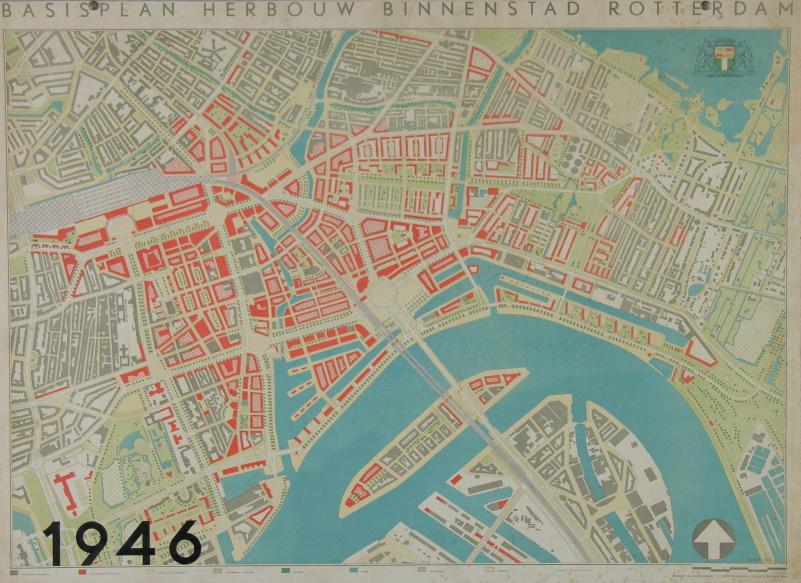
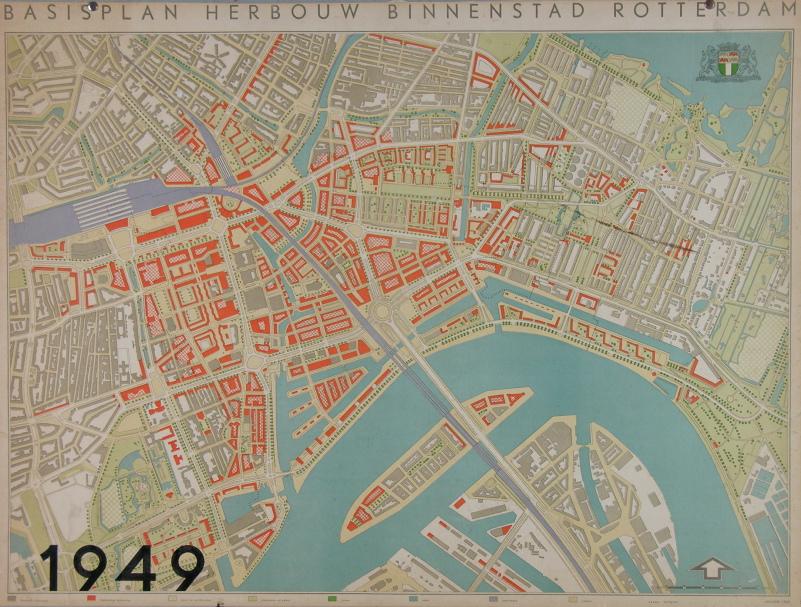
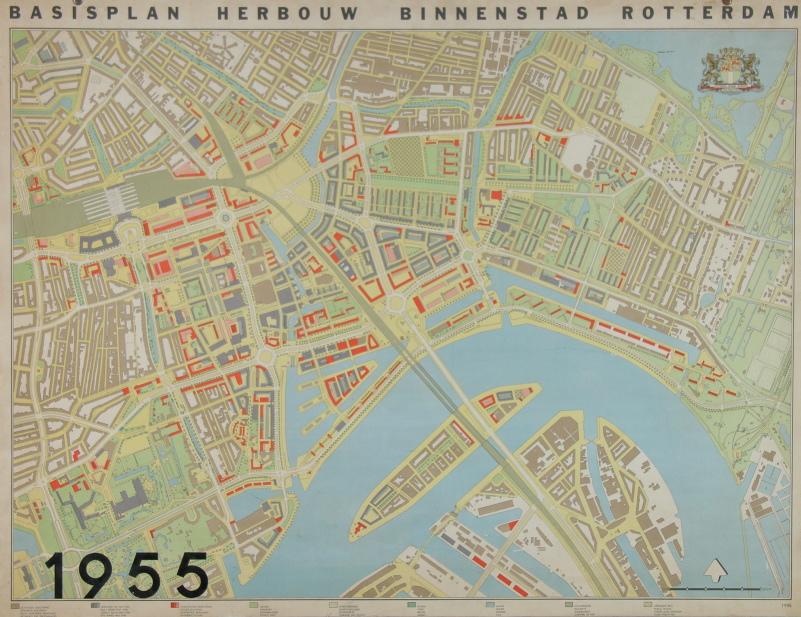
City council hired urban planner Willem Gerrit Witteveen to draft a master plan featuring wide boulevards, modern offices, and plenty of light and space. His 1946 “Basic Plan” called for a radical new grid, symbolizing a break with the past.
On 18 May 1947 Rotterdam introduced “Construction Day,” an annual festival that let citizens witness cranes and concrete reshaping their skyline. By the late 1960s, however, critics labeled the rebuilt centre “bleak” and “soulless.” Some even compared the new housing blocks to concentration‑camp barracks.
The pushback sparked a second wave of design—playful high‑rises, bold colours, landmarks such as the Cube Houses and the new theatre square—proving that reconstruction itself could evolve.
Any feedback for this story?