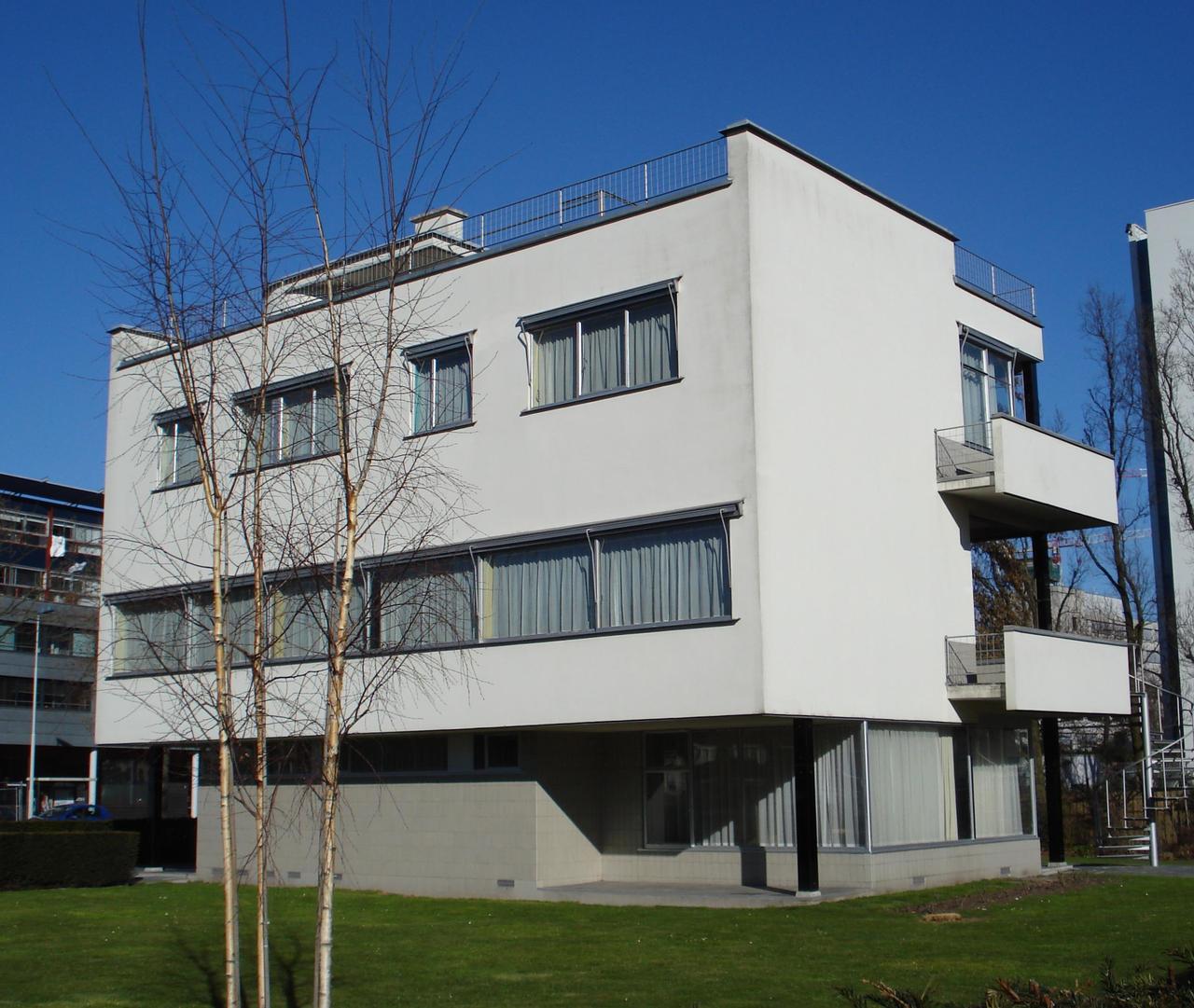
Sonneveld House
On the edge of Museumpark stands a home that seems to pause time: Huis Sonneveld. This 1930s modernist residence is a prime example of the Dutch "Nieuwe Bouwen" movement, designed by the iconic Rotterdam firm Brinkman and Van der Vlugt—also known for the Van Nelle Factory and Feyenoord Stadium.
Albertus Sonneveld, one of the Van Nelle directors, commissioned the home in 1929. When the family moved in four years later, they brought almost nothing from their previous house. They embraced not only a new space but an entirely new way of living—aligned with the avant-garde spirit of the era.
Nieuwe Bouwen focused on function, light, air, and space. No excess ornamentation—just design that served life. Huis Sonneveld reflects that: sleek, bright, and modern. Built with steel, concrete, and glass, it was decades ahead of its time.
The architects didn’t stop at the walls—they also designed the full interior. The furniture came from Gispen, the textiles from Metz & Co. The result is a home where architecture and lifestyle blend seamlessly.
Any feedback for this story?