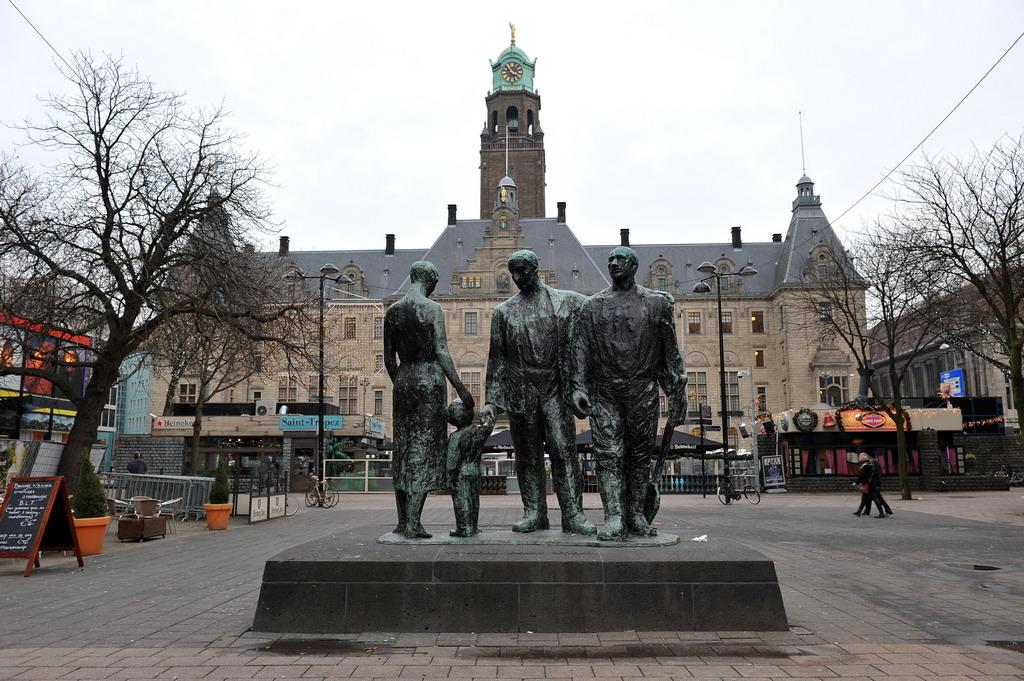
Stadhuisplein
In the early 14th century, a municipal guesthouse stood on the Hoogstraat in Rotterdam, offering lodging to merchants and travelers. Over time, the building also took on a governmental role, eventually being used entirely as the city hall after renovations in 1606.
As Rotterdam expanded rapidly in the early 20th century, the old city hall could no longer meet the city's needs. A new location was chosen on the Coolsingel, which required the demolition of the Zandstraat neighborhood, known for its lively atmosphere. Queen Wilhelmina laid the first stone of the new city hall in 1915. Architect Henri Evers designed a monumental building in the Beaux-Arts style, with Byzantine and Romanesque influences.
The city hall was completed in 1920. It covers a footprint of 86 by 106 meters and features a 71-meter tower. The richly decorated interior includes artworks by Johan Thorn Prikker and Marius Richters. Atop the tower stands a gilded angel of peace by sculptor Johan Keller.
On May 14, 1940, much of Rotterdam was destroyed, but the city hall survived with little damage. Since 1997, it has been a national monument. Today, it continues to serve as the seat of the city government and remains a popular venue for official receptions and weddings.
Any feedback for this story?