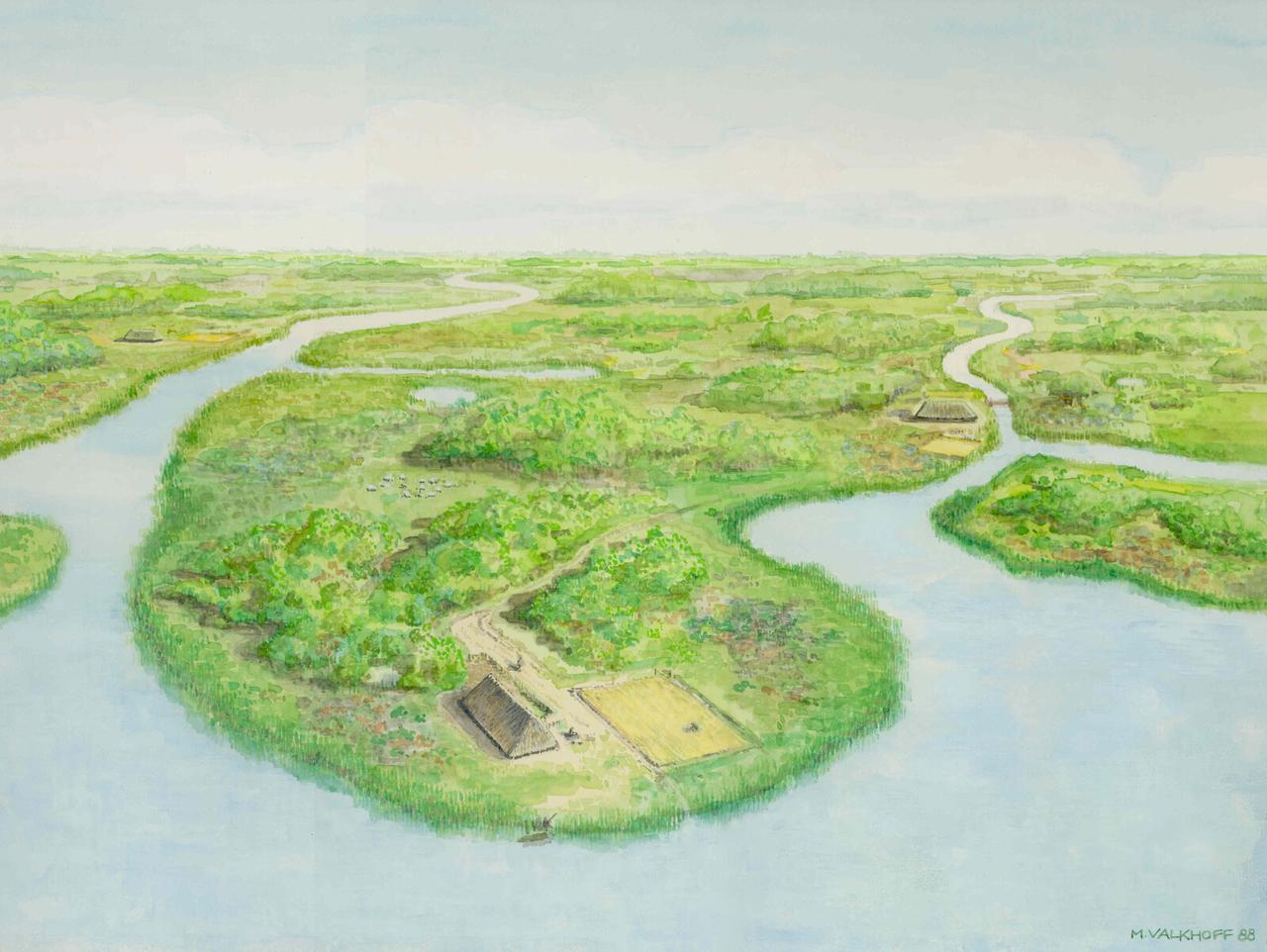
The first residents on the Maas
Long before Rotterdam existed, people already lived in the area. At that time, the Netherlands was still connected to England, and the land was home to mammoths and Neanderthals. This swampy region, known as Doggerland, was inhabited by nomadic hunter-gatherers.
Between 9000 and 6000 BC, rising sea levels gradually submerged Doggerland, forming the North Sea. People roamed the wetlands near the mouth of the Meuse, crafting barbed bone and antler arrowheads and hunting aurochs, deer, wild boars, and birds. They also gathered fish, shellfish, nuts, seeds, and roots.
They set up seasonal camps on higher river dunes known as “donken.” Depending on the time of year, they moved to areas rich in food. Archaeological finds at the Maasvlakte include arrowheads, hand axes, cutting tools, and bones of mammoths and woolly rhinos.
About 50 kilometers from Rotterdam, a Neanderthal skull fragment was found—dating back over 40,000 years. His face was reconstructed and he was named ‘Krijn’. Neanderthals were well adapted to the cold and used flint hand axes to butcher large animals.In Beverwaard, where we are now, later traces of human activity were found. On an ancient river dune, three cremation pits were uncovered, containing remains of people aged 10 to 40, buried with grave goods like a whetstone. These are among the oldest cremation graves found in the Netherlands.
These discoveries offer a unique glimpse into early life in the Maasmond region, before the sea eventually consumed Doggerland.
Any feedback for this story?