World War I Refugees
Where Rotterdam Central Station now stands, there used to be Delftsche Poort station, opened in 1847. It was an important train hub to cities like Amsterdam and The Hague. During Rotterdam’s bombing in May 1940, the station was severely damaged and later removed.
In the early First World War, especially after Antwerp fell on October 9, 1914, thousands of Belgians fled to the Netherlands. Between October 7 and 14, 1914, about 23,000 Belgian refugees arrived in Rotterdam, often by train via Delftsche Poort and Beurs. The city, with over 6 million residents, saw a large temporary influx.
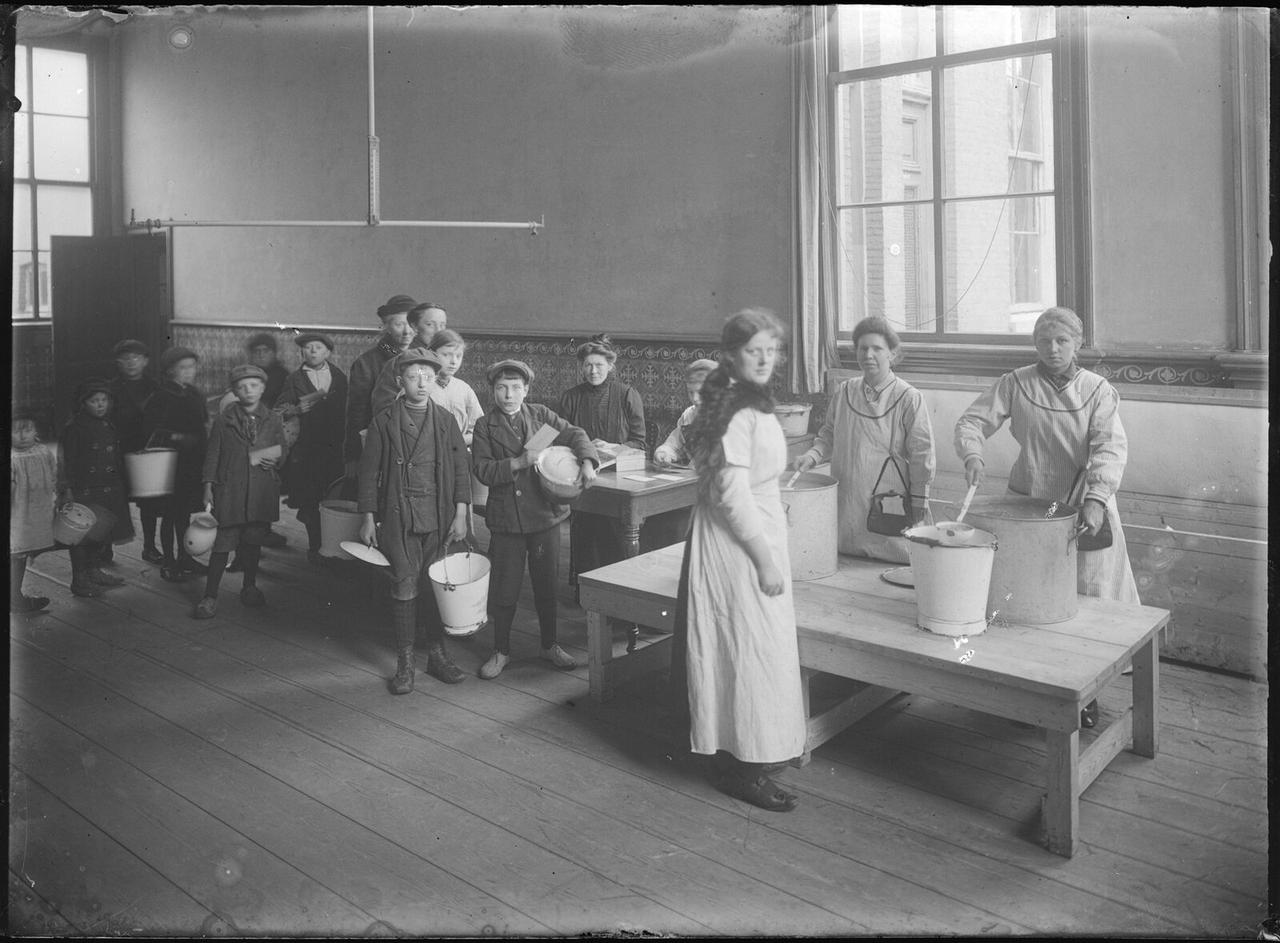
Volunteers and aid committees welcomed them. Around 17,000 refugees stayed with private families. Name signs were hung on houses to help families find each other. About 6,000 Belgians stayed on ships or in public buildings, while those better off stayed in boarding houses or hotels.After about a month, most—around 18,000—returned to Belgium. For the 5,000 who stayed, Rotterdam offered support. The poor received 30 cents daily, children half that. These allowances were higher than for unemployed Rotterdam residents, causing some resentment. By early 1916, allowances were equalized at about 5 guilders per week.
The administration worried about tensions, especially between Belgian refugees and German residents. Belgian children were barred from Rotterdam schools but attended Belgian-funded schools.
By 1918, the number of refugees rose again to about 9,000. Complaints about allowances and jobs did not lead to serious conflicts. After the armistice in November 1918, most Belgians returned home.
Any feedback for this story?