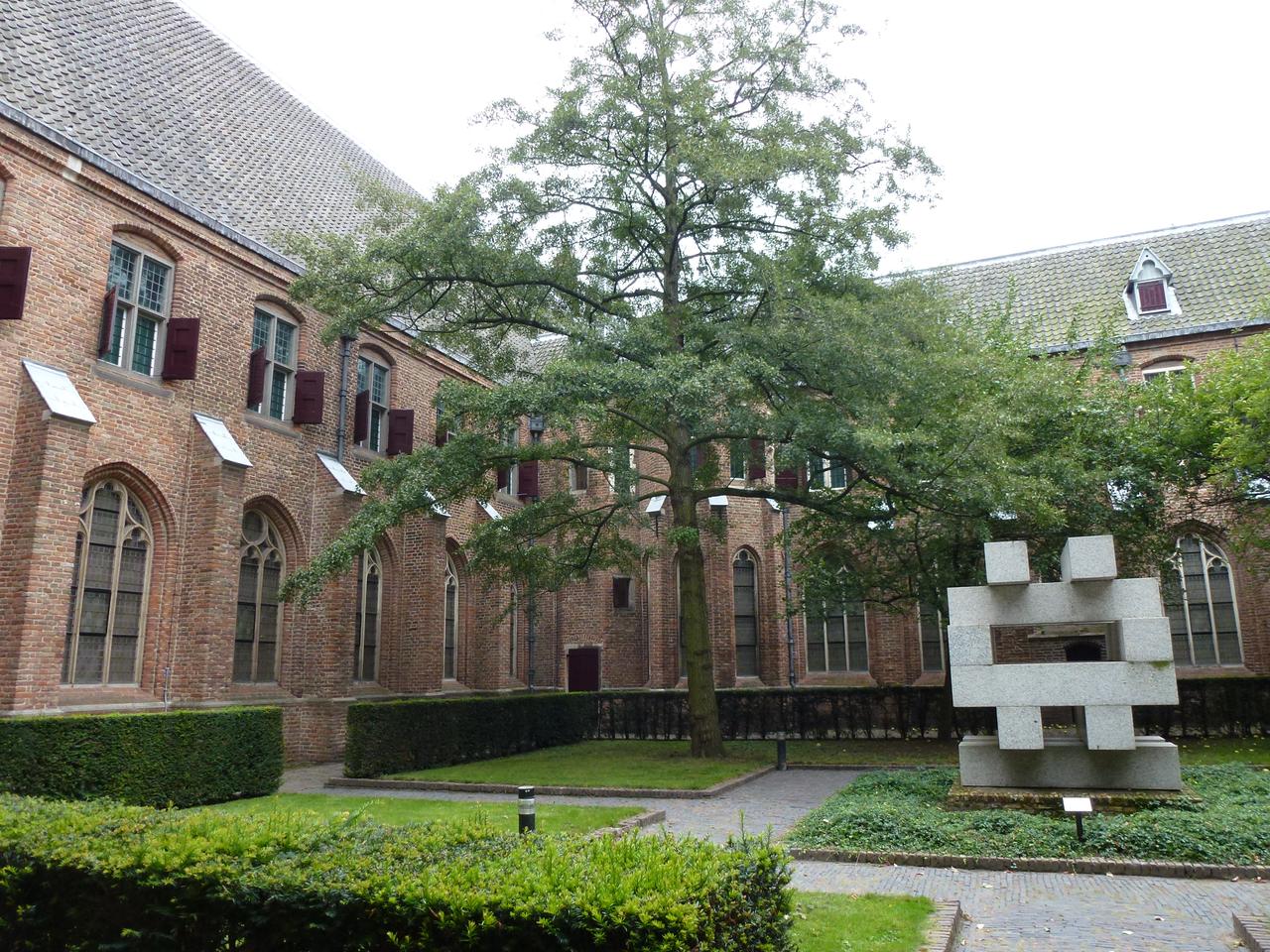
Catharijneconvent
Few buildings have lived as many lives as the one you're looking at right now. The Catharijneconvent, tucked behind medieval walls in the center of Utrecht, started out in 1366 as a shelter for homeless people. A century later it became a Carmelite monastery, then a Johannine monastery, then a city hospital that treated patients until 1811. In 1914, Belgian refugees slept here after fleeing the First World War. During the Second World War, German forces used it as a storage depot.
Since 1979, it has been a museum, and honestly, that feels like the right ending. The collection inside holds more than 50,000 objects: medieval manuscripts with ink still sharp after six centuries, carved wooden altarpieces, triptychs by Flemish masters, golden liturgical objects that once sat on church altars across the Netherlands. Each one carries a story about how Christianity shaped Dutch culture, architecture, and everyday life.
What makes Catharijneconvent special is that the building itself is part of the collection. Every stone wall and vaulted ceiling has absorbed centuries of prayer, suffering, healing, and history.
And somewhere in there, probably between the Flemish paintings and the gift shop, a German supply crate once stood.
Any feedback for this story?