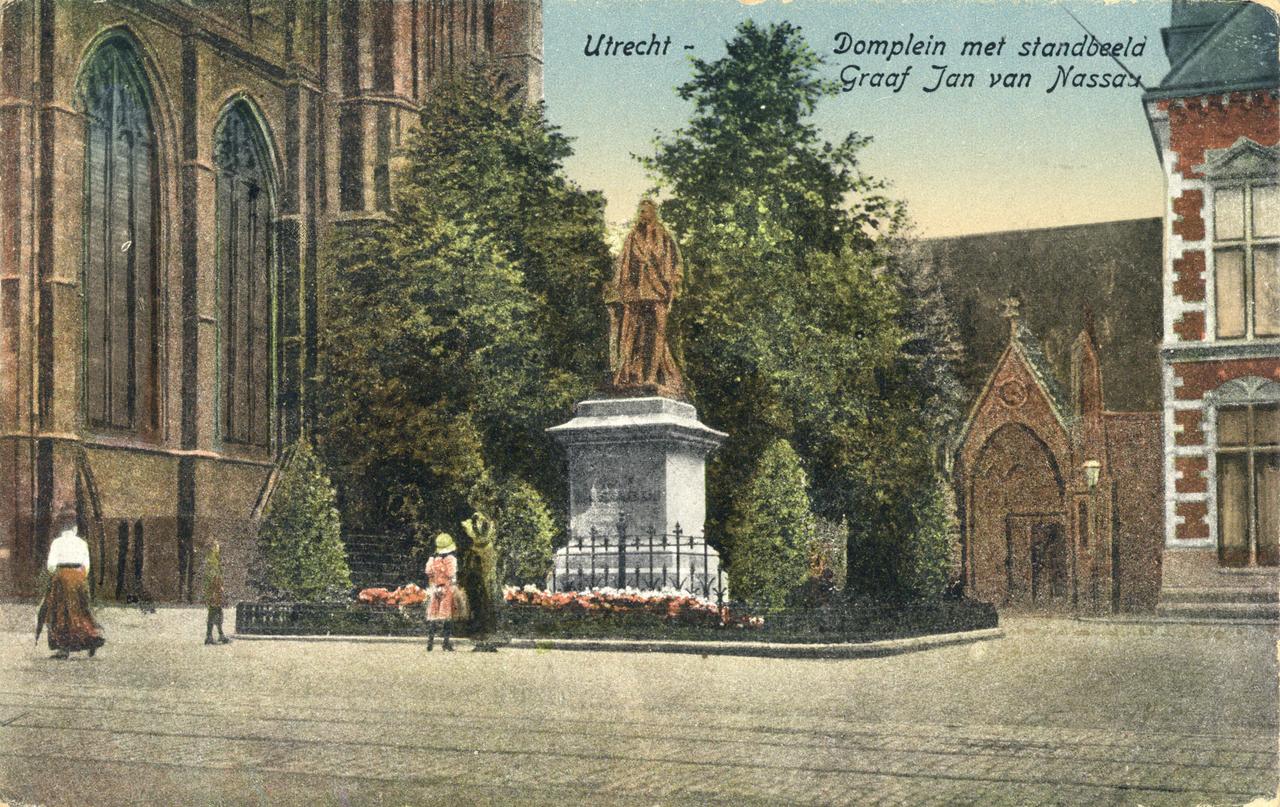
Jan van Nassau
In Cathedral Square,, stands a venerable statue of John of Nassau. The name may be familiar to you, but who was he really and why is he so important?
Jan van Nassau, born on 22 November 1536 in Dillenburg, Germany, was the elder brother of William of Orange. He played a crucial role in the Dutch Revolt against Spanish rule in the 16th century. His contribution was mainly political; he was responsible for drafting and signing the Union of Utrecht. This historic treaty, signed on 23 January 1579 in Utrecht, was an alliance between the northern Dutch provinces.
Consisting of provinces such as Holland, Zeeland, and Utrecht, this Union of Utrecht was an essential step towards the independence of what would later become the Republic of the Netherlands. It is often seen as the founder of the modern Dutch state.
A year after signing the Union of Utrecht, John of Nassau returned to Dillenburg. He disagreed with his brother William's political approach, which had a French influence. Despite this withdrawal, Jan remains a key figure in Dutch history. His role in founding the Republic of the Netherlands and the Union of Utrecht had an indelible impact.
Jan of Nassau died on 8 October 1606 in Dillenburg, but his legacy lives on. The statue on Domplein, near the academy building, is a reminder of his crucial contribution to the formation of the Netherlands. It ensures that his story and his importance in Dutch history are not forgotten.
Any feedback for this story?