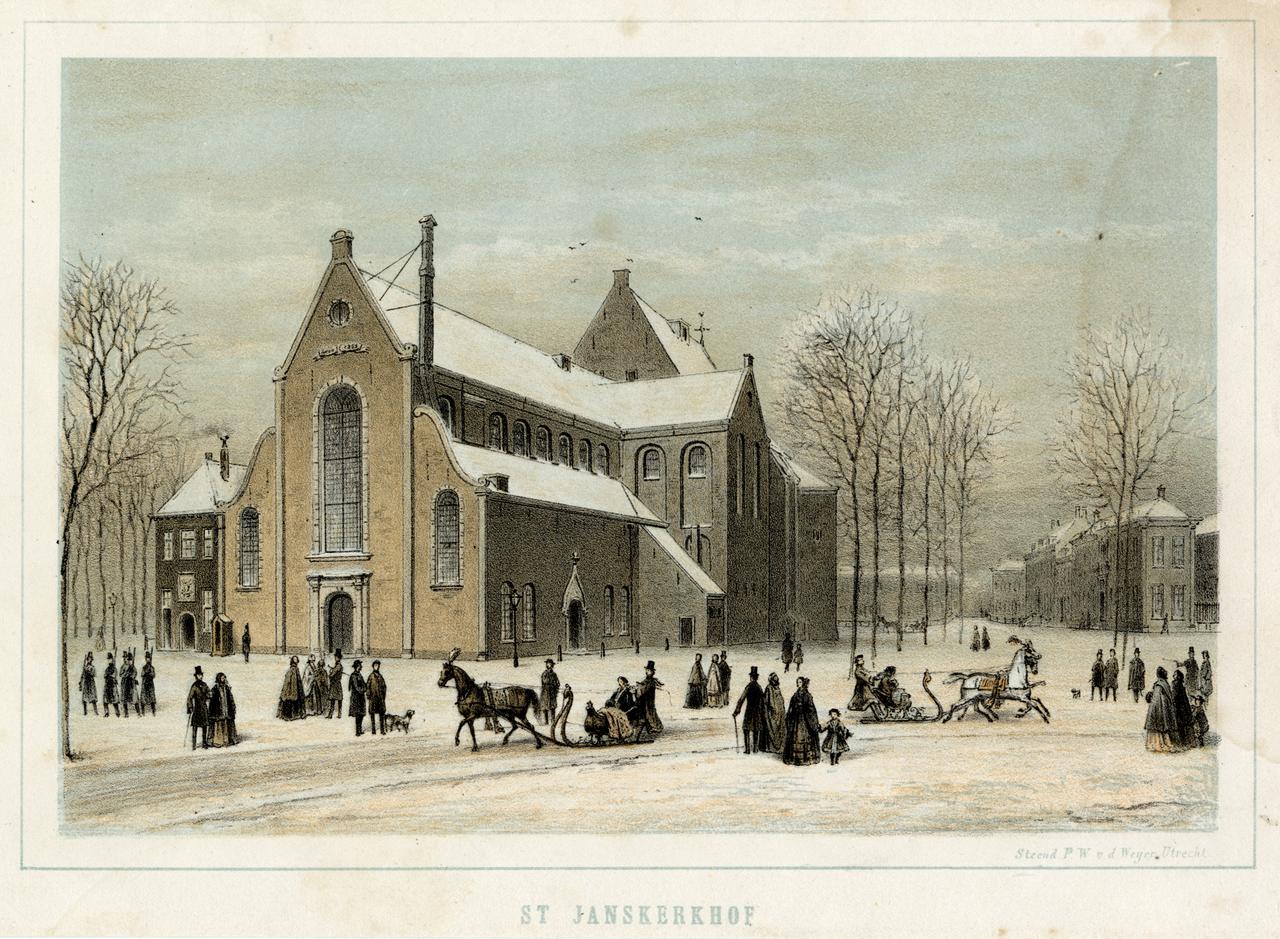
Janskerkhof Square
In 1632, a blind nobleman named Jacob van Eyck was hired as bell-ringer at the Janskerk, the church you can see right at the edge of this square. But he didn't just ring bells. On summer evenings, he stepped outside onto this very churchyard and played his recorder for the people strolling by. The church council liked it so much that in 1649 they officially raised his salary from 80 to 100 guilders, so that he would "entertain the wandering people on the churchyard sometimes in the evenings with the sound of his little flute." Those tunes became Der Fluyten Lust-hof, the largest solo wind instrument work in European music history, and recorder players worldwide still perform it today.
The square itself is older than the church. Romans grazed their cattle here. Around 1050, bishop Bernold built the Janskerk as part of a cross of churches around the Dom cathedral, choosing a spot along a branch of the Rhine that used to run where the Minrebroederstraat is now. Why he placed it slightly off-centre remains a mystery.
When archaeologists dug here in 2000, they found dozens of medieval graves just beneath the surface. And every Saturday since around 1835, people have been selling flowers on top of all that history. Some of the best entertainment in Utrecht has always been free.
Any feedback for this story?