Jewish monument
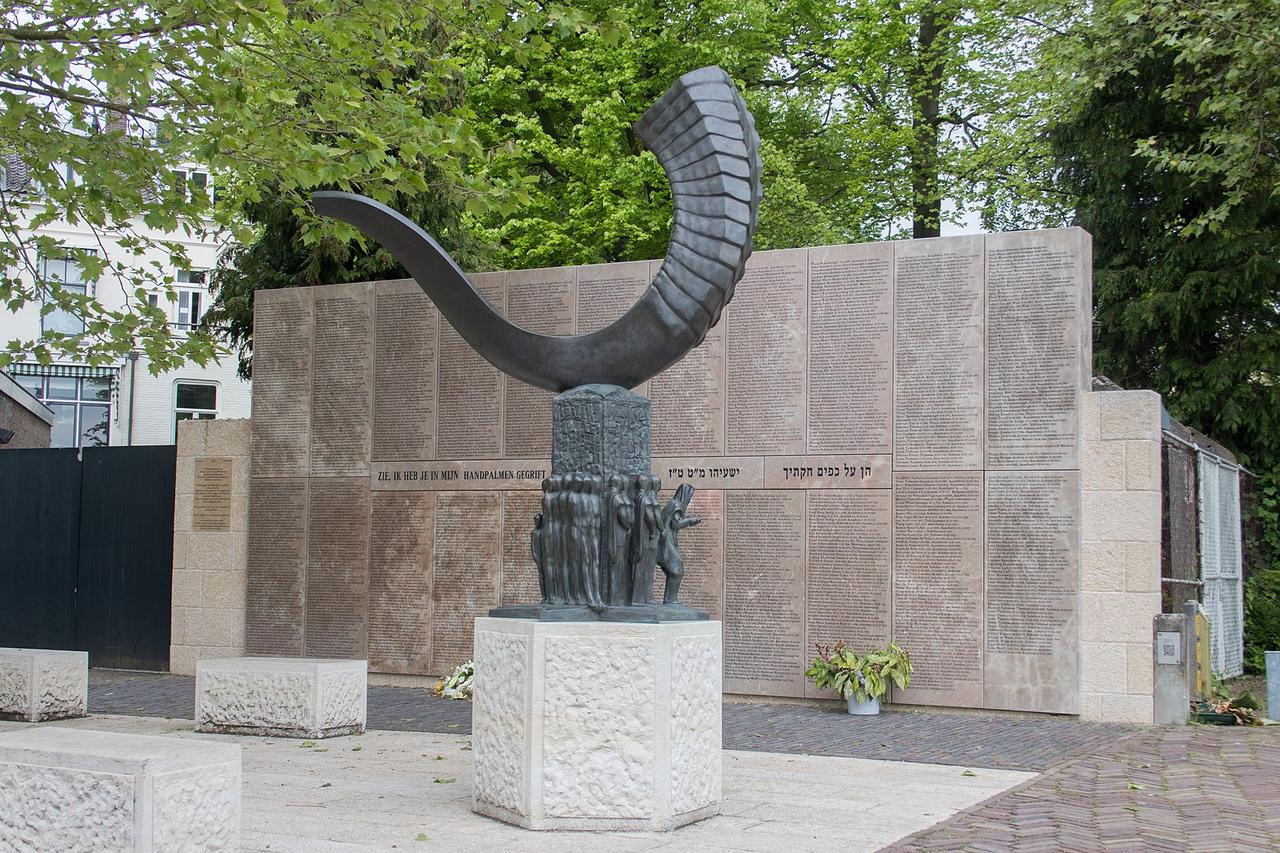
In the shadow of the former Maliebaan station in Utrecht, from where many Jews were deported, there is now a memorial that offers both remembrance and hope. On October 29, 2015, the Jewish Monument Utrecht was unveiled, a place that connects the past and the future through three powerful elements: a memorial wall, a shofar, and a plateau.
The memorial wall, made of Jerusalem stone, bears the names of 1,239 Jewish citizens who were deported from Utrecht during the Second World War. Each name is carefully engraved, accompanied by a date and place of birth and death. In the center of the wall is a moving text from Isaiah: a promise that these names, though engraved in stone, will live on forever in the palms of the Almighty.
Next to the wall stands the shofar, a ram's horn traditionally used in Jewish rituals to announce the Jubilee Year and the Day of Atonement. This shofar, carried by a sculpture of ten Jewish men, symbolizes the hope and collective strength of the community. The artwork, designed by Jewish-Georgian artist Amiran Djanashvili, serves as a reminder of the resilience and unbreakable spirit of the Jewish community.
The plateau surrounding a tree offers a peaceful seating area where visitors can reflect. It invites them to sit, remember, and perhaps even learn about the individuals whose names are carved into the wall. A nearby electricity pole with a barcode allows visitors to use their smartphones to learn more about the life stories behind the names.
This monument was made possible thanks to the efforts of many Utrecht residents, donations from various communities, and support from local funds. It is a testament to the city of Utrecht's commitment to never forget and always honor. Passersby are invited to pause for a moment at this special place, which now bears the stories of past suffering but also radiates a lasting message of hope and humanity.
Any feedback for this story?