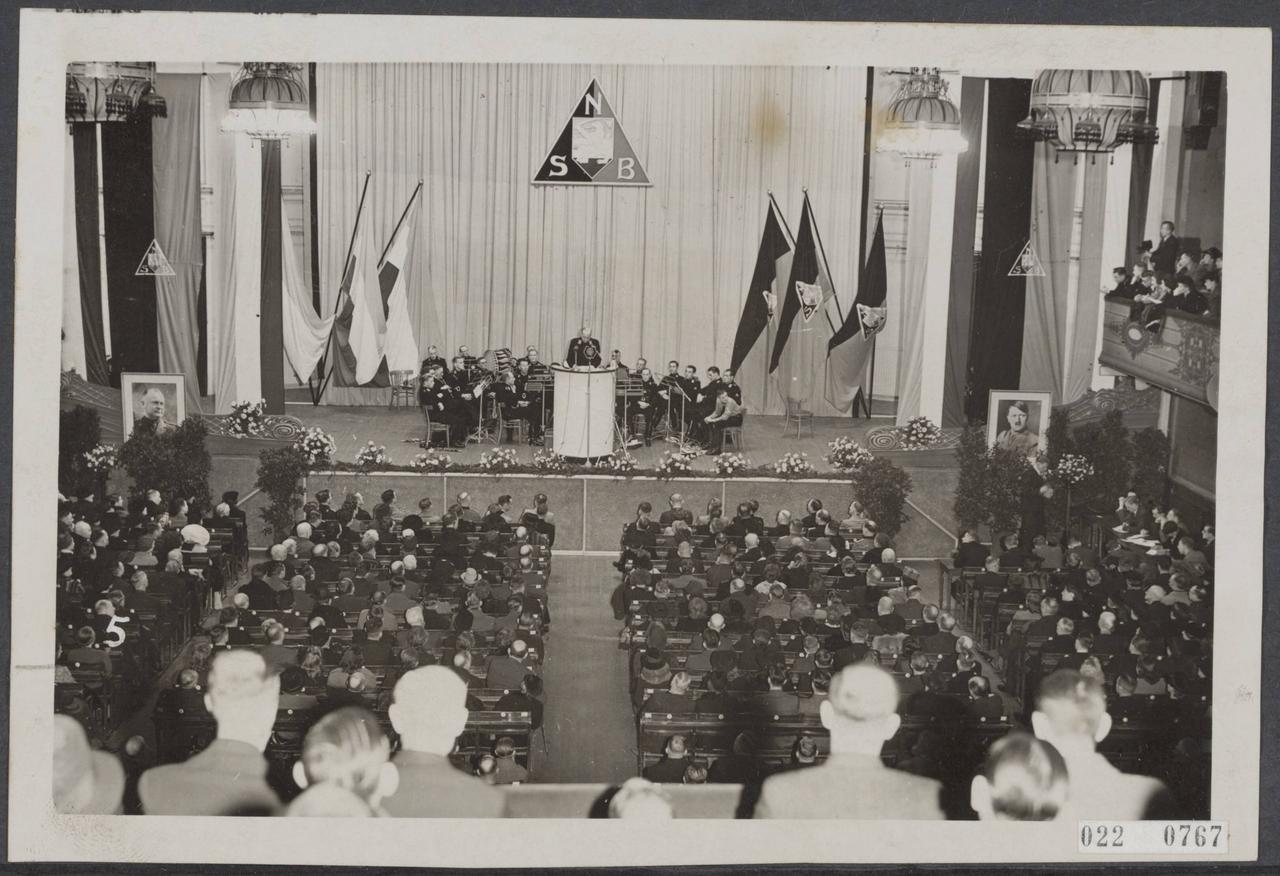
NSB meeting in the old Tivoli
In Utrecht in 1943, while the world was embroiled in the atrocities of World War II, a remarkable meeting took place in the historic hall of the former Tivoli theater on Kruisstraat. It was a large national gathering of the NSB, the National Socialist Movement in the Netherlands, led by Anton Mussert. On that day, June 5, tensions and divisions within the party and the occupied Dutch society reached a boiling point.
Under the heavy chandeliers of the Tivoli, 1,300 members of the NSB stood tense and uncomfortable due to the palpable unrest. Mussert, who was under increasing pressure from both the German SS and internal differences of opinion, was ready to deliver one of his most crucial speeches that day.
He spoke about the conflicts with the SS, the frustrations over the lack of recognition of his leadership, and his concerns about Hitler's future plans for the Netherlands. Mussert declared his intention to speak personally with Hitler to obtain clarity about the position of the Netherlands within the larger Germanic empire. He expressed his determination to protect Dutch traditions and values against the so-called “Greater Germanic idea.”
The highlight of the meeting was a remarkable and paradoxical demand by Mussert for freedom of religion and conscience in the Netherlands, a request that ironically came from a leader of a movement known for its repressive and authoritarian nature.
A brief but intense conflict arose when Mussert and Feldmeijer, an important NSB official and founder of the Dutch SS, clashed openly. Feldmeijer, who accused Mussert of a lack of loyalty to Nazi ideals, left the room in a huff with his staff, which only reinforced the divisions within the party.
The events of that day were recorded in a report that was discovered decades later, almost by accident, in an attic, a silent witness to the complex and often contradictory nature of human behavior under extreme circumstances.This document offers a rare glimpse into the internal struggles and dilemmas of a movement that marked a dark period in Dutch history. The echoes of that day in Tivoli remain a reminder of the power of ideologies and the fragility of human principles under pressure.
Any feedback for this story?