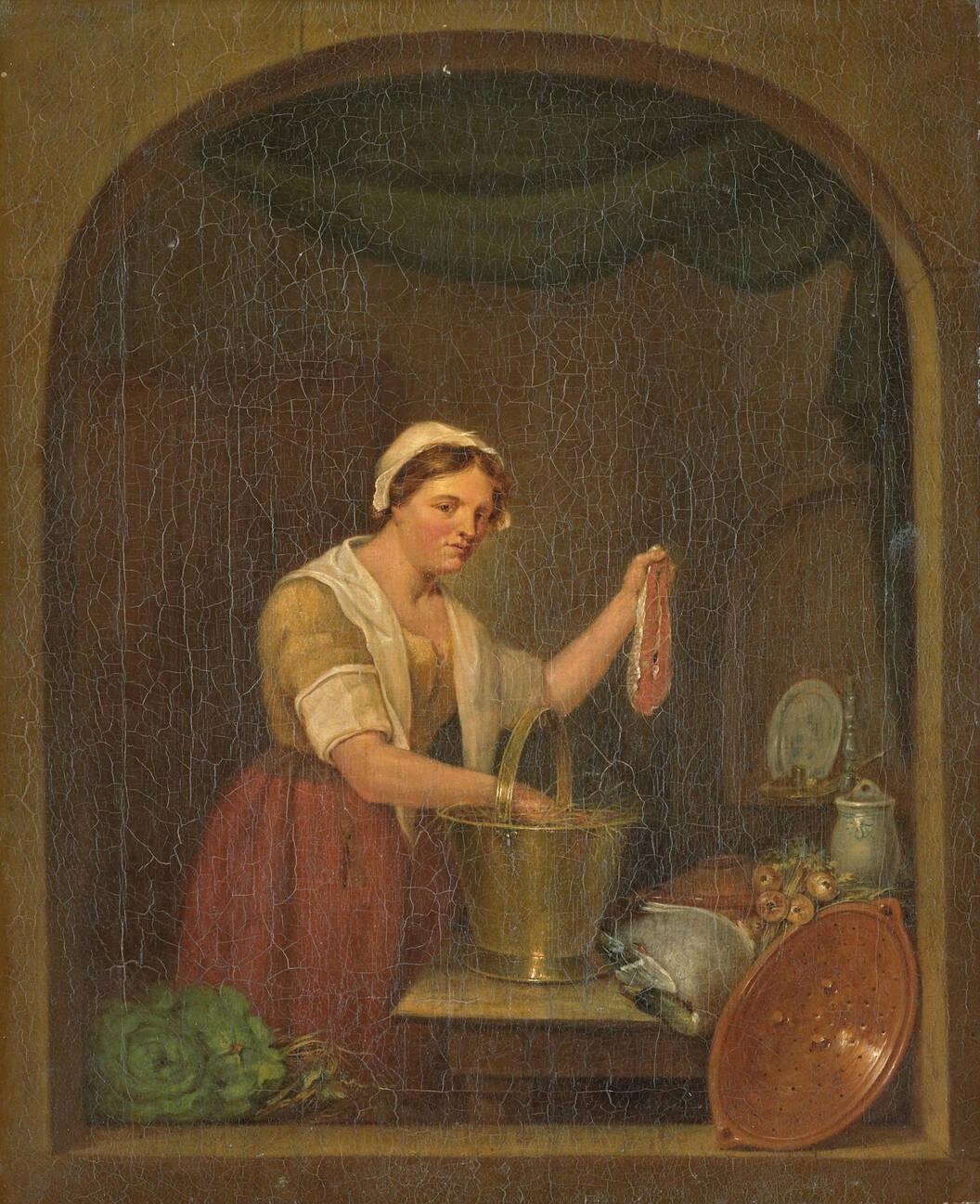
Recipes from the Old Kitchen Maid
In the heart of the 18th century, when the Netherlands boasted of its prosperous bourgeoisie, Utrecht publisher Robartus Oudemeijer came up with something groundbreaking: a cookbook specifically for kitchen maids. With the publication of the 'Nieuwe Welervarene Utrechtse Keukenmeid' in 1769 and its predecessor 'De Schrander Stichtsche Keuken-meid' in 1754, he opened up a culinary treasure for a new target group. Previously, cookbooks were the domain of professional cooks in noble courts, but these cookbooks brought sophisticated cuisine to the homes of the well-to-do bourgeoisie.
These 'kitchen maid cookbooks' not only provided practical recipes - about 500 in the later book - but also became part of the Dutch culinary heritage. Some of them, such as the oldest known recipe for Dutch gingerbread, are still cherished today.
It was a period when kitchen maids, who had previously depended on oral transmission and improvisation, now had their own manual to govern their kitchens. These books symbolised a cultural shift and provided the kitchen maids of the well-to-do with the means to prepare dishes previously reserved for the nobility. The influence of French cooking, as seen in 'Le Cuisinier Francois', seeped into these recipes, although the language barrier sometimes made for charming spelling variations. This was a time when Dutch cuisine developed and enriched with influences from across the borders, recorded for future generations in the form of these special cookbooks.
Any feedback for this story?