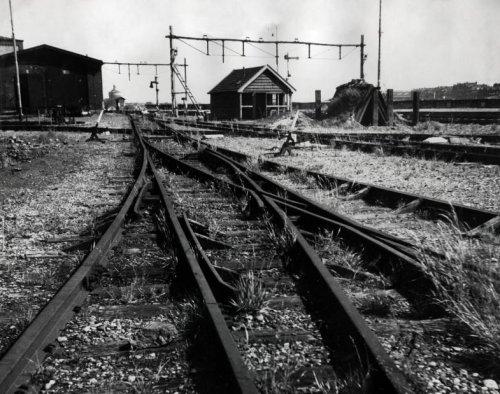
The Dutch railways during the war
During the dark days of World War II, the Dutch Railways (NS) played a dual role of unprecedented scale and complexity. On the one hand, there was the dark reality of their cooperation in the transport of Jews to extermination camps, an act for which the NS offered financial compensation to survivors and their relatives decades later, in 2019. This gesture acknowledged the terrible mistakes of the past, but could of course never compensate for the suffering that had been inflicted.
On the other hand, the NS was also known for the heroic Railway Strike in September 1944, which effectively thwarted the German occupying forces. This strike was a turning point, with railway workers walking off the job en masse, disrupting German defenses and contributing to the acceleration of the liberation of the Netherlands. This moment of resistance is often celebrated as one of the most significant contributions of the Dutch civilian population to the Allied war effort.
These contradictions in the role of the NS during the war raise questions about morality and survival in times of conflict. How could the same company that performed such undeniable heroic deeds also be involved in atrocities? The answer lies partly in the circumstances of the war, in which the NS was pressured by the German occupiers and regulations imposed by the Dutch government prior to the war, which required companies to remain operational even under enemy occupation.
Near Utrecht Central Station, we find the monument to 'fallen railway personnel'. This memorial was erected to honor all railway workers who died during the occupation as a result of acts of war.
Any feedback for this story?