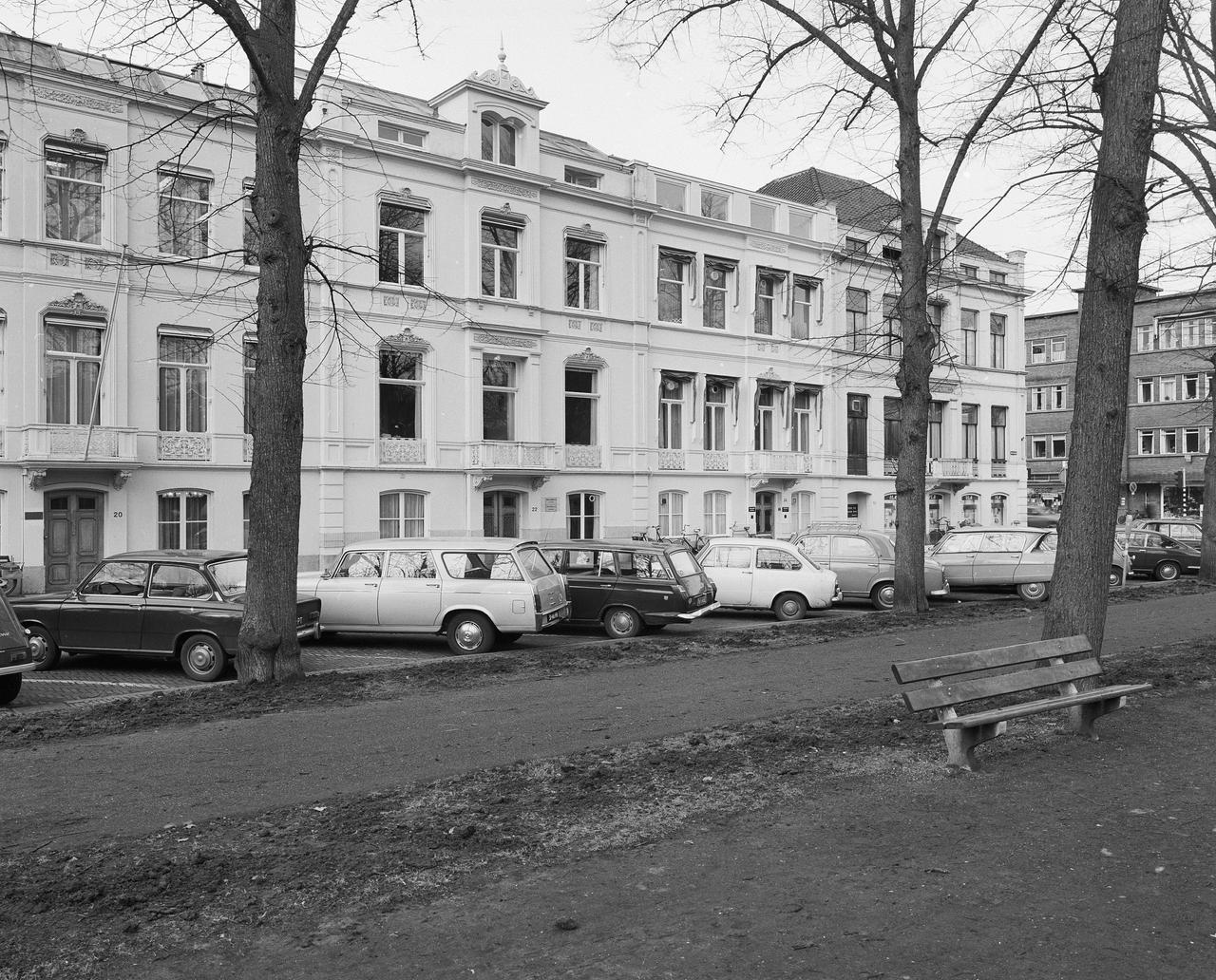
The Maliebaan
Do you know where the name Maliebaan actually comes from? It refers to "malie," a ball game popular among wealthy gentlemen in the 17th century, played on long, specially designed lanes. So yes, you are essentially standing on what was once Utrecht's fanciest sports field.
Fast forward to the Second World War, and this graceful avenue had earned a very different reputation. Locals nicknamed it "Unter den Linden," after the famous boulevard in Berlin, because the street had become the beating heart of the Nazi movement in the Netherlands. The NSB, led by Anton Mussert, was headquartered at number 35, where he regularly addressed crowds from the balcony. The Sicherheitspolizei, the Sicherheitsdienst, and the Wehrmacht also made themselves at home here, turning the Maliebaan into a center of occupation and fear.
Yet just a few doors down, the resistance was quietly at work. At number 71, illegal newspapers were printed and Jewish people were hidden. At number 72bis, Marie-Anne Tellegen ran Utrecht's resistance network under the alias "Doctor Max," while Nazi officers searched her neighborhood looking for a man named Max, never once suspecting the woman in front of them. History has a very sharp sense of irony.
Any feedback for this story?