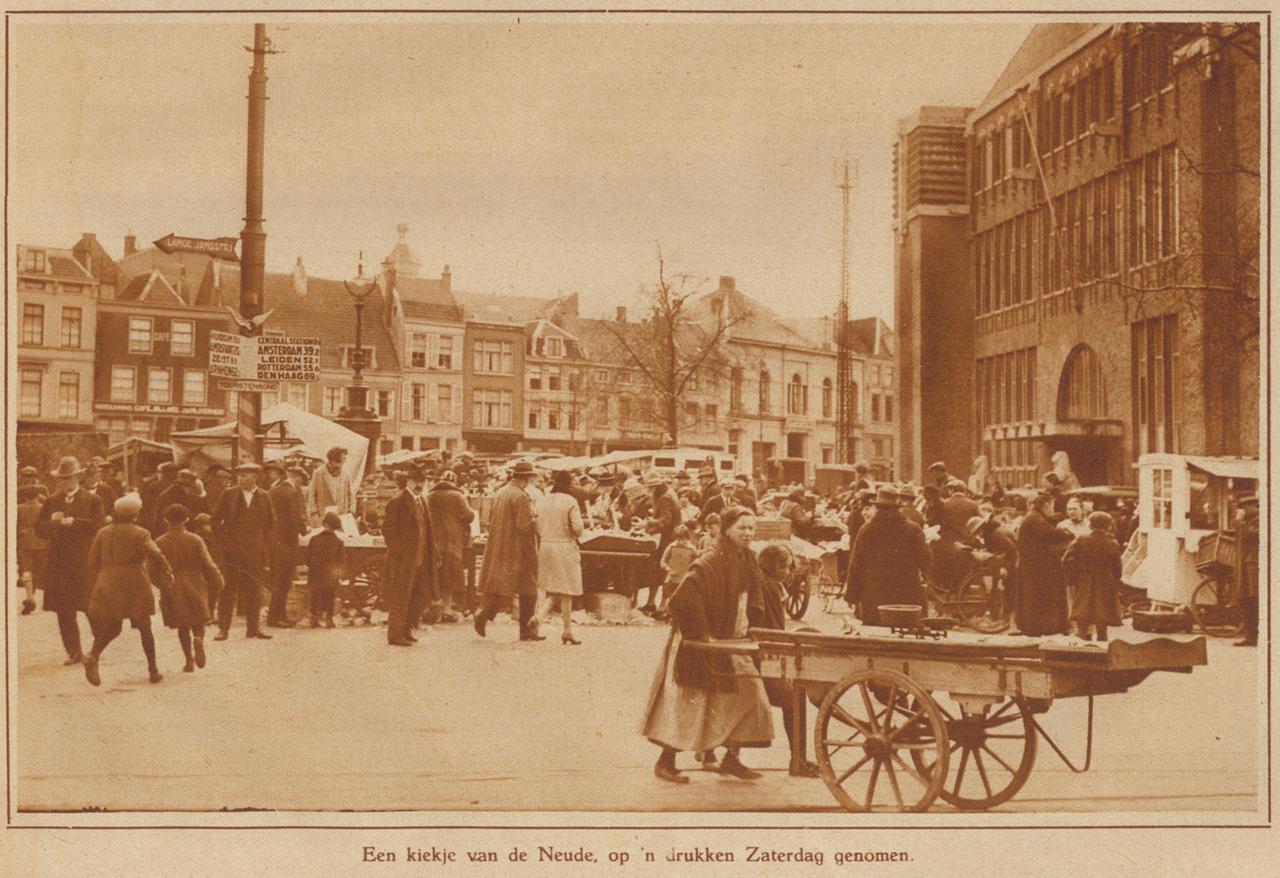
The Neude
The ground beneath your feet has been hiding secrets for centuries. The name Neude comes from the Old Dutch "hnodi," meaning marshy lowland, because that is exactly what this was. The Rhine used to flow right through here. From the 13th century onward, residents piled up earth and city waste, meter by meter, until solid ground finally appeared beneath Utrecht's feet.
In 1441, this square became a tournament arena. More than 300 cartloads of sand were hauled in from the nearby Janskerkhof so that mounted knights could joust without sinking into the mud. Then in 1465, the city paved it properly for the first time, using cobblestones quarried from the Utrechtse Heuvelrug.
After the tournaments came the executions. Murderers hanged. Witches and heretics burned. Fraudsters were boiled alive in oil. This square witnessed all of it until the late 17th century.
In 2024, during renovations, archaeologists dug up a massive public well built in 1529 on the orders of Emperor Charles V, with an excavation pit over 7.5 meters wide. They also found 14th-century pilgrim badges from Cologne, and beautifully preserved leather and textiles.
Somehow a square with that résumé ended up lined with café terraces.
Any feedback for this story?