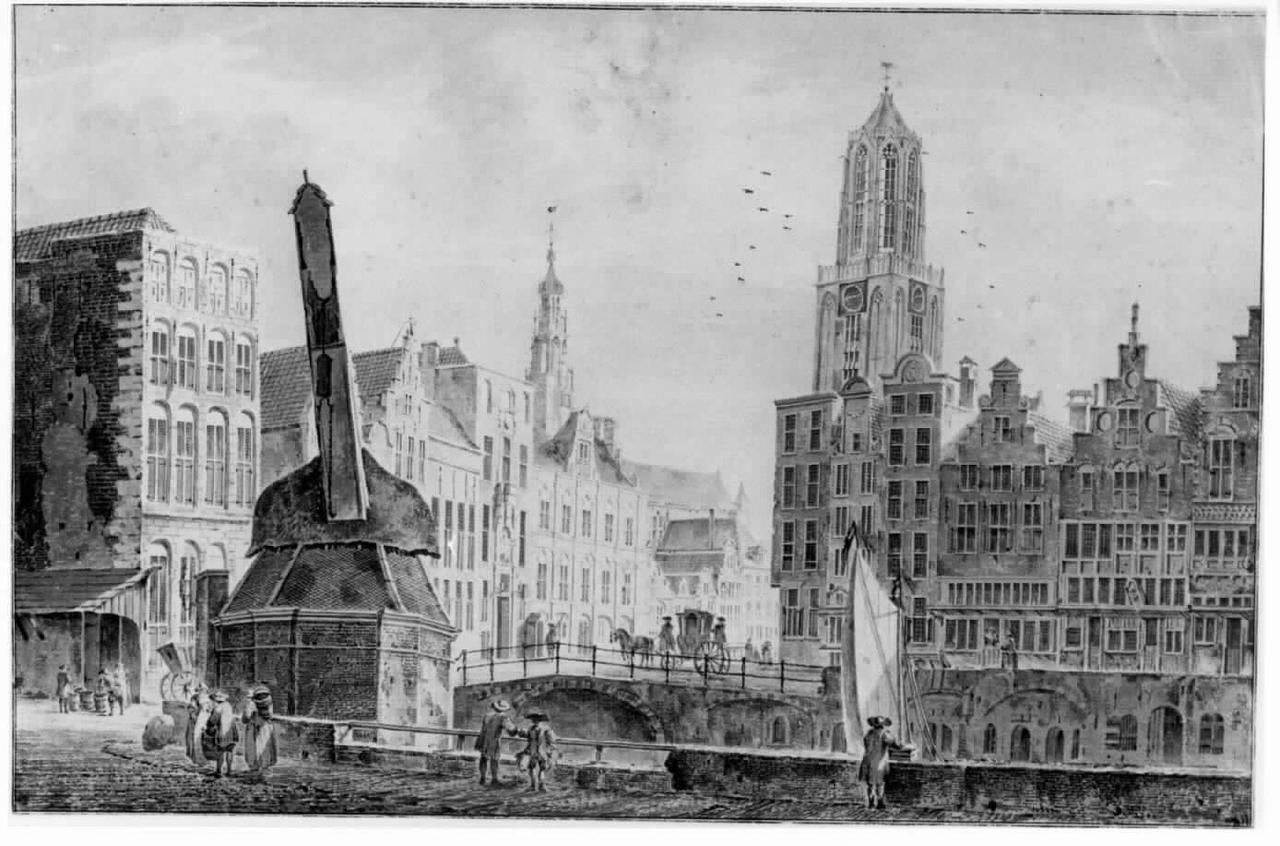
The origins of the Oudegracht and its wharves
Walking along the picturesque Oudegracht in Utrecht is like a journey through time. It is hard to imagine that these historic quays and wharf cellars are not the result of a single grand construction project, but rather of a multitude of private initiatives. This unique cityscape has its origins in the late 12th century, when a progressive merchant decided to move his merchandise directly from the quay to his cellar, a more efficient alternative than transporting it to the higher banks.
This ingenious idea of cellar tunnels was quickly adopted and evolved into wharf cellars with barrel vaults that spanned the width of a plot. These cellars were both storage rooms under the street and domestic cellars. The concept of wharf cellars gained popularity and peaked in the fourteenth century. By the sixteenth century, the yards and wharf cellars along Oudegracht formed a nearly two-kilometre-long city harbour.
For centuries, Oudegracht was the beating heart of Utrecht, a lively trade route with ships, cranes, workers and market vendors. Everything from wine and textiles to fish, grain, vegetables, fruit, wood, peat and livestock were traded and stored here. However, with the arrival of larger ships and car traffic in the 20th century, the Oudegracht's role as a trading port gradually declined.
Any feedback for this story?