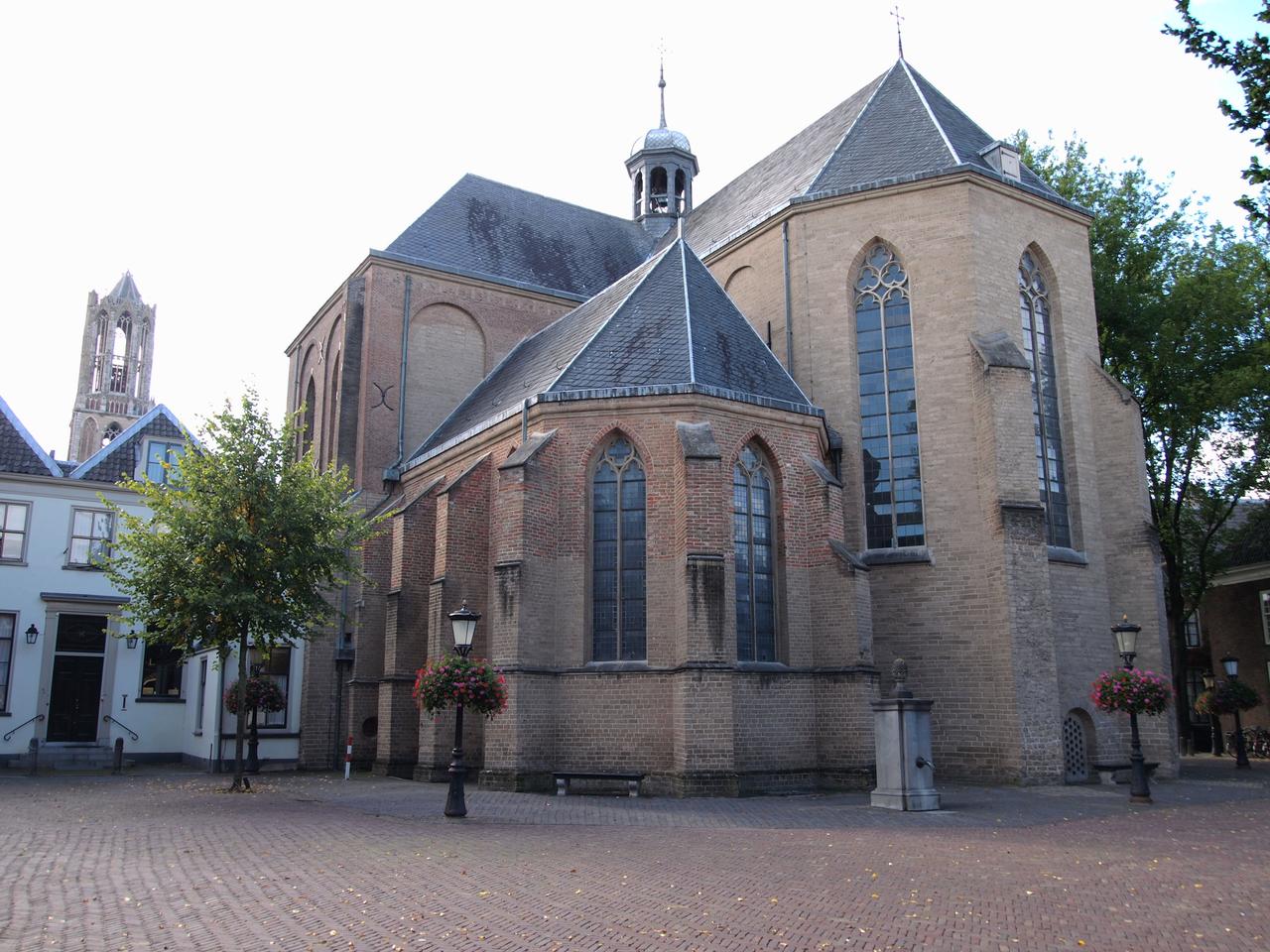
The Pieterskerk
Pieterskerk, or St. Peter's Church, stands as a historical beacon in Utrecht, with origins dating back to 1048. Inaugurated by the Bishop of Utrecht, its construction began almost a decade prior. Renowned for its German-Romanesque architecture, it mirrors the style of St. John's Church or Janskerk, and is one of the oldest examples of such design in the Netherlands.
Dedicated to the apostle Peter, Pieterskerk was initially a collegiate church, serving Roman Catholic priests rather than the general populace. However, this exclusive use evolved over time.
The Reformation, a period of religious turmoil, marked a pivotal chapter in the church's history. In the wake of Protestant reforms around 1580, the church faced potential demolition, a plan thwarted by families with crypts in the church, leading to the government's decision to preserve the structure.
For a period, Pieterskerk was left unused, its silence occasionally broken when it served as an army barracks and later, a university theatre. Today, it has been reinvigorated with spiritual life, serving as a Walloon Church, a sanctuary for French-speaking Protestants who sought refuge from religious persecution during The Reformation. Its walls, steeped in history, continue to echo with the sounds of worship, a testament to its resilience and enduring significance.
Any feedback for this story?