The Second World War
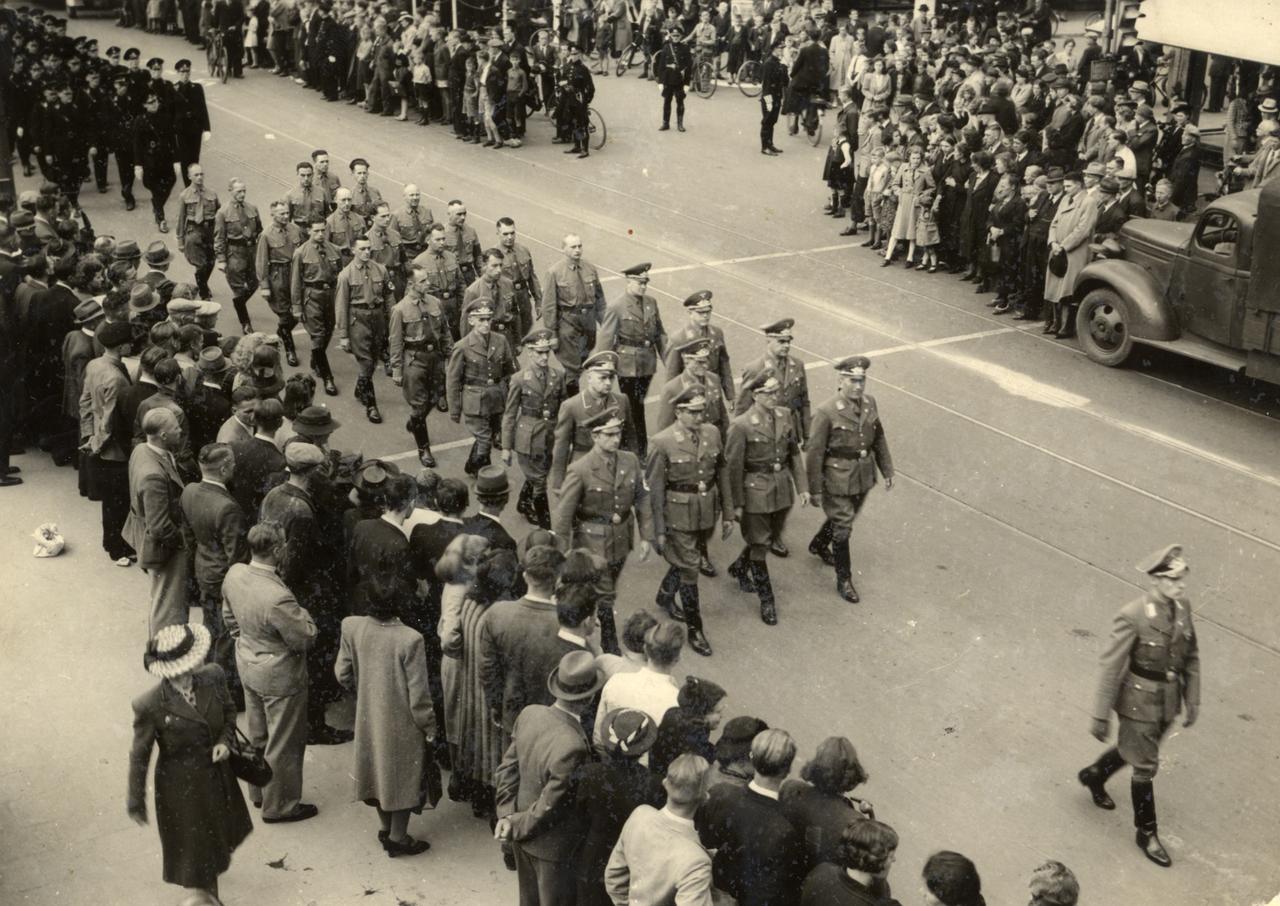
Every year on 4 May, Utrecht, like the rest of the Netherlands, commemorates the victims of World War II. Ceremonies take place at the cemetery on Prinsessenlaan and at the Freedom Monument on Domplein. These commemorations are especially fraught in Utrecht because of the unjustified image of a "brown" past. This image stems from the presence of the National Socialist Movement (NSB) and their headquarters in the city, although the NSB did not score exceptionally well in pre-war elections in Utrecht and there was no significant collaboration during the war.
When war broke out in May 1940, Utrecht escaped the devastation that struck Rotterdam. Despite the German occupation, the city council led by mayor Ter Pelkwijk tried to run the city as well as possible. The local metal industry flourished even through the war economy. For Utrecht's Jewish residents, however, anti-Semitic measures began early in the occupation. The rest of the population did not experience the changes until 1942 with a new city administration and the Arbeitseinsatz.
Resistance to the occupiers gradually grew. In Utrecht, 'Kindjeshaven' played an important role by providing shelter for Jewish children. The situation worsened in autumn 1944, especially after the failed Allied operation 'Market Garden' and the railway strike declared by the Dutch government in exile. These events led to the infamous hunger winter, which also claimed many victims in Utrecht.
In May 1945, Utrecht was liberated by Canadian troops who entered the city via Biltstraat. With the return of mayor Ter Pelkwijk, the city slowly began to return to normality.
Any feedback for this story?