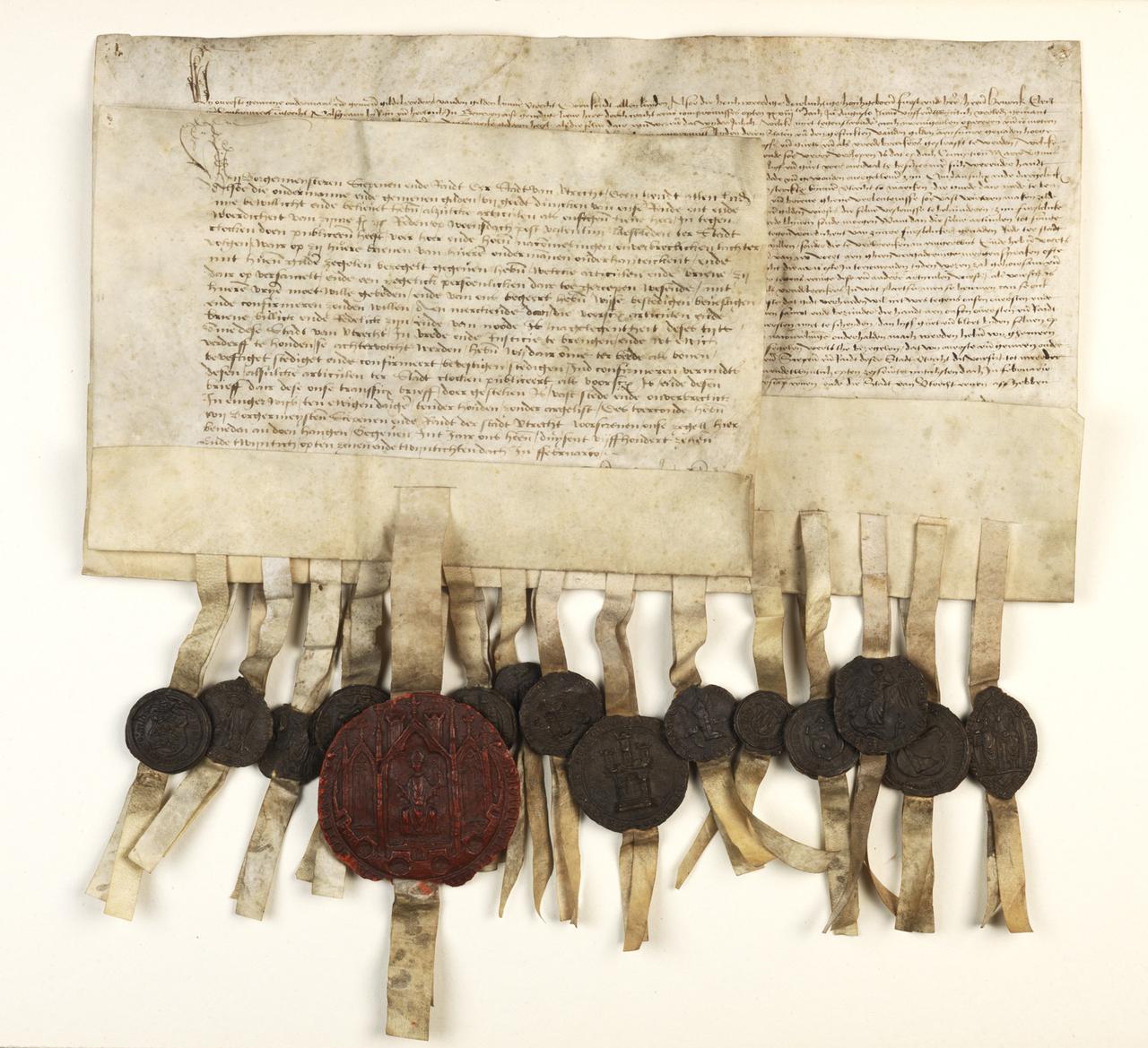
The trade unions of the Middle Ages: Guilds
"In the Middle Ages, artisans in Utrecht were organized into guilds. This phenomenon occurred throughout the Netherlands and can be compared somewhere to the trade unions of today. It was a special phenomenon that workmen united in guilds. Only members of a guild were allowed to practice their trade within the city. There were several guilds, including the bakers, tanners, shoemakers, blacksmiths, bag carriers and many others. In 1341, there were as many as 21 guilds in Utrecht. Guild members made agreements on working hours, prices, quality and training of apprentices among themselves.
The guilds' influence extended beyond their profession. They also had a role in the city government of Utrecht. During the peasant revolt in 1273, the guilds took power from the rich merchants and city nobility, the patricians. These were divided among themselves into the parties of the Fresingen and Lichtenbergers and tried to get the guilds on their side in order to seize power. This gave the guilds an important role in city government and the first Utrecht guild letter was drafted in 1304.
However, not everyone was happy with the power of the guilds. This sometimes led to bans on guilds. Resistance to the power of the guilds grew and in 1526 nobles and canons intervened. They managed to subdue the guilds, and the bishop threatened to build a coercive castle to force obedience from the guilds. This threat proved effective, but the guilds refused written confirmation. The bishop did not trust this and asked for help from Emperor Charles V, who went a step further and demanded the administration of Utrecht, with which the bishop lost control."
Any feedback for this story?