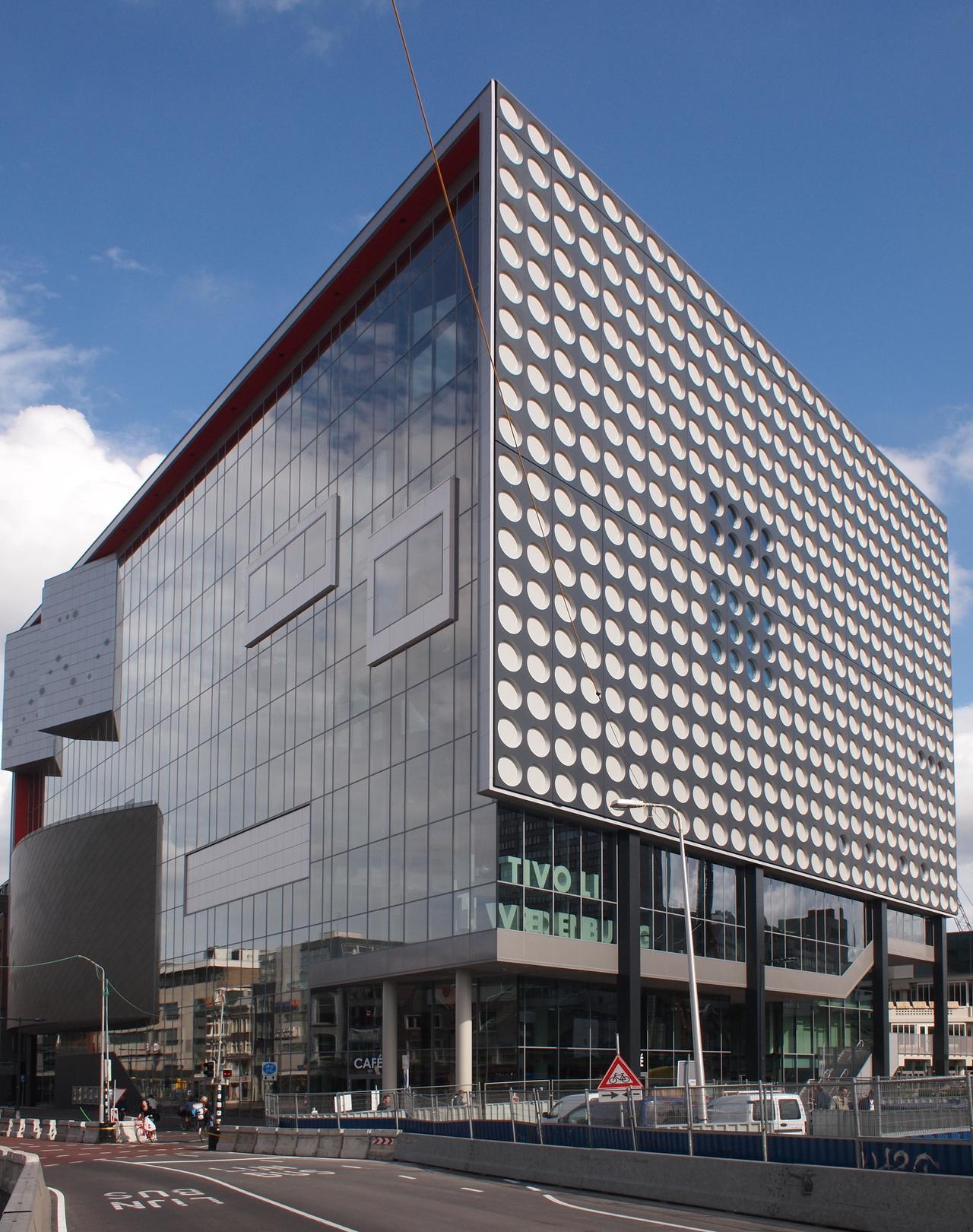
Tivoli
TivoliVredenburg in Utrecht, now a renowned cultural institution, has a fascinating history. It all started in 1823 with the opening of a public garden on Kruisstraat, called Tivoli, where open-air concerts were held. In 1871, the Tivoli concert hall opened within this garden, but after eighty years, the building had fallen into disrepair. It was demolished in 1955, after which a temporary wooden concert hall appeared on the Lepelenburg, uniquely placed among and around the trees.
Meanwhile, there was a plan for a new concert hall on Vredenburg, designed by Herman Hertzberger. In 1977, the first pile was struck for this new building. After moving to Muziekcentrum Vredenburg, the old Tivoli concert hall was squatted. Under the name 'Komité Tivoli Tijdelijk', pop concerts were organised there. Unfortunately, this led to a tragic end when the building burned down completely in 1979.
But Tivoli did not give up. It found a new home in the former N.V. House on Oudegracht. After a tumultuous start and resistance from the municipality, it became an official and legal pop venue from 1982. Tivoli on Oudegracht became home to concerts and dance nights, where legendary artists such as Prince, Red Hot Chili Peppers, and Nirvana performed.
The name TivoliVredenburg is a tribute to this rich history, a combination of the old Tivoli and the modern Vredenburg. The current Tivoli was opened in 2014 and designed by Wiel Arets. The building reflects modernity with its geometric shapes and large glass surfaces. It offers a wide range of musical genres and cultural events, from rock and pop to classical music. With facilities such as Het Gegeven Paard, a restaurant with a focus on local and seasonal ingredients, TivoliVredenburg is more than a concert hall - it is a living monument of music history and cultural evolution in Utrecht.
Any feedback for this story?