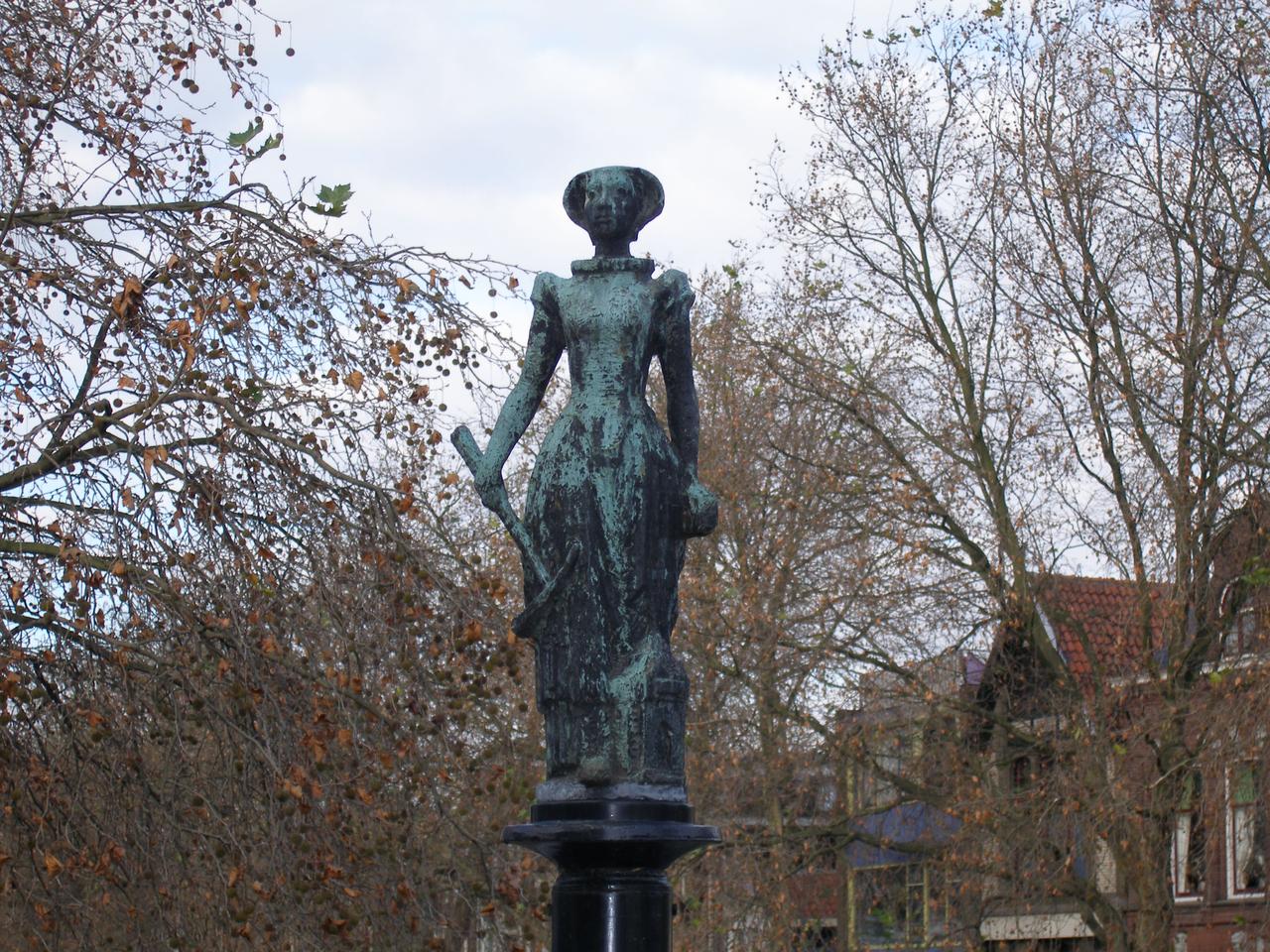
Trijn van Leemput
Trijn van Leemput, born in 1530 in Vreeswijk, played a crucial role in Utrecht's history during the Eighty Years' War against the Spaniards. Although not widely known outside Utrecht, she is still revered in the city as a heroine of resistance.
Trijn gained particular fame for her leading role in the siege of Vredenburg in 1577. After a prolonged siege of the city by the Spaniards, she gathered a group of women and led them in the demolition of Vredenburg castle, an act that was crucial in reclaiming the city and heralding the end of Spanish rule.
The siege of Vredenburg, a key moment in the battle, began in 1576. The city of Utrecht was strategically important as a link between the northern and southern Netherlands. The final victory, almost a year later, was made possible in part by the courageous action of Trijn and her group.
After the Pacification of Ghent in 1576, in which the Dutch provinces agreed to fight together against the Spaniards, Utrecht's position quickly strengthened. Trijn's leadership during the siege of Vredenburg made her a legendary figure. She started the demolition of the castle by prying loose the first stones herself, after which many Utrechters followed her example.
Trijn, often depicted with a blue apron and banner, can still be seen on the Zandbrug in Utrecht. Although there was some doubt about the historical accuracy of her story, archival research confirmed the truth. She lived with her husband in 'Die Vergulde Craen' at Oudegracht number 17 and was buried in the Dom Church after her death in 1607.
A symbol of courage and perseverance, Trijn van Leemput left an indelible impression on the history of Utrecht and the Dutch struggle for independence. Her legacy lives on in the city.
Any feedback for this story?