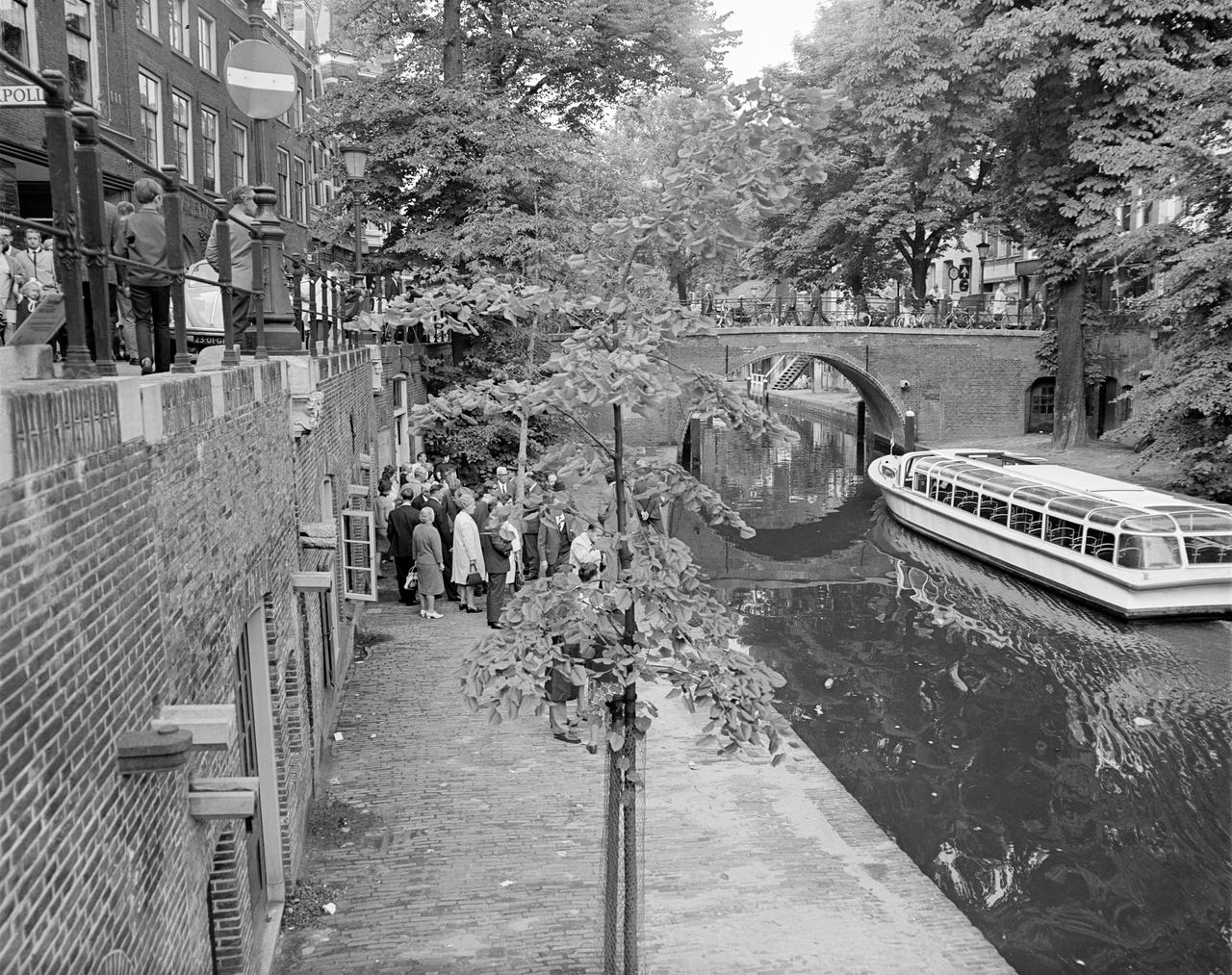
Utrecht canals
The history of Utrecht's canals is rich and fascinating, with the Oudegracht at its centre. This canal, dug in the 12th century, played a crucial role in the city's trade. Traders mainly used the Oudegracht to bring in goods, but bringing these items ashore was a challenge. Initially, they dragged the goods from the quay up the bank, only to bring them back down to the house cellars of the canal houses. These cellars functioned as storage rooms.
A clever innovation took place at the end of the 12th century, when traders started building tunnels from the quay directly to the house cellars. This facilitated the transport of goods as they could now be moved at ground level. As the need for more storage space increased, these tunnels were made wider and wider. Thus, they gradually transformed into what are now known as wharf cellars.
These wharf cellars, as we know them today, are a unique feature of Utrecht's canals. Their development was made possible by the changed water regime along the Oudegracht. From 1150, the current number of 732 wharf cellars came into being, mainly through private initiatives. These cellars are not only historically significant, but are still a vital part of the urban infrastructure today, serving as warehouses, shops and even catering establishments.
This fascinating development of Utrecht's canals and wharf cellars is a perfect example of how the city adapted to the needs of its inhabitants and traders over the centuries. It is a unique element that contributes to Utrecht's charm and historical character.
Any feedback for this story?