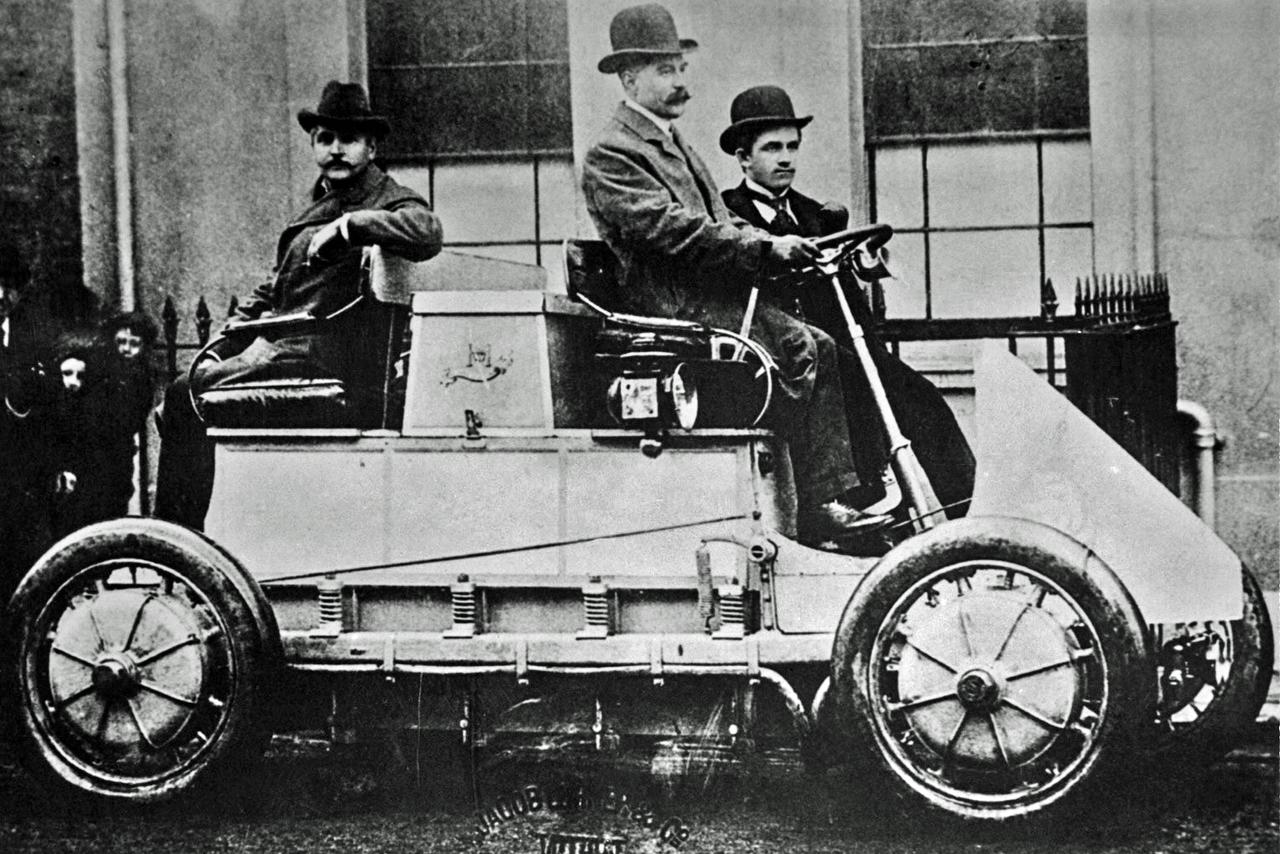
Lohner-Porsche
The technology that drove NASA's moon buggies was born here. You're standing near where Jacob Lohner & Co. once operated, a Viennese carriage maker that changed automotive history. In 1900, 24 year old Ferdinand Porsche developed the world's first hybrid car for this company. He called it the Semper Vivus, Latin for "always alive."
The innovation was radical. Porsche put electric motors directly in the wheel hubs, eliminating the need for a transmission entirely. No gears, no differential, just motors spinning the wheels. For the hybrid version, two small gasoline engines powered generators that fed electricity to those motors. Portable charging, decades before anyone called it that.
It worked. Around 300 vehicles were built. The Viennese fire station bought 40. Others became taxis. The car could hit 32 kilometers per hour, and all four wheels could brake simultaneously, both milestones in 1900.
But the wheel hub motor proved too complex for mass production. The idea faded from passenger cars. Then, 70 years later, NASA engineers designing the lunar rover for the Apollo missions studied Porsche's design. Those moon buggies that crossed the lunar surface used electric wheel hub motors, the same principle Porsche pioneered blocks from where you're standing.
Any feedback for this story?