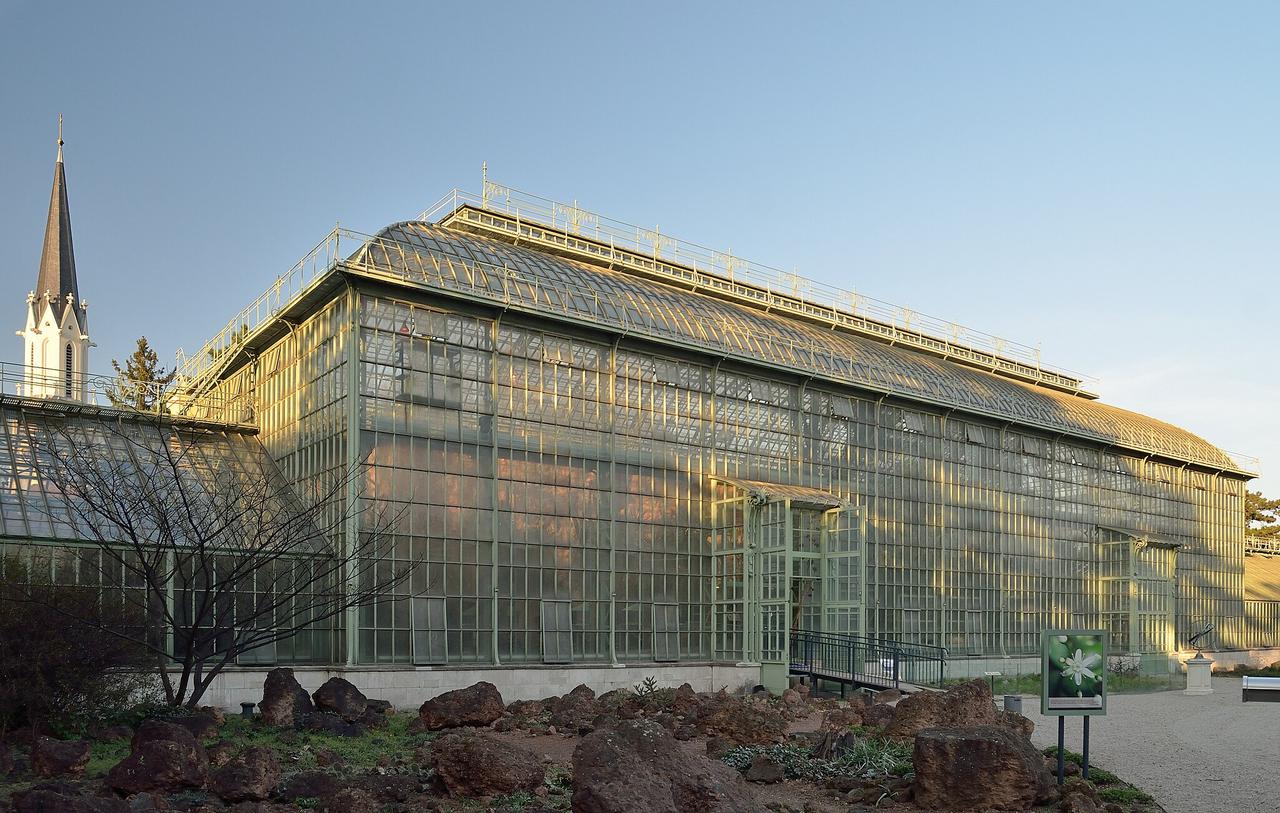
Wüstenhaus
The green iron and glass structure in front of you was built in 1904 to house an emperor's plant obsession. Franz Joseph needed proper winter shelter for his Australian specimens, exotic plants from what Europeans called New Holland. The Imperial Court had bought the entire collection in 1848 from diplomat Charles von Hügel, who spent 1833 to 1834 collecting seeds in Australia after a broken engagement sent him on a six year journey around the world.
Architect Alfons Custodis designed this Art Nouveau greenhouse with a north facing brick wall and south facing glass panels, perfect for the delicate Australian plants. The building gets its name from a sundial standing in the gardens to the south.
Then February 1945 arrived. Bombs hit Schönbrunn Palace. The massive Palmenhaus greenhouse beside this building lost nearly all its glass. But here, most windows survived. The glass panels stood almost parallel to the shockwave. Workers quickly moved plants from the shattered Palmenhaus to safety here.
The building became Austria's first butterfly house in 1990. Rust damage forced it to close in 1998. After renovation from 2000 to 2003, it reopened as the Wüstenhaus. Cacti and blacktail rattlesnakes now live where eucalyptus once wintered. An imperial greenhouse built for Australian flora now shelters American desert life.
Any feedback for this story?