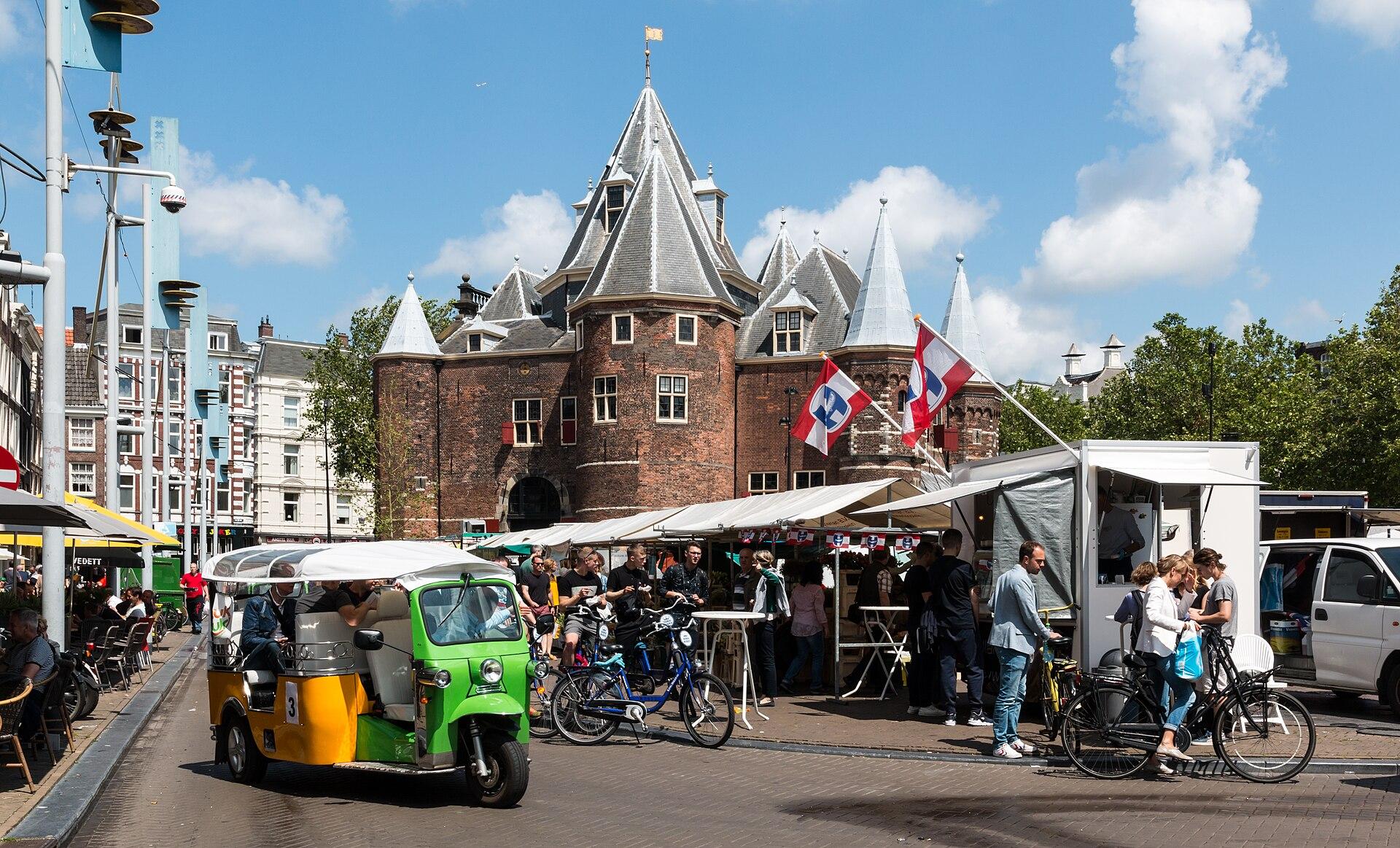
Trading went on across this square for centuries, and along its edges the money earned often went again the same afternoon. Many workers were paid their wages inside the drinking house itself, which goes some way towards explaining how high consumption could climb. Around 1825 the Netherlands drank close to ten litres of pure alcohol per head per year, a level never reached again since.
Until 1881 anyone at all could sell spirits. The country held an estimated forty-five thousand places where that happened, from respectable pub to stille knip, the local name for an illegal tap. The Drink Act of that year turned it into a licensing system, with a ceiling per municipality based on population.
Meanwhile the movement against it grew. Members of the Society for the Abolition of Strong Drink wore a blue button on the lapel, and the Amsterdam membership lists hold schoolmistresses, metalworkers, sailors and a striking number of people under eighteen. Their slogan ran that thinking workers do not drink and drinking workers do not think.
In the nineteen thirties a campaign even ran for local votes on a drink ban, and those votes duly happened while the ban itself never arrived.
From the we head into the Nieuwe Hoogstraat and hold that line across the canals, until just before the Dam the street takes the name Damstraat. A narrow alley then opens on your right.
Sources. Story: https://beta.archief.amsterdam/bronnen/blauwe-knoop and https://www.cbs.nl/nl-nl/achtergrond/2015/44/van-drinken-om-te-vergeten-naar-vergeten-om-te-drinken Photos: Dietmar Rabich, via Wikimedia Commons (CC BY-SA 4.0)