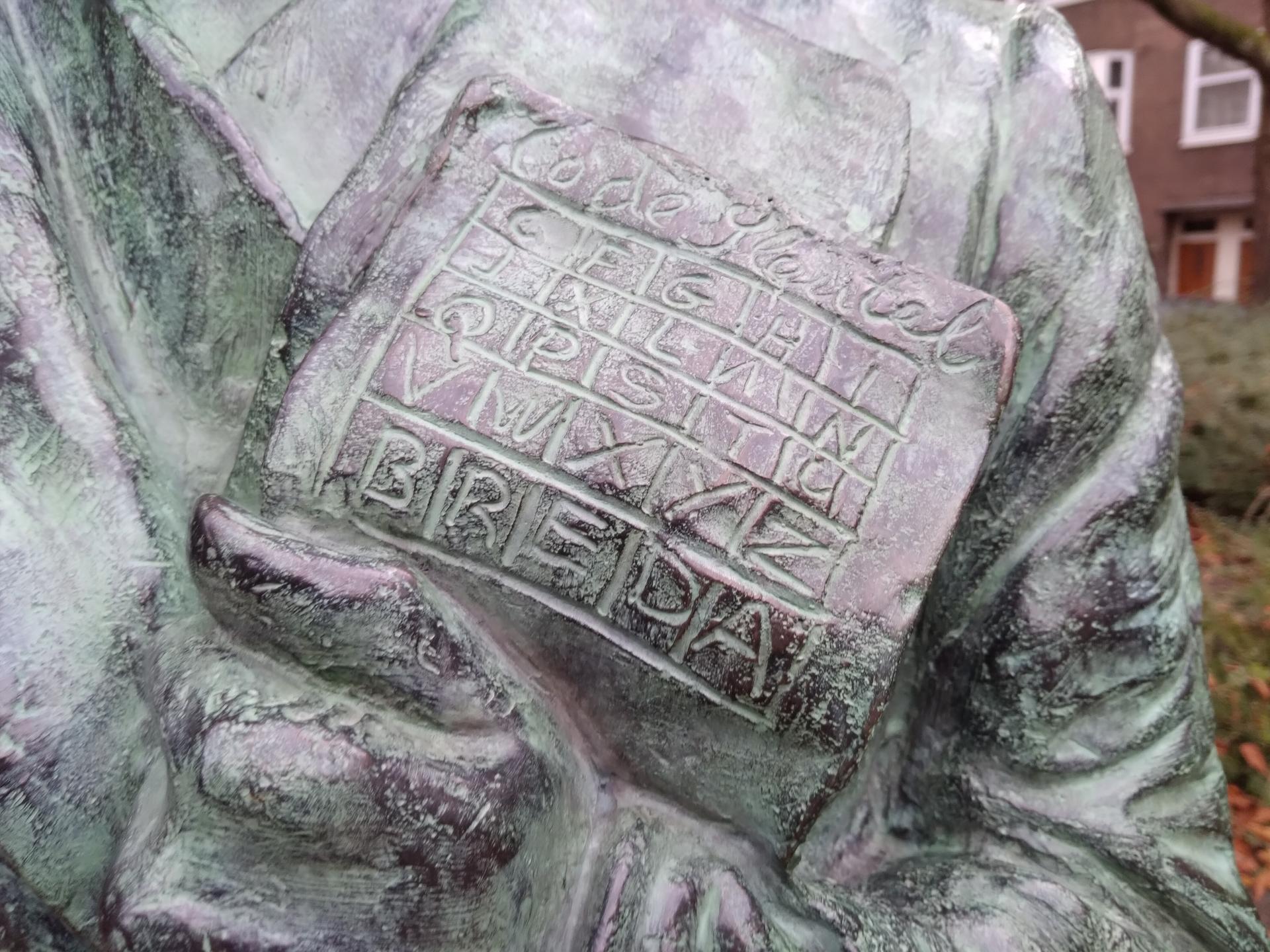
On the little square in the Antillenstraat you'll find a bronze woman, placed there in October 2021. She was made by the sculptor Fabio Pravisani and adopted by the children of the primary school just down the road. On either side of the pedestal are plaques covered in numbers. Those are the members of Groep 2000, and the woman is their leader, , who lived in the house across the way.
When in May 1940, Van Tongeren was working as a church social worker. She built a resistance group that found safe addresses, forged identity papers, medical care, and above all food coupons. She carried thousands of them at once in a specially sewn vest, so many that she looked like a pregnant woman. That's how she earned her nickname, the coupon queen.
From her father, a career army officer, she had learned how to work with codes. Everyone in the group was given a number instead of a name, and she herself was number 2000. So when the , the German security service, found the headquarters in 1945, the lists were right there, and they stayed unreadable.
Those codes kept their secret long after the war too. The group remained almost unknown for seventy years, until her nephew Paul found her memoirs and wrote a book about it in 2015. Of the roughly 4,500 people Groep 2000 helped into hiding, most of the names are still a mystery today, and he is searching for them even now.
Sources. Story: Verzetsmuseum Amsterdam; Stichting Jacoba van Tongeren; Paul van Tongeren, Jacoba van Tongeren en de onbekende verzetshelden van Groep 2000 (1940-1945), Aspekt publishers. Photos: Photo: Ceescamel, CC BY-SA 4.0, via Wikimedia Commons.