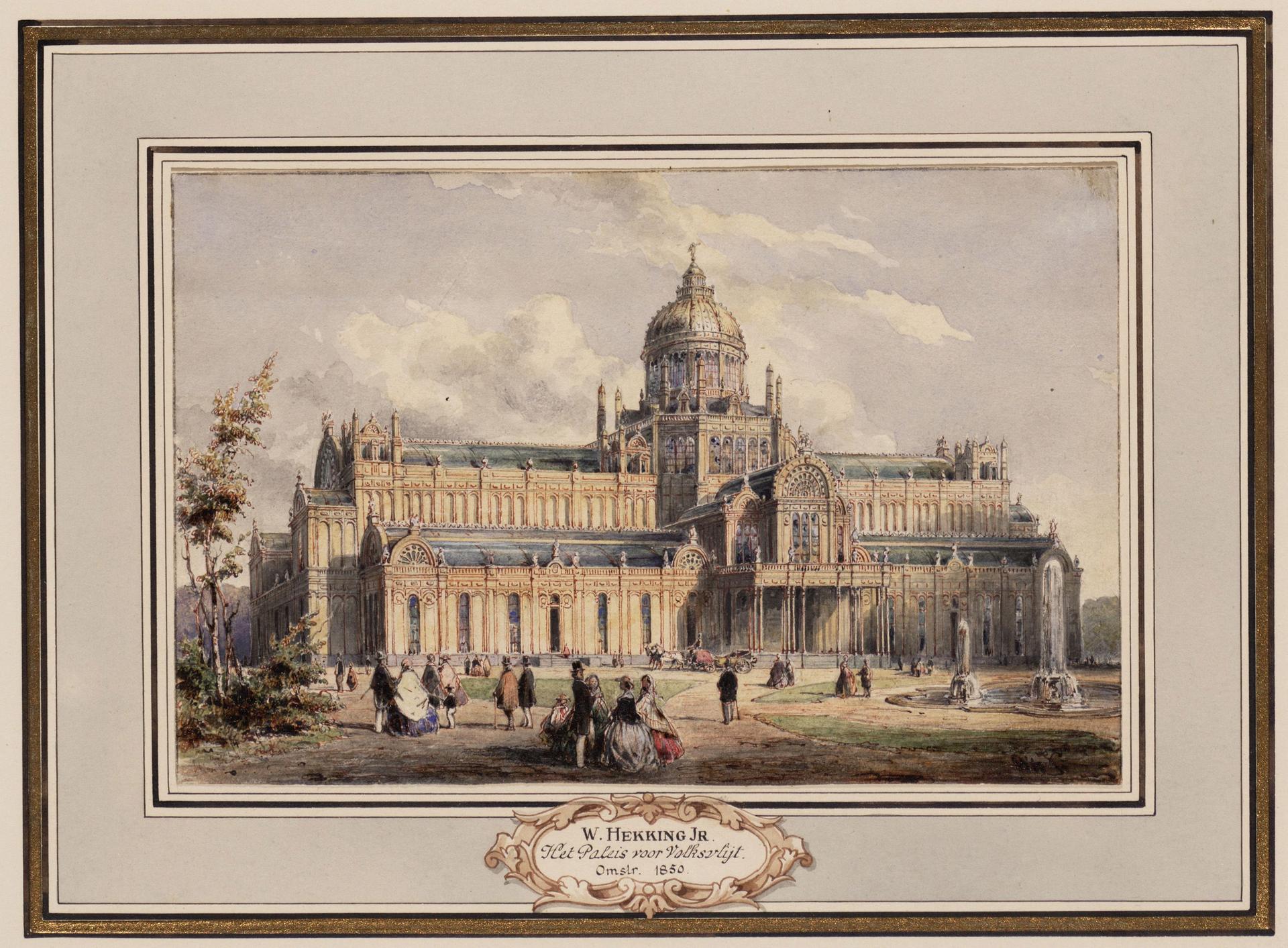
On the Frederiksplein stands the massive block of , the Dutch central bank. Until 1929 something very different stood here: a palace of glass and cast iron, one hundred and forty-five metres deep, with a dome rising fifty-five metres into the sky.
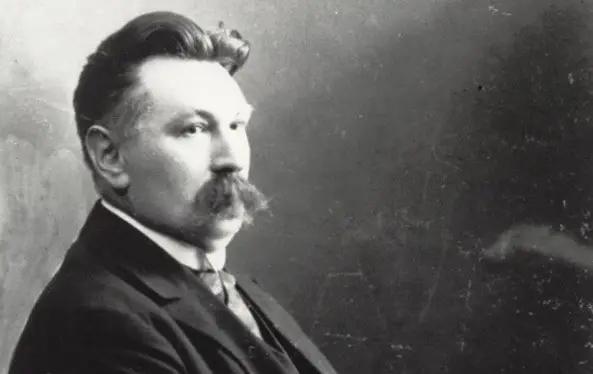
The Paleis voor Volksvlijt opened in 1864, modelled on the in London. Volksvlijt means the industry of ordinary people, and that was exactly the idea of its initiator , a physician and entrepreneur who wanted a place where art, trade and industry came together for everyone. He saw little of it himself, dying two years after it opened.
Inside it was a city of its own, with exhibitions, concerts, balls, international trade fairs and an arcade full of shops, cafes and galleries where the elite and the ordinary Amsterdammer stood side by side. The very first exhibition, back when the RAI was an association of bicycle manufacturers, was held here in 1895.
Without Sarphati the ideal thinned out and the palace became mostly a commercial centre, slowly falling into disrepair. In 1929 the rear was demolished, and on 17 April that year the main building burned down. The arcade held on until the 1960s.
Its London model met the same end, also by fire.
Sources. Story: Het Paleis voor Volksvlijt (historiek.net). RAI Amsterdam, history of its exhibition buildings (rai.nl). Photos: Amsterdam City Archives