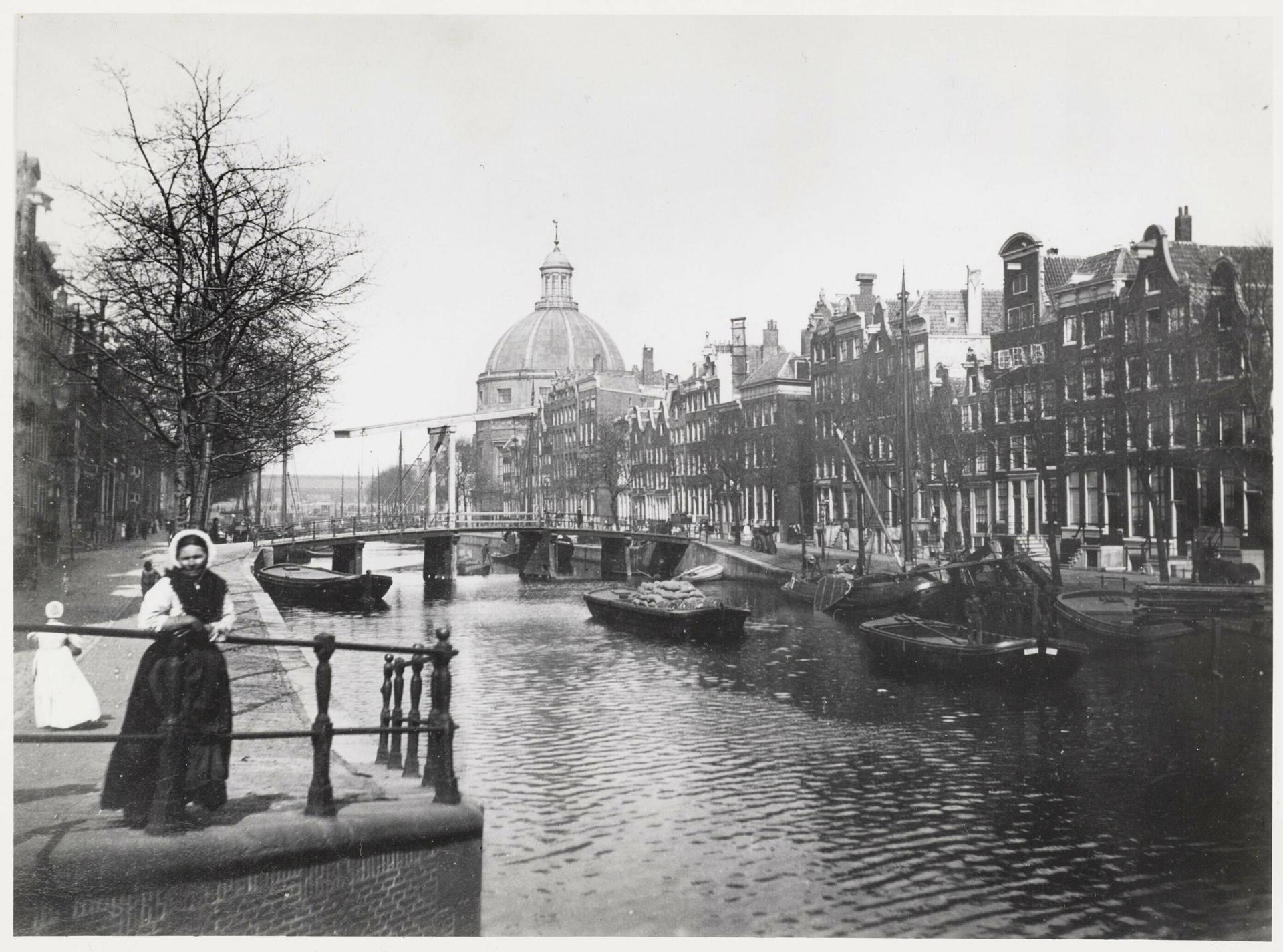
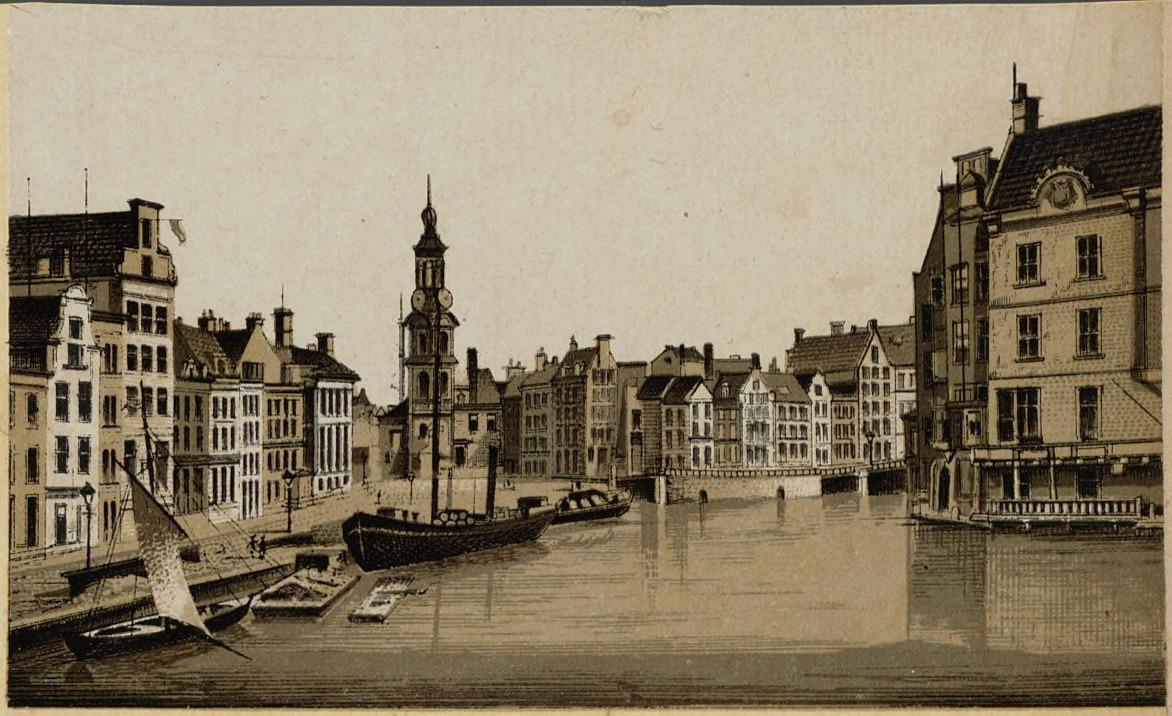
This tower is two buildings a century and a half apart, standing on top of each other. The square brick base was the Regulierspoort, one of the city gates set into the wall here around 1490, with the water in front of it as a moat. Anyone entering the city came past this spot.
What sits on top arrived after a fire. In 1618 the gate went up in flames and a single tower stayed standing. , the city architect who also designed the , crowned it with an octagonal spire and gave Amsterdam one of its most recognisable outlines.
The name comes from a single year. In French troops stood in the country, the mints at Dordrecht and Enkhuizen lay out of reach, and Amsterdam began striking its own coins in the guardhouse beside the tower. A year later it was over, and the tower has been called the Mint ever since.
The spire holds a by the , the bell founders who in the seventeenth century were the first to cast bells that were truly in tune. On Saturday afternoons the city carillonneur plays it live, out over the traffic.
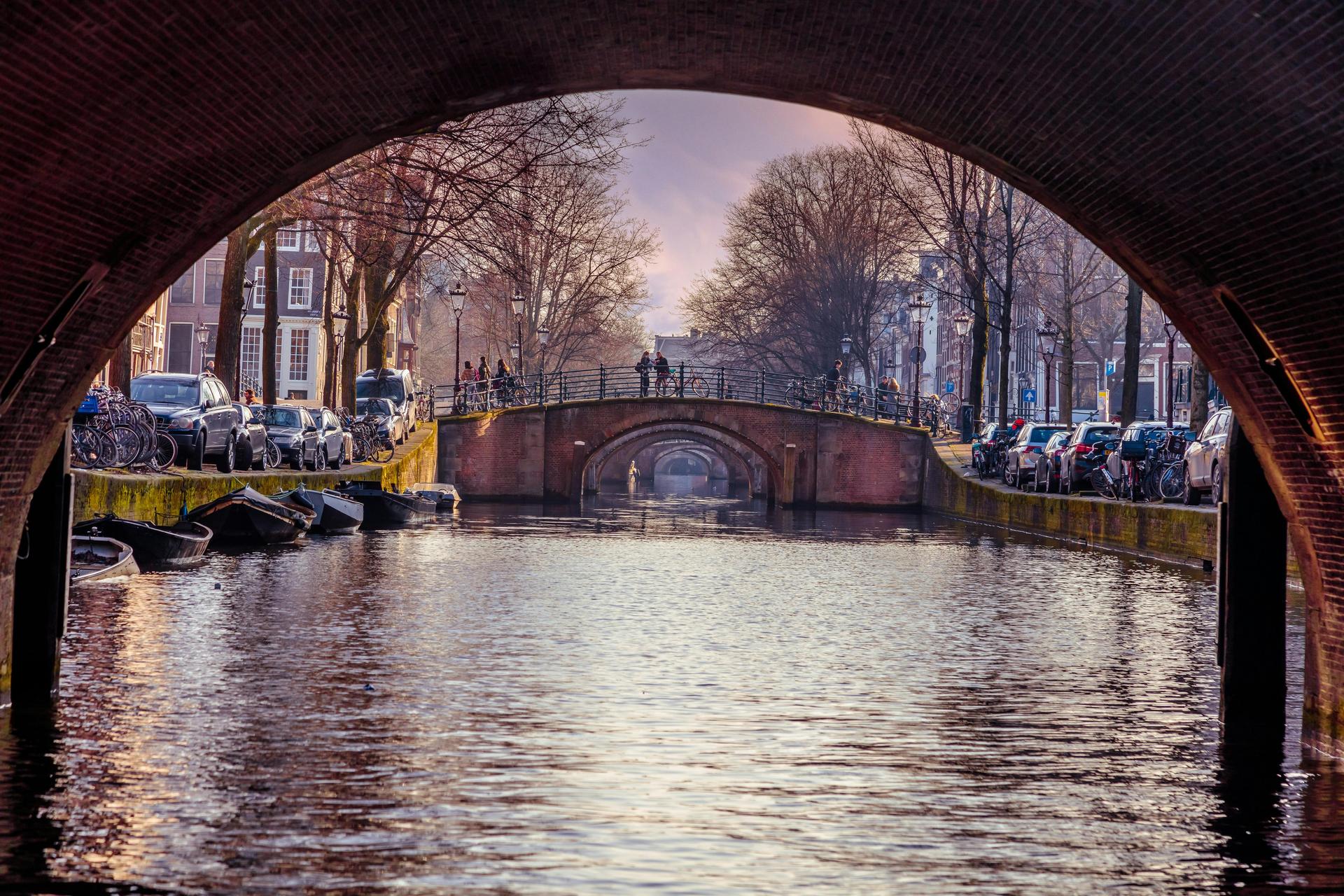
From the square we cross the bridge and follow the Kloveniersburgwal north along the water, to a wide building with a gateway in it.
Sources. Story: Stadsarchief Amsterdam and the Rijksmuseum on the Regulierspoort, the fire of 1618, the emergency mint of 1672 and the Hemony bells Photos: Stadsarchief Amsterdam