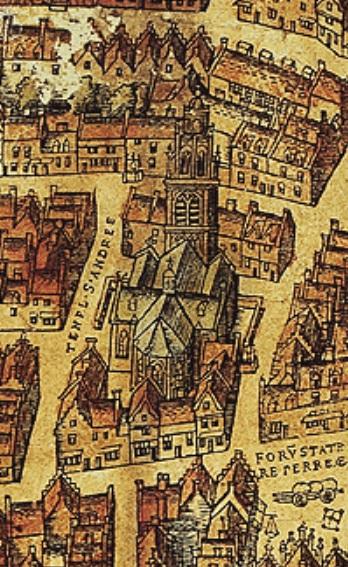
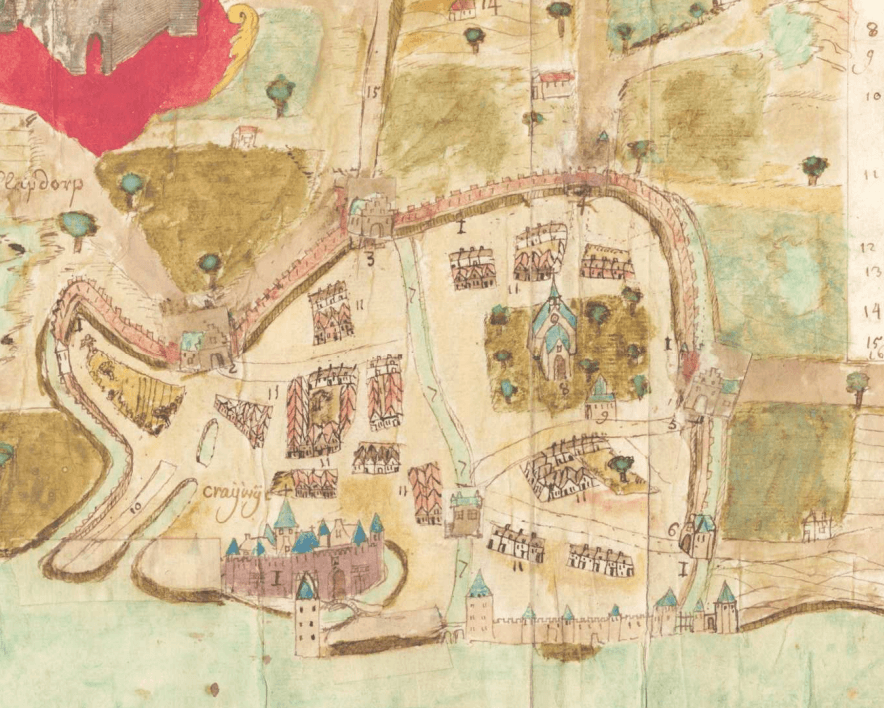
here at the beginning of the sixteenth century had a prior who had studied in Wittenberg, at Luther's university. Within a few years they were openly preaching his teachings, and in 1522 the authorities had every monk in the monastery arrested. The monastery was sealed off and, on the orders of Margaret of Austria, the governor who ruled these lands for the Habsburgs, torn down.
Three of the monks refused to renounce their faith. and were burned alive on the Grote Markt in Brussels on 1 July 1523, the first Protestant martyrs of Europe.
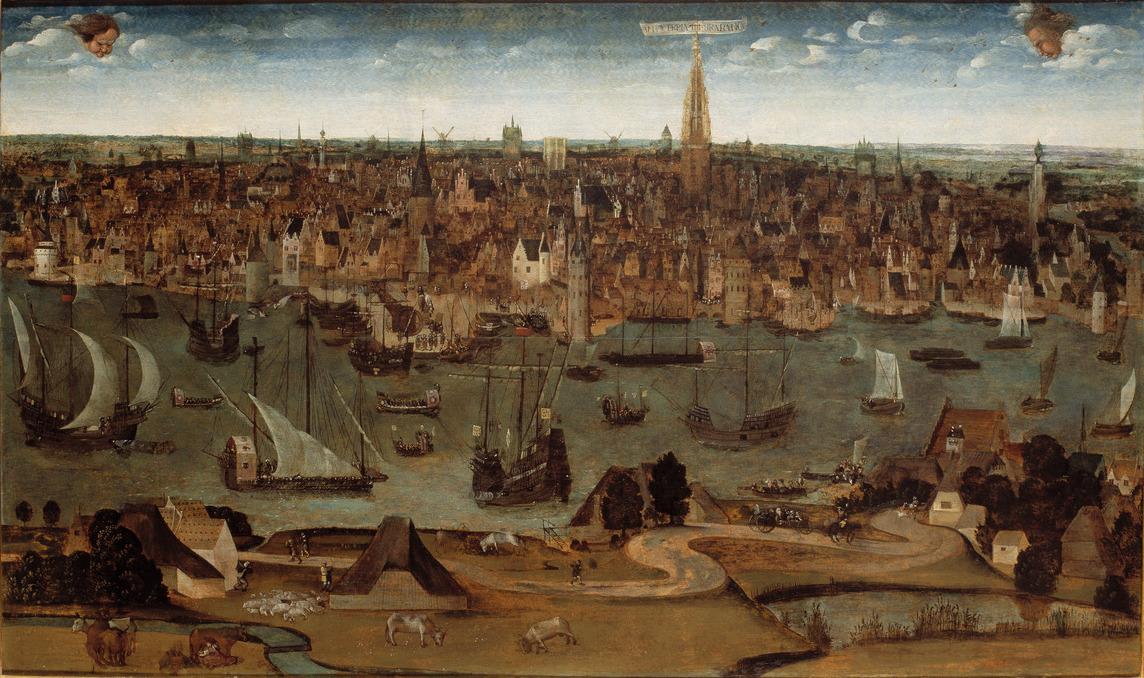
The half-finished church was spared, and in 1529 it found a new purpose as a parish church dedicated to . Locals called the neighbourhood around it the parish of misery, after the poverty of the dock workers who lived here.
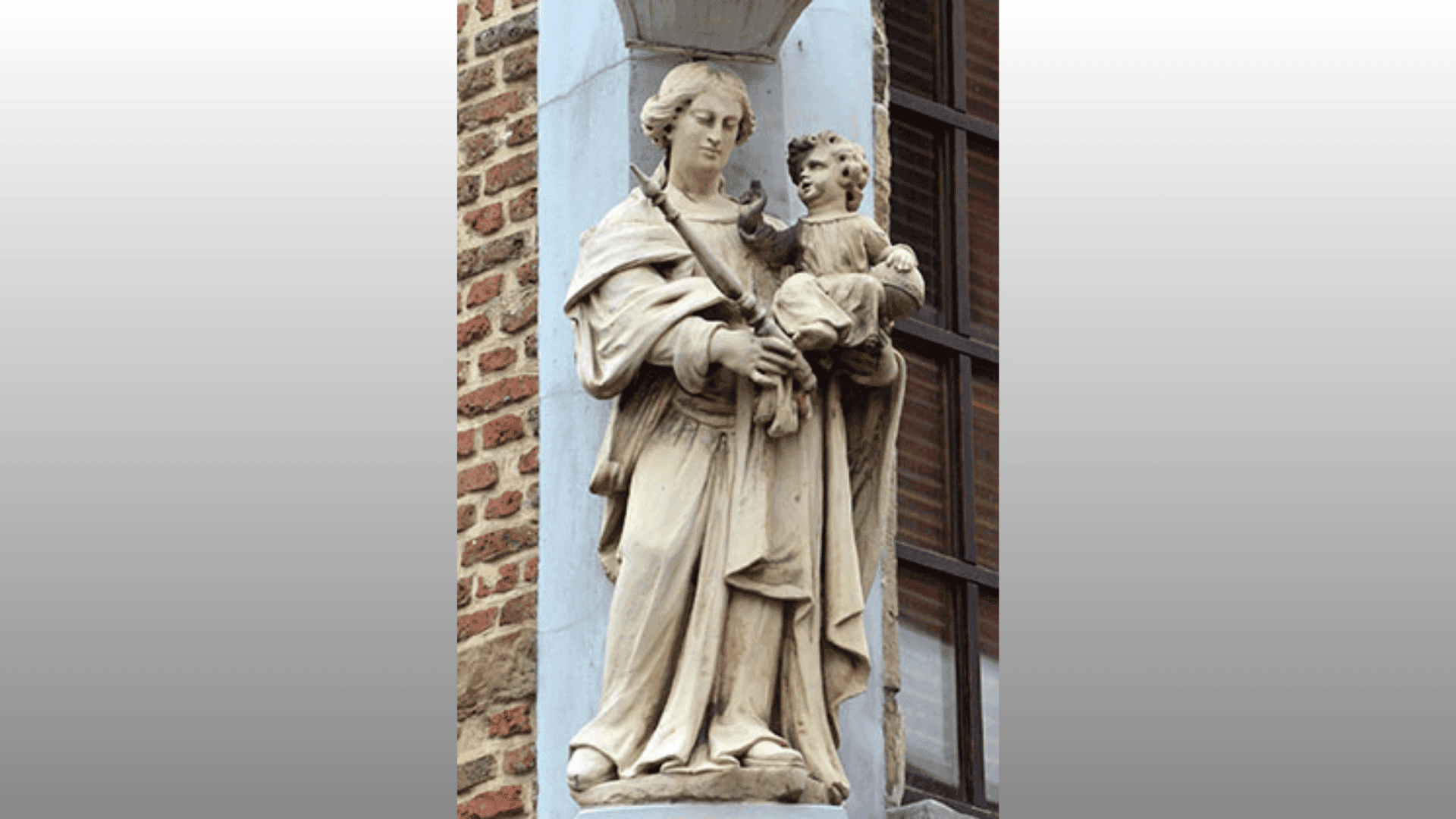
Inside you'll find the opposite of that poverty: an exuberant baroque altar, a marble Saint Peter consumed by his guilt, and a madonna in a robe made for her by the fashion designer . That last statue ties in nicely with where we'll end up. The church is open during the day on weekdays and admission is free.
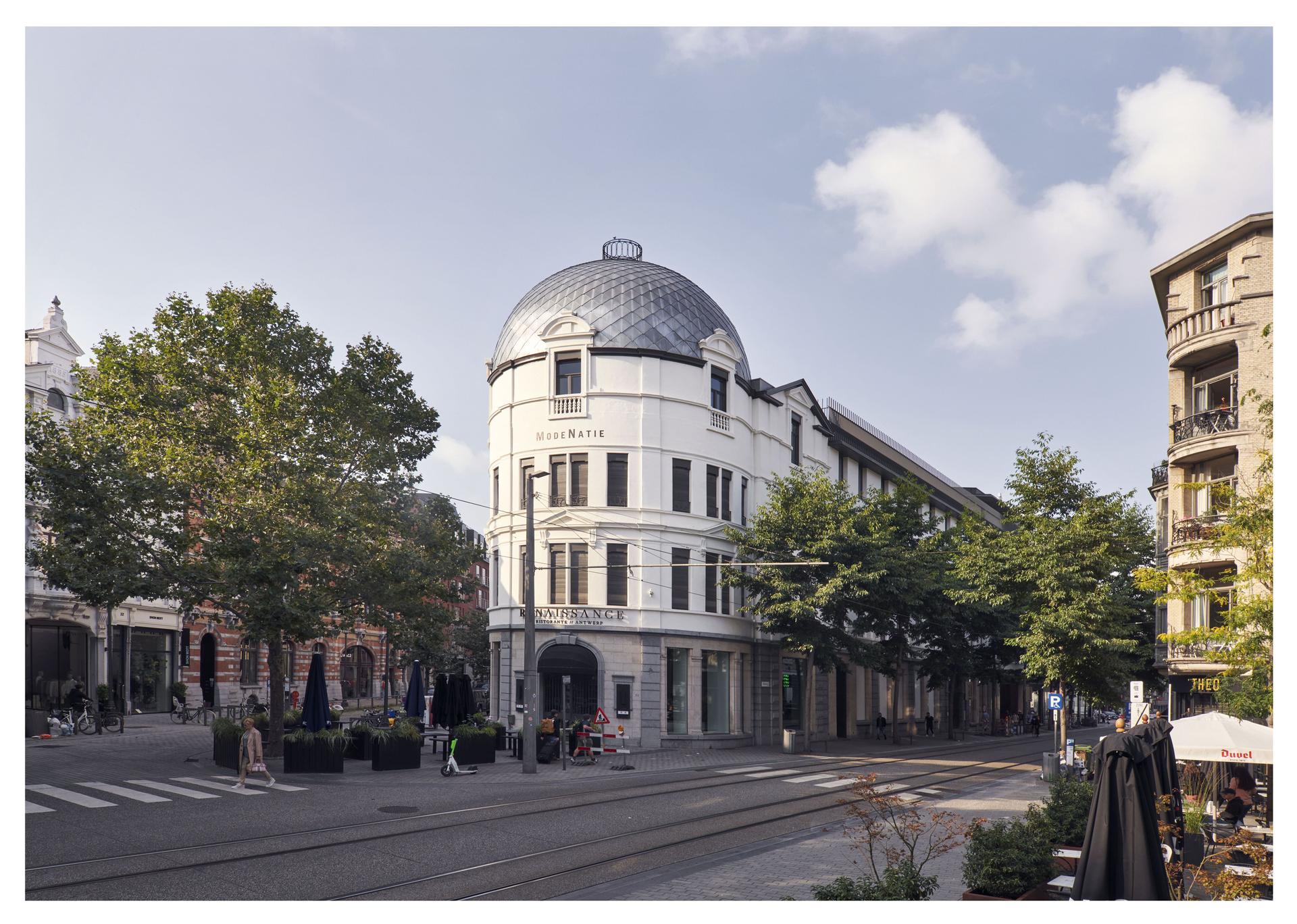
From the church square we walk northeast onto the Nationalestraat, as far as the large corner building at number 28.
Sources. Story: https://nl.wikipedia.org/wiki/Sint-Andrieskerk_(Antwerpen), https://www.sint-andries.com/basis/Historiek.htm, https://mkantwerpen.be/en/churches/st-andrews-church/ Photos: By Grapheus, Cornelius; Bononiensis, Virgilius (ill.) - URBS ANTVERPIA (1565), Public domain, https://commons.wikimedia.org/w/index.php?curid=47214141