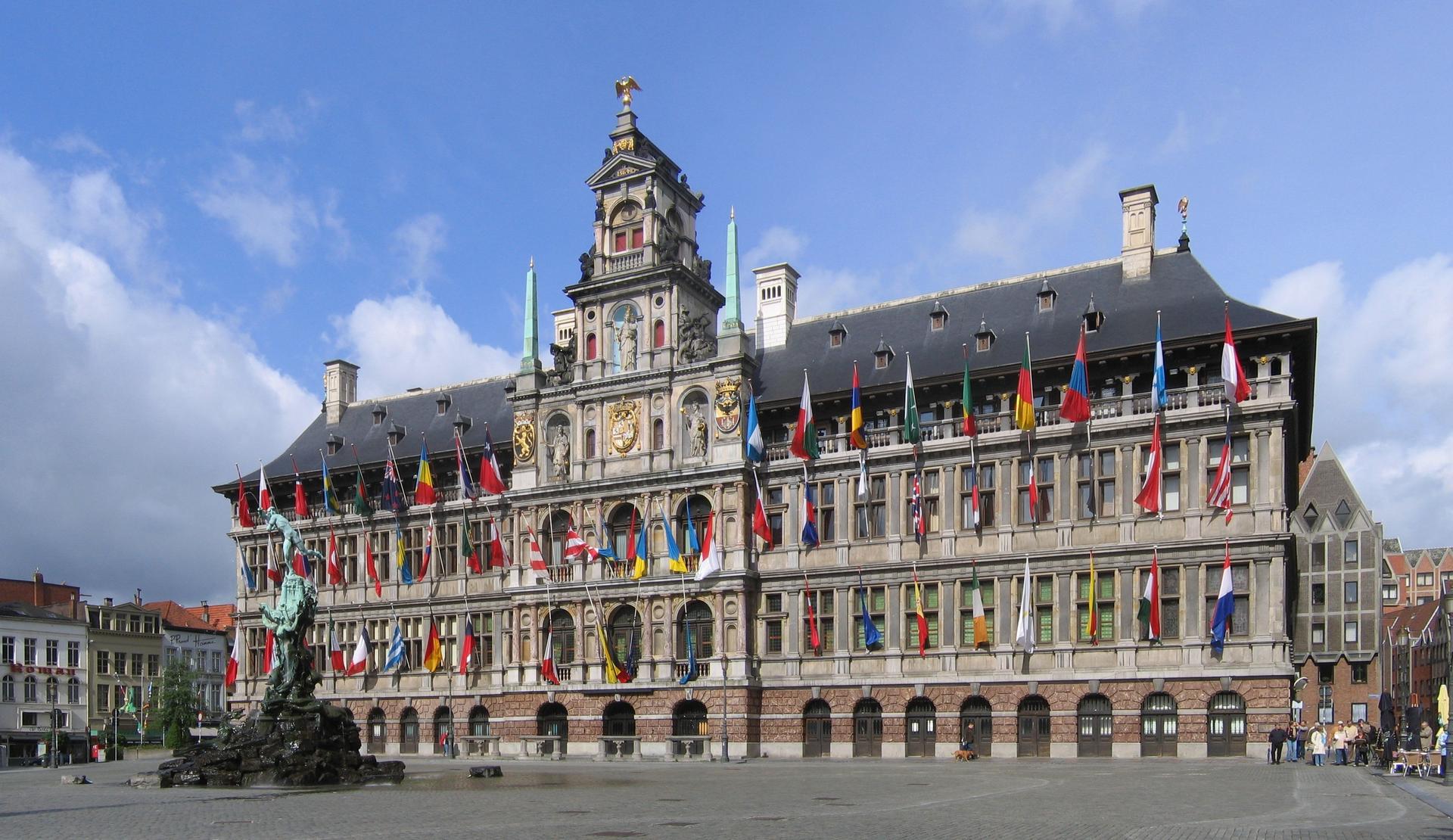
The city hall you're looking at was only eleven years old in 1576, and it stood as visible proof that Antwerp could afford absolutely anything. On the 4th of November that year it burned down to its bare walls.
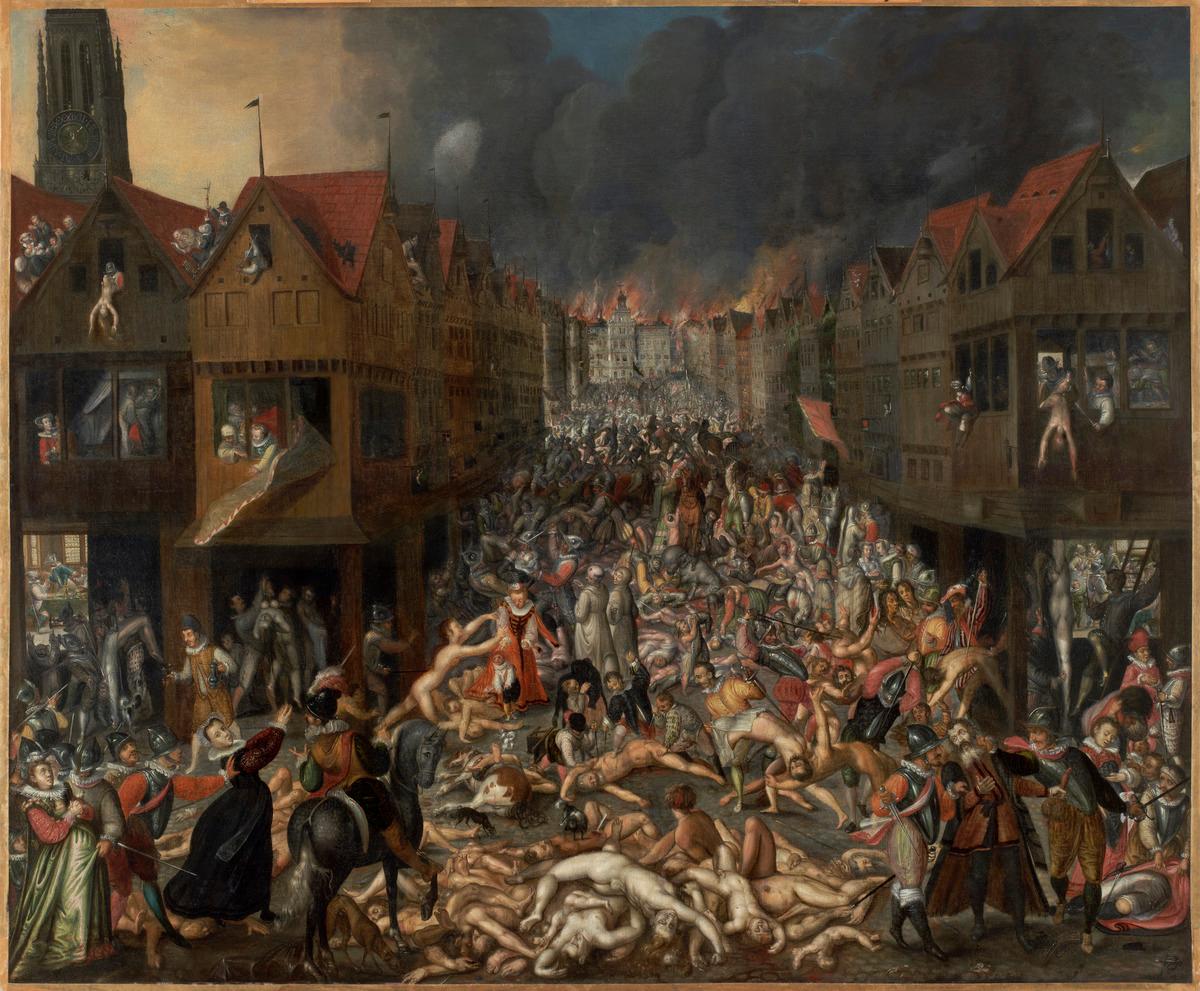
The cause was money. Spain was bankrupt and the soldiers in the hadn't seen a wage in months. They mutinied and marched into the city to pay themselves, led by . Facing them stood , who tried to hold this square with a hastily assembled army and lost it within a few hours.
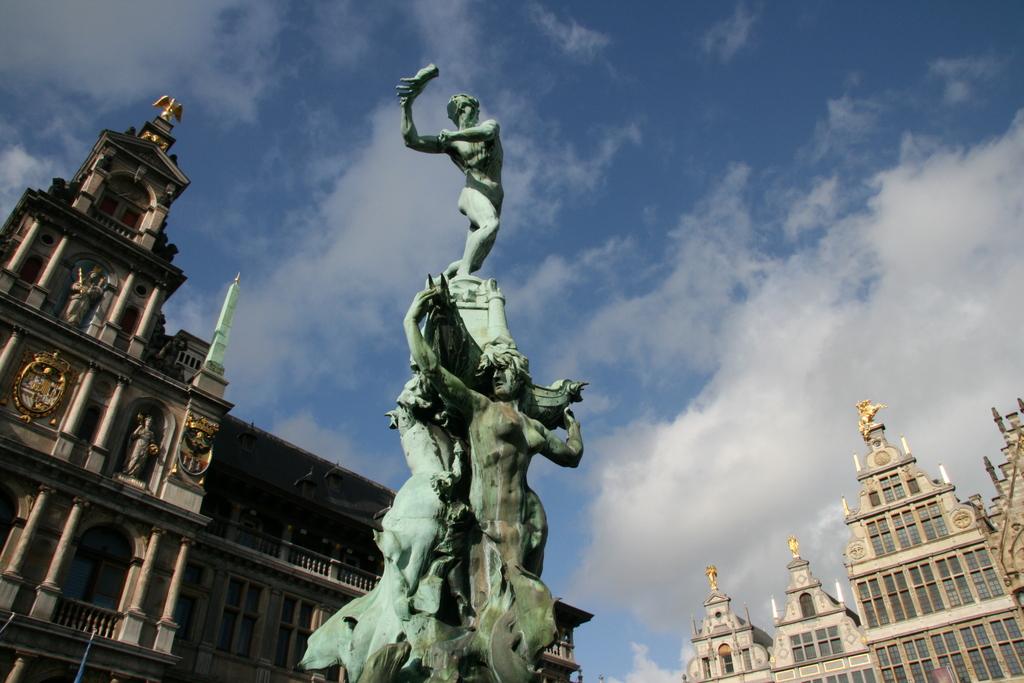
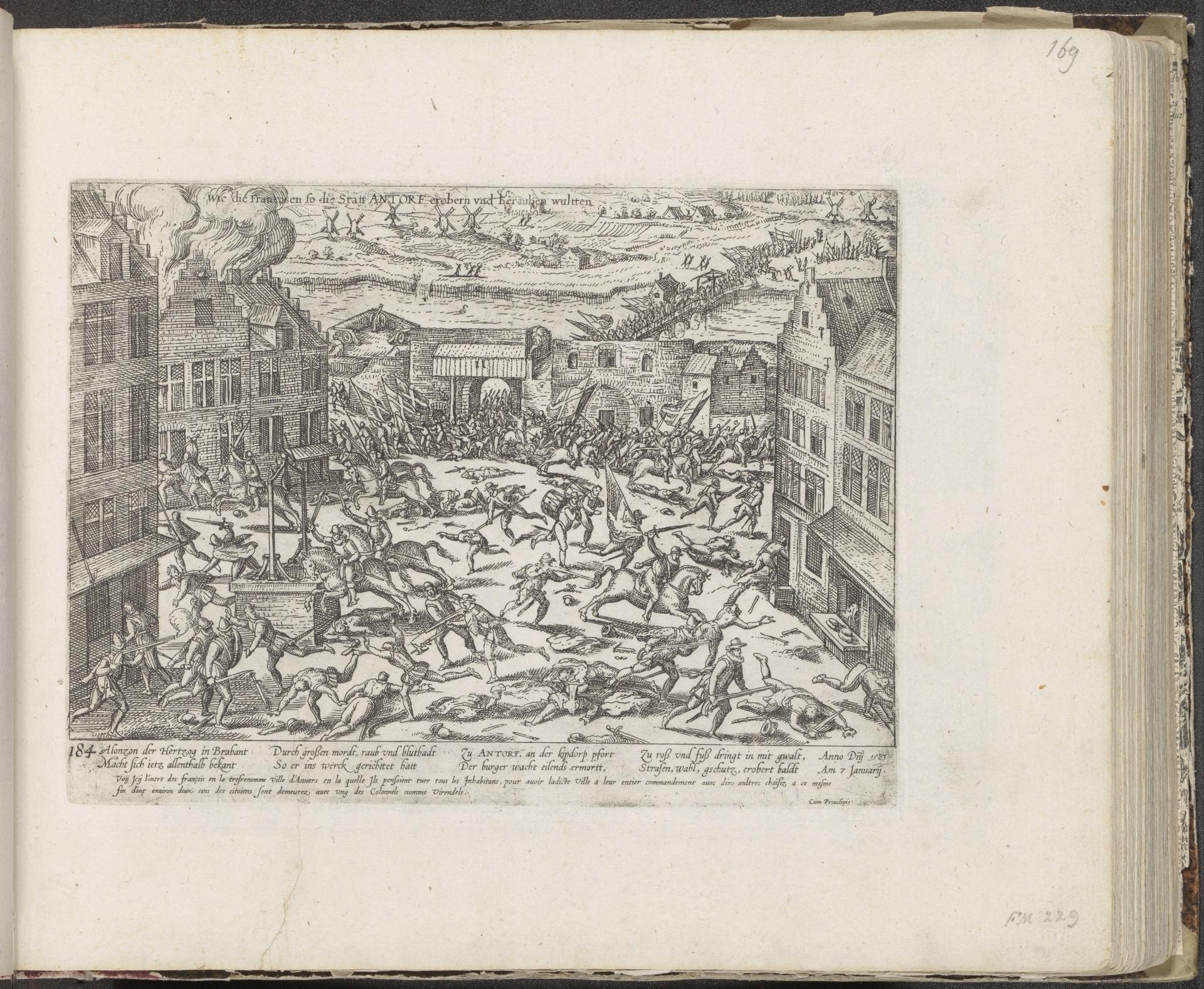
For three days there was looting, burning and killing, with estimates running as high as eight thousand dead in a city where almost everyone knew one another. Merchants were tortured in their own warehouses until they revealed where their money lay, and anyone who fled into the canals drowned. The with their gilded façade statues that you see standing here were nearly all rebuilt after those days.
What followed was as remarkable as the violence itself. The outrage over the Fury brought the provinces to the within a week, in which Catholic and Protestant regions agreed together to send the Spanish troops away. A year later this left Antwerp fully in the hands of the city itself.
As we leave the square on the south side and cross the Oude Koornmarkt, we come out onto the Groenplaats.
Sources. Story: Museum aan de Stroom, painting of the Spanish Fury on the Grote Markt. City of Antwerp, heritage information on the city hall and its rebuilding after 1576. Photos: Museum aan de Stroom, CC0, via Wikimedia Commons.