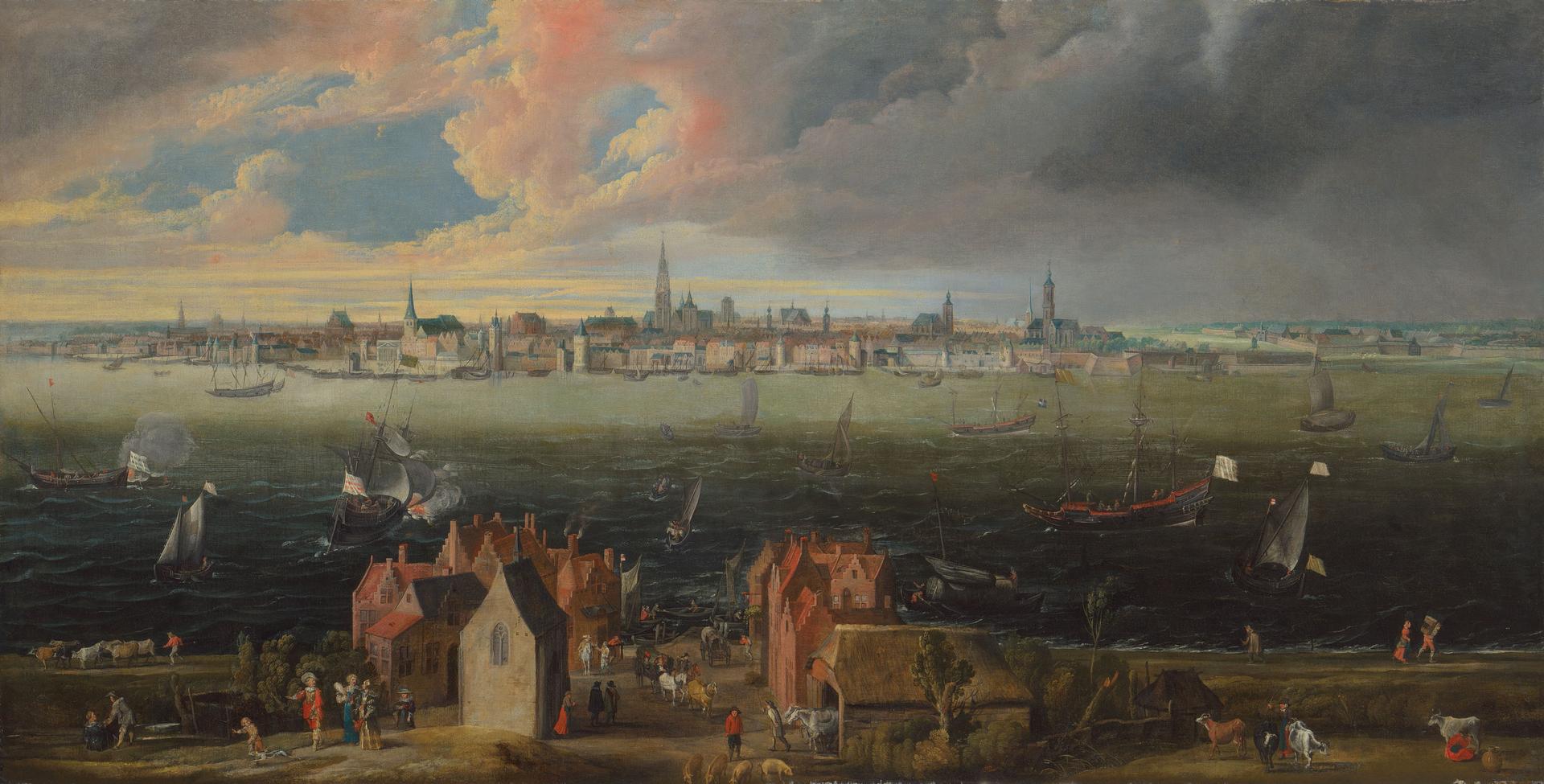
In the sixteenth century, Antwerp experienced its “golden age.” The city became the economic heart of Northwestern Europe, attracting merchants, bankers, and artists from all over the world. With its strategic location on the Scheldt River, Antwerp became a hub for international trade.
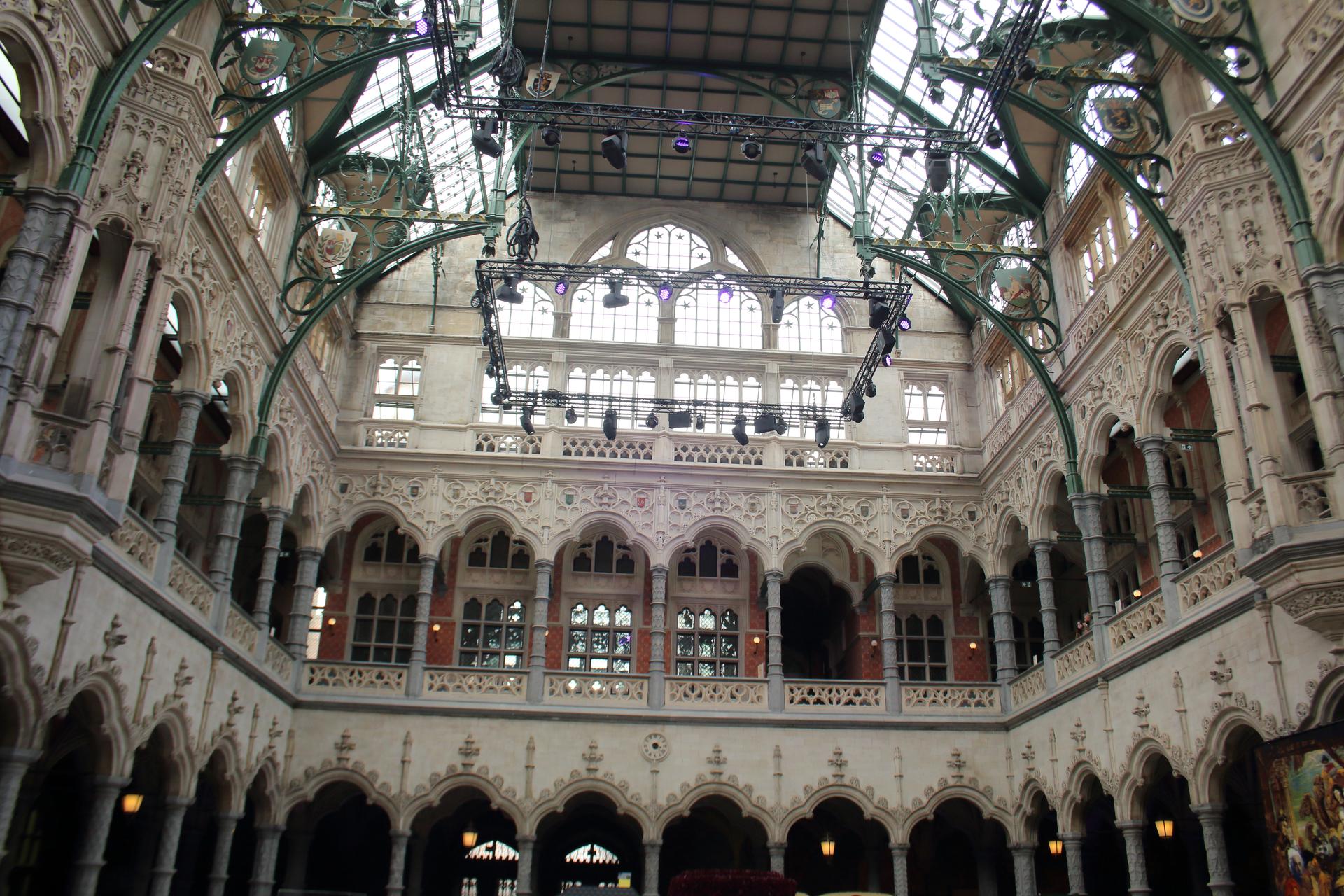
We are now standing in front of the Antwerp Stock Exchange, built in 1531 as the first covered exchange in the world. This is where traders from all corners of the globe gathered. It is therefore the perfect place to tell the story of this “golden age.” However, the word “golden” is controversial, as much of the wealth was built on exploitation in overseas territories, where goods and resources were taken at the expense of local populations.
From the harbor came spices from Asia, wool from England, and silver from the New World. Italian bankers opened offices here, German merchants settled along the quays, and Portuguese ships brought exotic goods. Antwerp became a cosmopolitan city where more than twenty languages could be heard.
Not only trade flourished, but also art and culture. Painters like Pieter Bruegel the Elder and later Peter Paul Rubens became world-famous. Printers such as Christophe Plantin turned Antwerp into a center of knowledge and book printing. The city was known for its relative tolerance, allowing different religious communities to coexist peacefully.
But this prosperity did not last. Political and religious tensions, the Iconoclasm of 1566, and ultimately the Spanish Fury of 1576 brought turmoil. With the Fall of Antwerp in 1585, this “golden age” came to an end. Many merchants and artists moved to Amsterdam, which then became the new trading center of the north.
Still, the sixteenth century is remembered as a time when Antwerp stood at the height of its power: a vibrant world city where trade, art, and science came together, but also a period with a darker side of inequality and exploitation.
Sources. Story: Source Story: https://nl.wikipedia.org/wiki/Antwerpen_in_de_16e_eeuw Photos: Source Photo: Jan Wildens, Public domain, via Wikimedia Commons