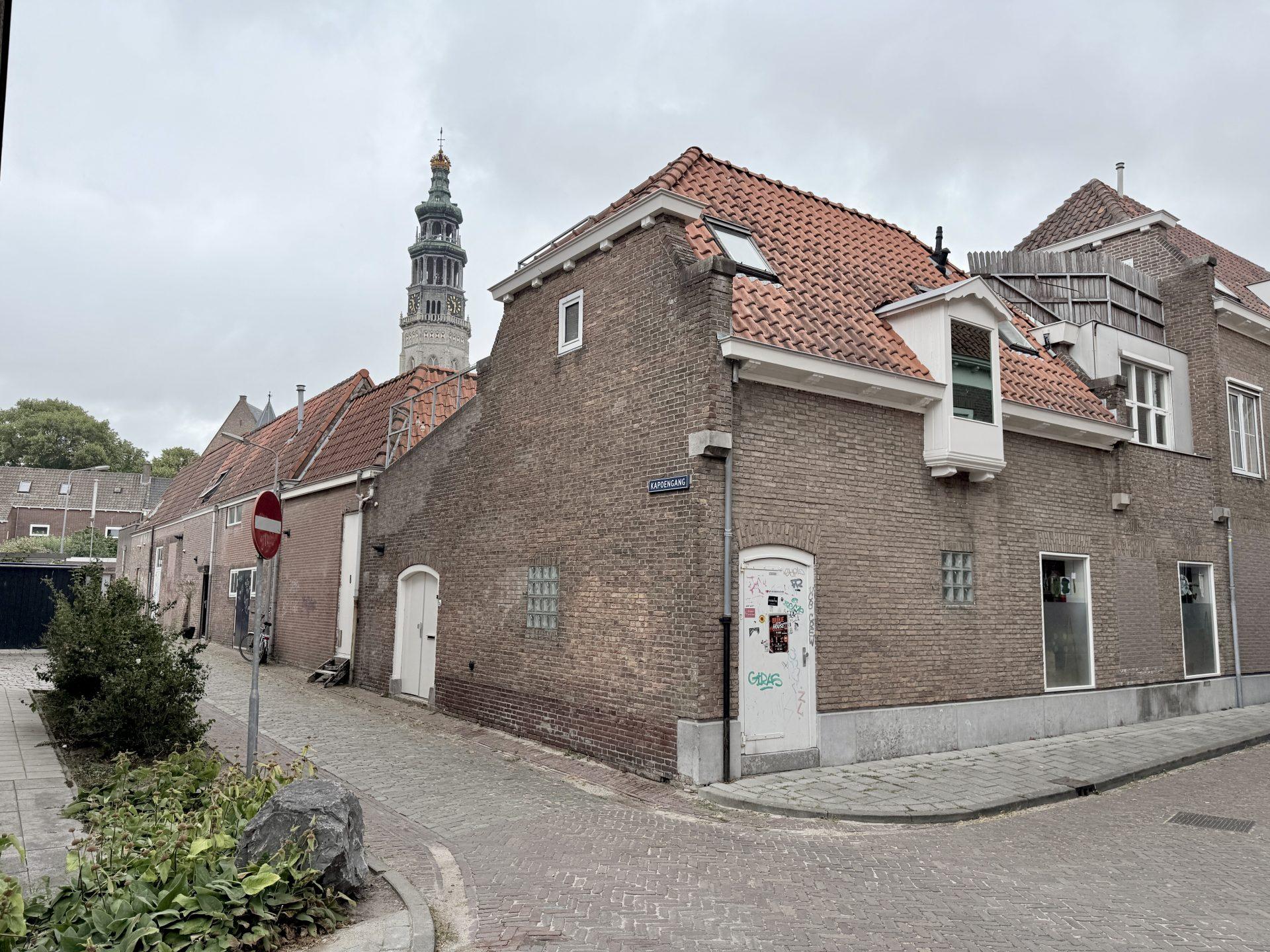
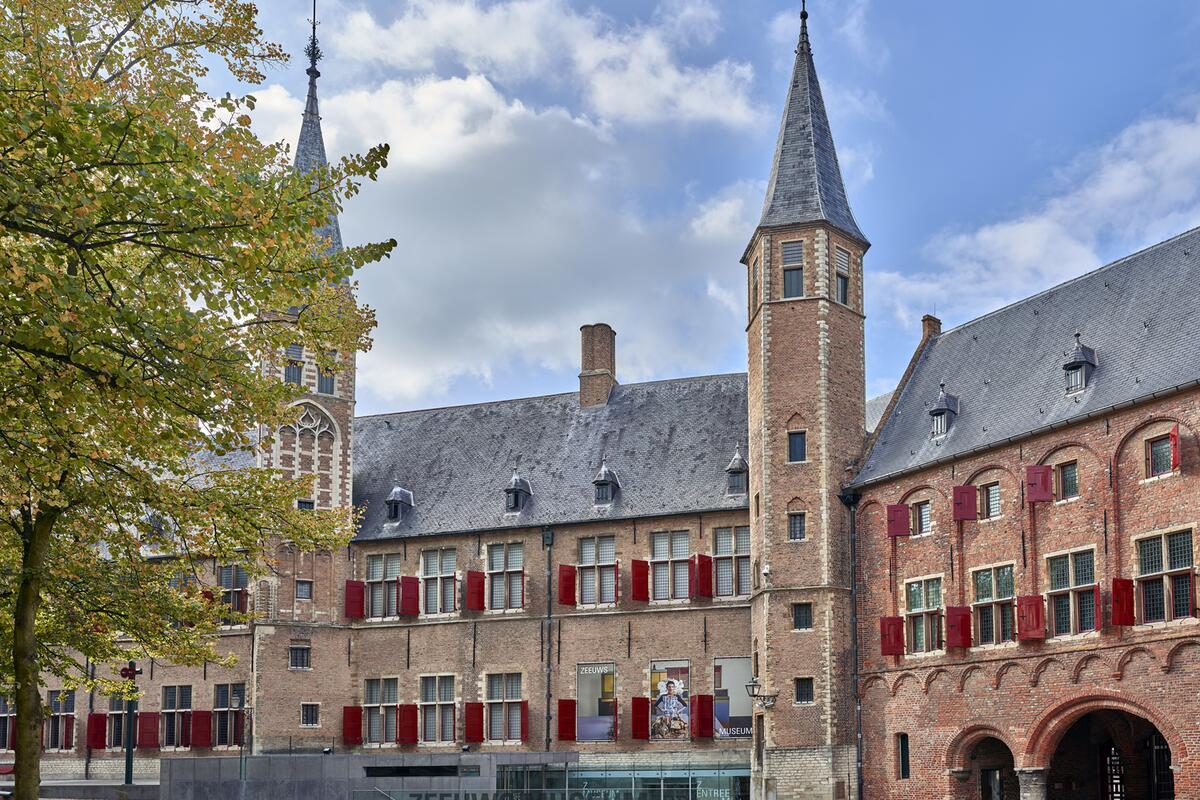
We finish at a hofje called Onder de Toren, and that name is meant literally. Above the roofs stands the , the abbey tower that has burned down three times. The nickname of the people of Middelburg comes from it too: they are called Maneblussers, moon-extinguishers, ever since someone mistook the moonlight on the tower for flames and raised the alarm. In a city where that tower had already burned three times, that was an understandable reflex.
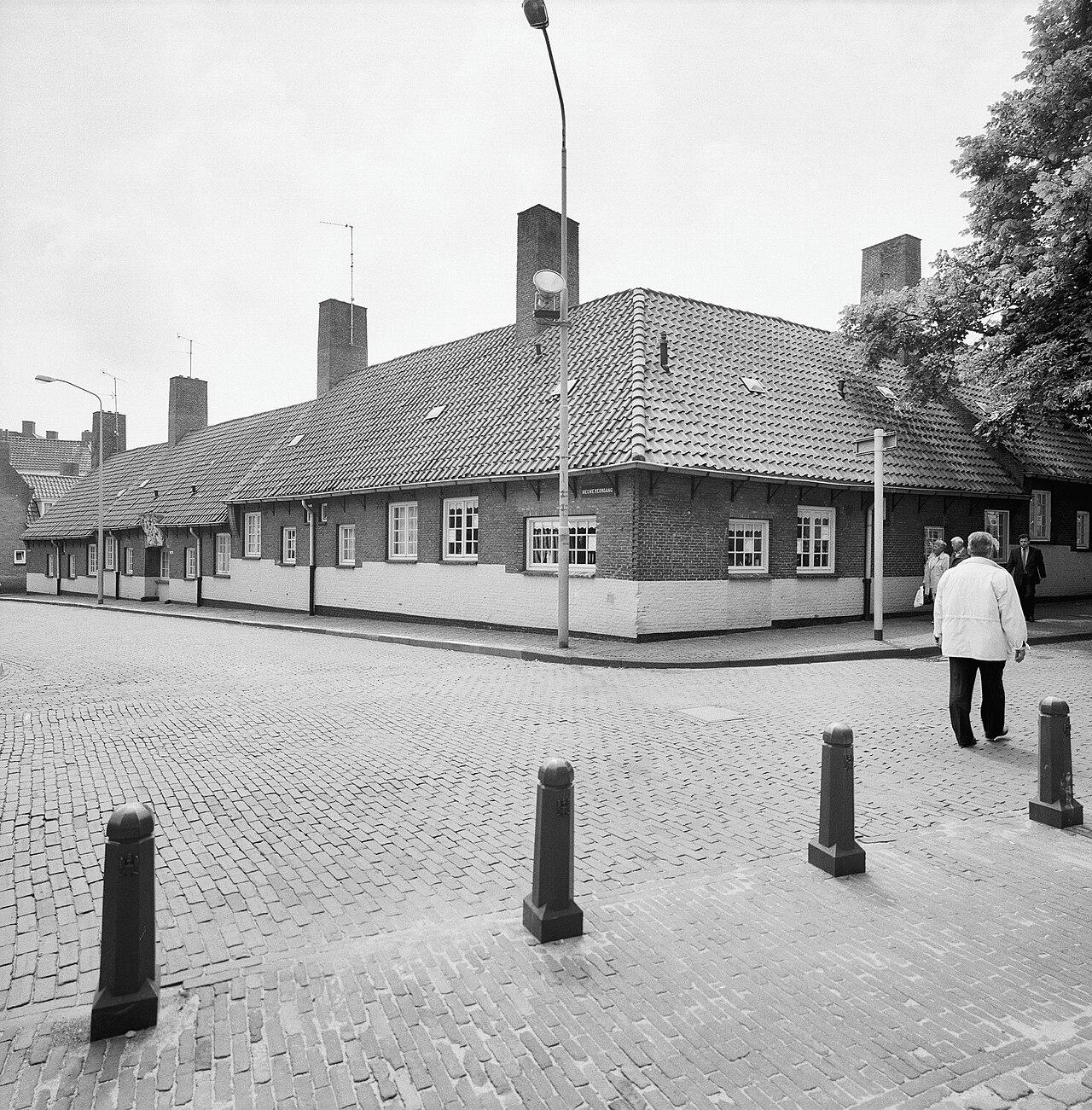
A hofje is a walled courtyard with small dwellings around it, traditionally built to house people who couldn't manage on their own. This one has twelve little houses with small windows and red roof tiles, and a tea pavilion tucked into one of the corners. They were built for elderly women with little money, in 1942 and 1943, so right in the middle of the war, in a city still full of rubble from the bombing of May 1940. The houses were deliberately kept low so the Lange Jan would stand out clearly above them. Even in those years, how the city looked still mattered.
In 1994, the council drew up plans to demolish the hofje. That was met with resistance, and not just from the people living there. Three quarters of Middelburg's residents felt the hofje belonged to the city and should stay. The demolition never happened, and the complex has been a listed national monument ever since.
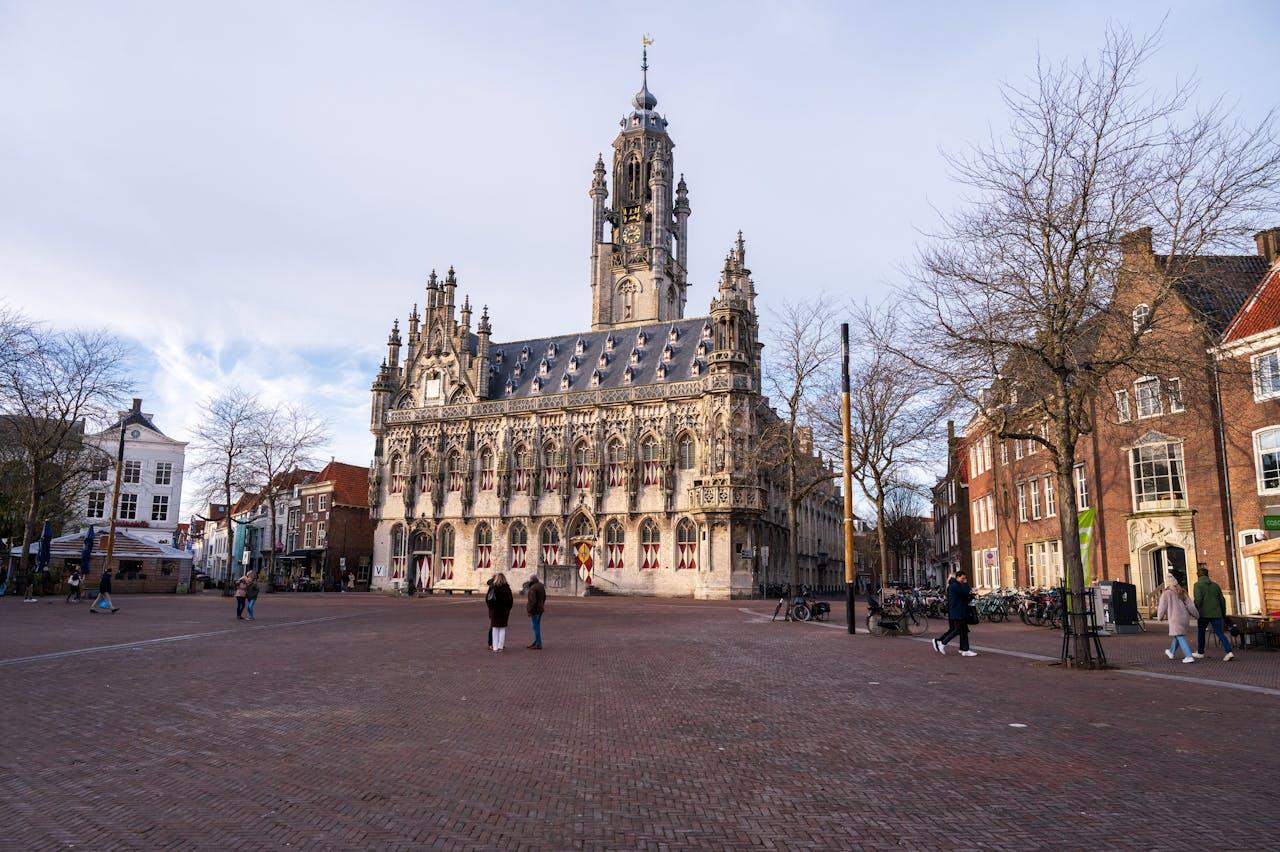
And that brings us full circle. We started at a square where a church disappeared, and we're ending at twelve houses that nearly disappeared too but were saved because the city chose to save them. That's Middelburg in miniature.
This was the walk along the monuments. There are two more. One follows Middelburg as a trading city, along the quays, the warehouses, and the shipyards, tracing a story of wine, spices, and people. The other takes you through the green of the bolwerken, the old fortifications that became a city park in the nineteenth century.
From here we head back west, about two hundred and fifty metres, and we're back on the Markt where we started. Thanks for walking with us, and as they say in Zeelandic Dutch: toe naaste keer!