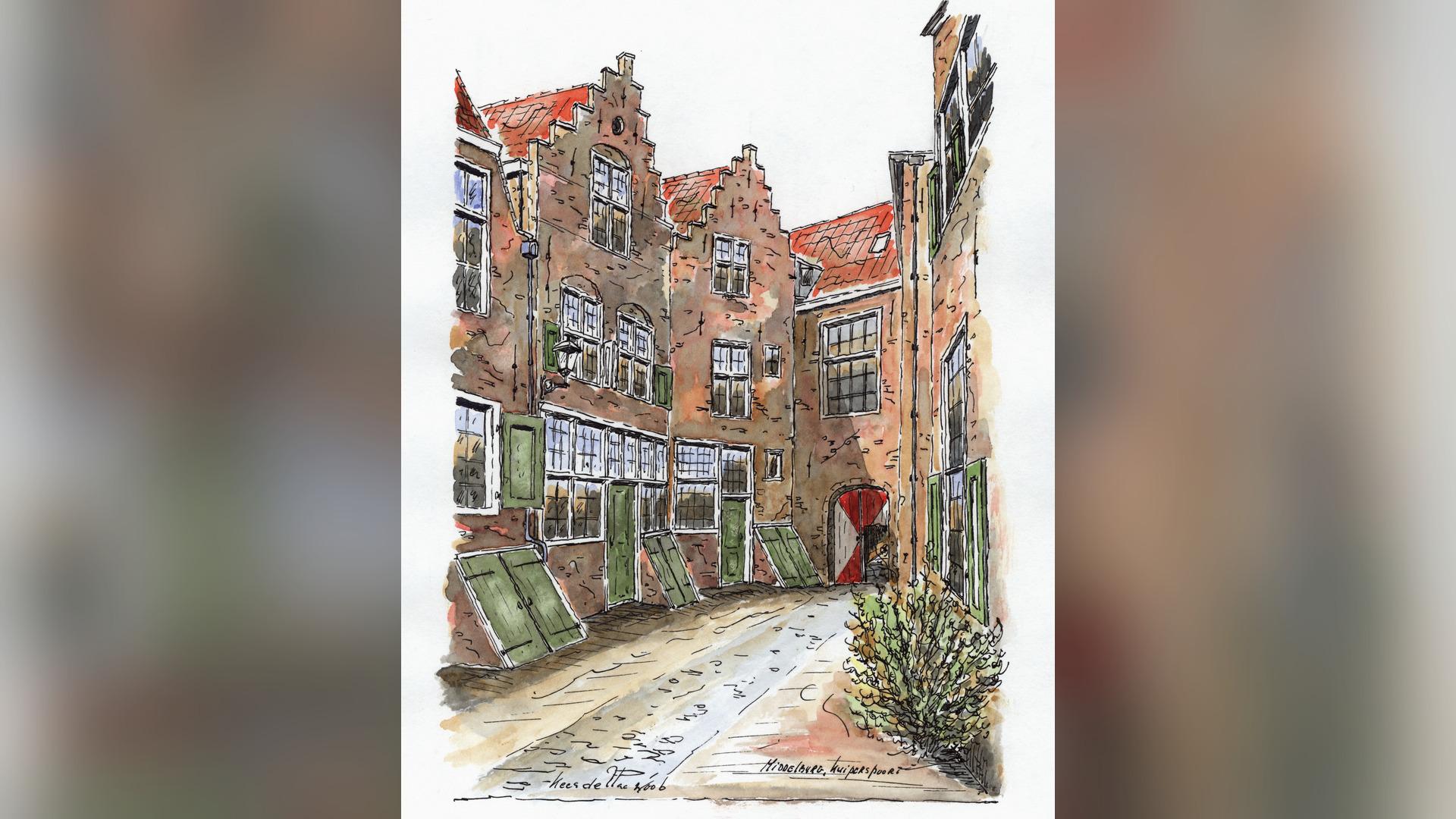
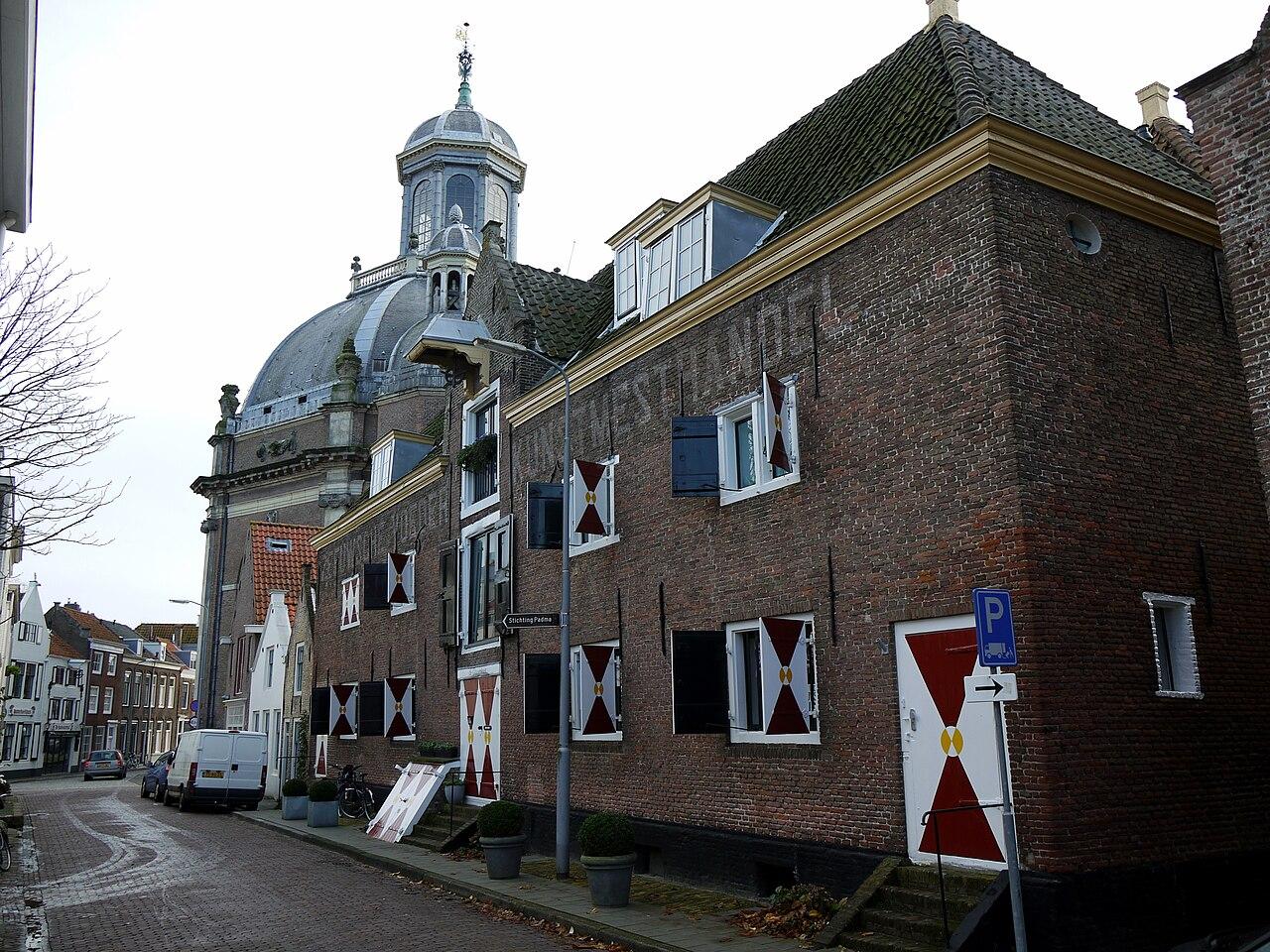
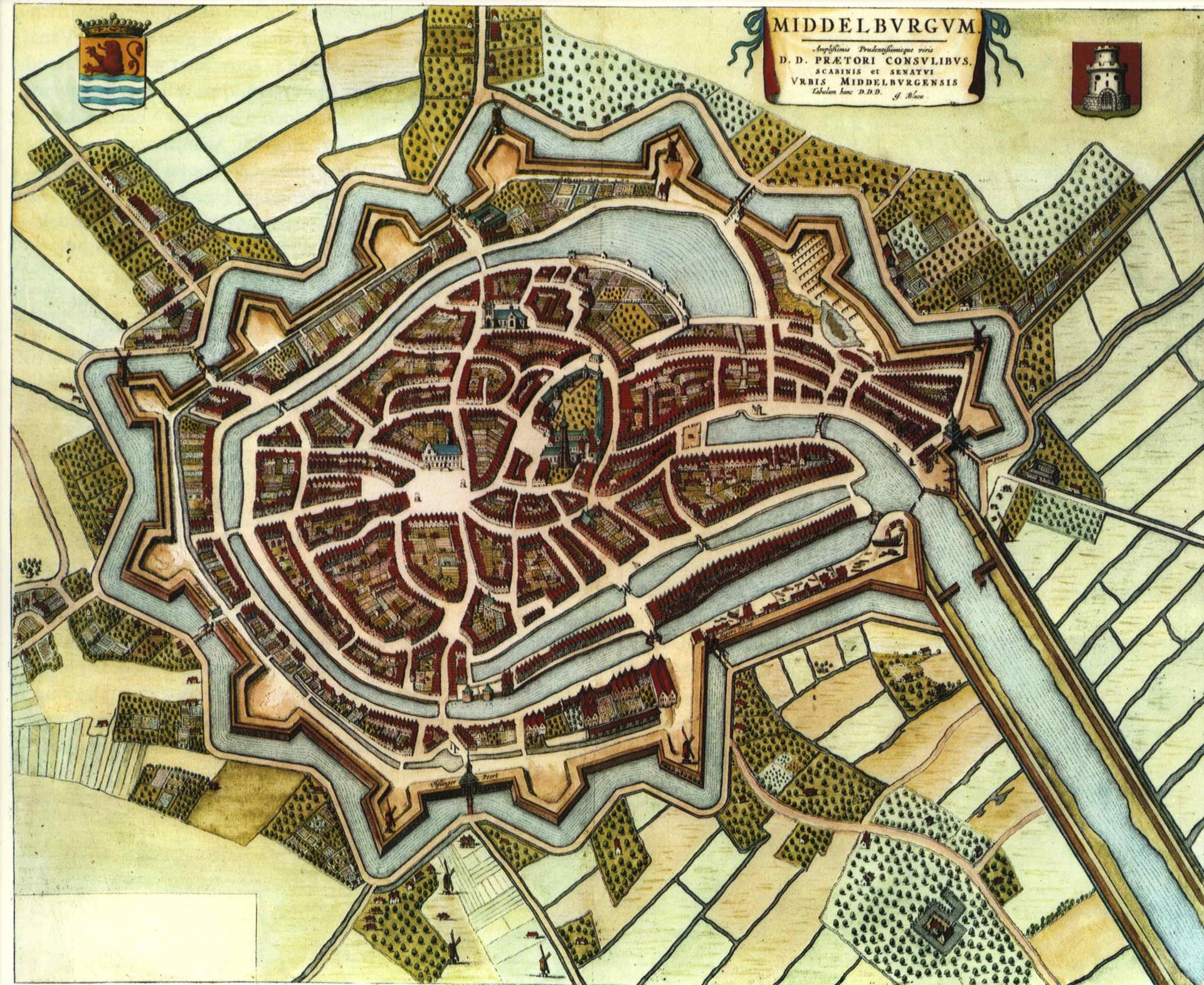
You are standing in the Pijpstraat, and the name is about wine. A was a unit of volume, a barrel of considerable size, and this narrow street held the cellars and storehouses of the Middelburg wine trade. The city traded that wine on into the rest of the country, and several houses here still carry a trace of it.
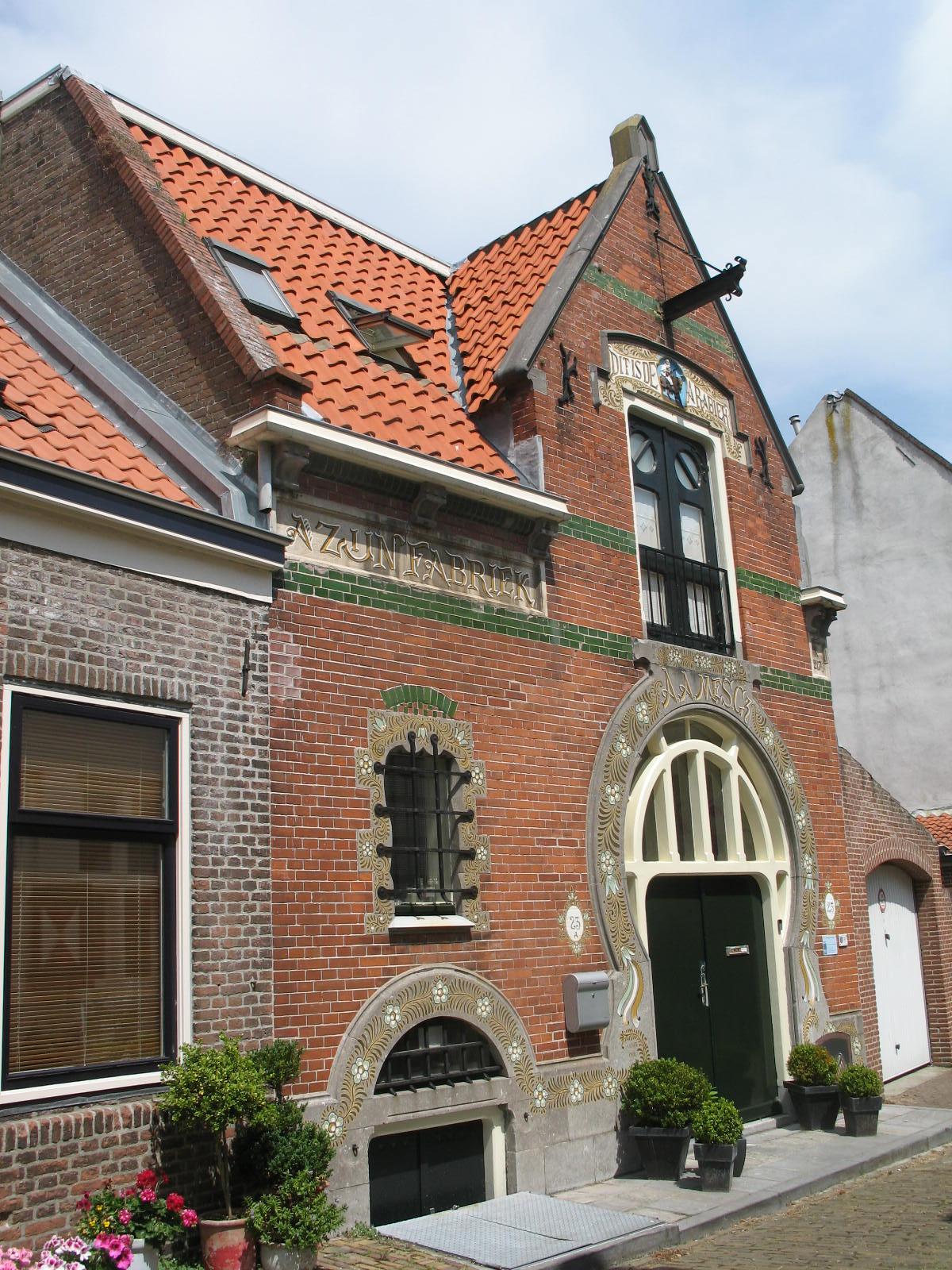
At number 23 stands the building where that trade lingered longest. Around 1875 Anthony Adriaan Mes took over a wine and liqueur firm here and started a factory called De Pijp, after the street. His barrels were branded with an Arab on horseback, a figure he had lifted from a Portuguese stamp, and in 1881 he was allowed to call himself .
In 1900 the factory burned to the ground. What took its place is what you have in front of you now: an facade from 1900 and 1901, with horseshoe arches, round windows and painted decoration. Set into the stone is a relief of that same rider, with the words DIT IS DE ARABIER beneath it. Higher up, along the wooden gutter, the word AZIJNFABRIEK runs across the frieze, because vinegar was made here until around 1953. A lemonade factory took over the building for years after that.
Walk west out of the Pijpstraat. A hundred metres on you reach the Molstraat, where we pause once more.
Sources. Story: National monuments register of the Cultural Heritage Agency of the Netherlands, description of the former vinegar factory and cooperage De Arabier at Pijpstraat 23, supplemented with Zeeuwse Ankers on the Art Nouveau vinegar factory, indebuurt Middelburg on the story behind the Arabian building in the Pijpstraat, and Viatours on Middelburg as a wine city. Photos: Basvb via Wikimedia Commons, CC BY-SA