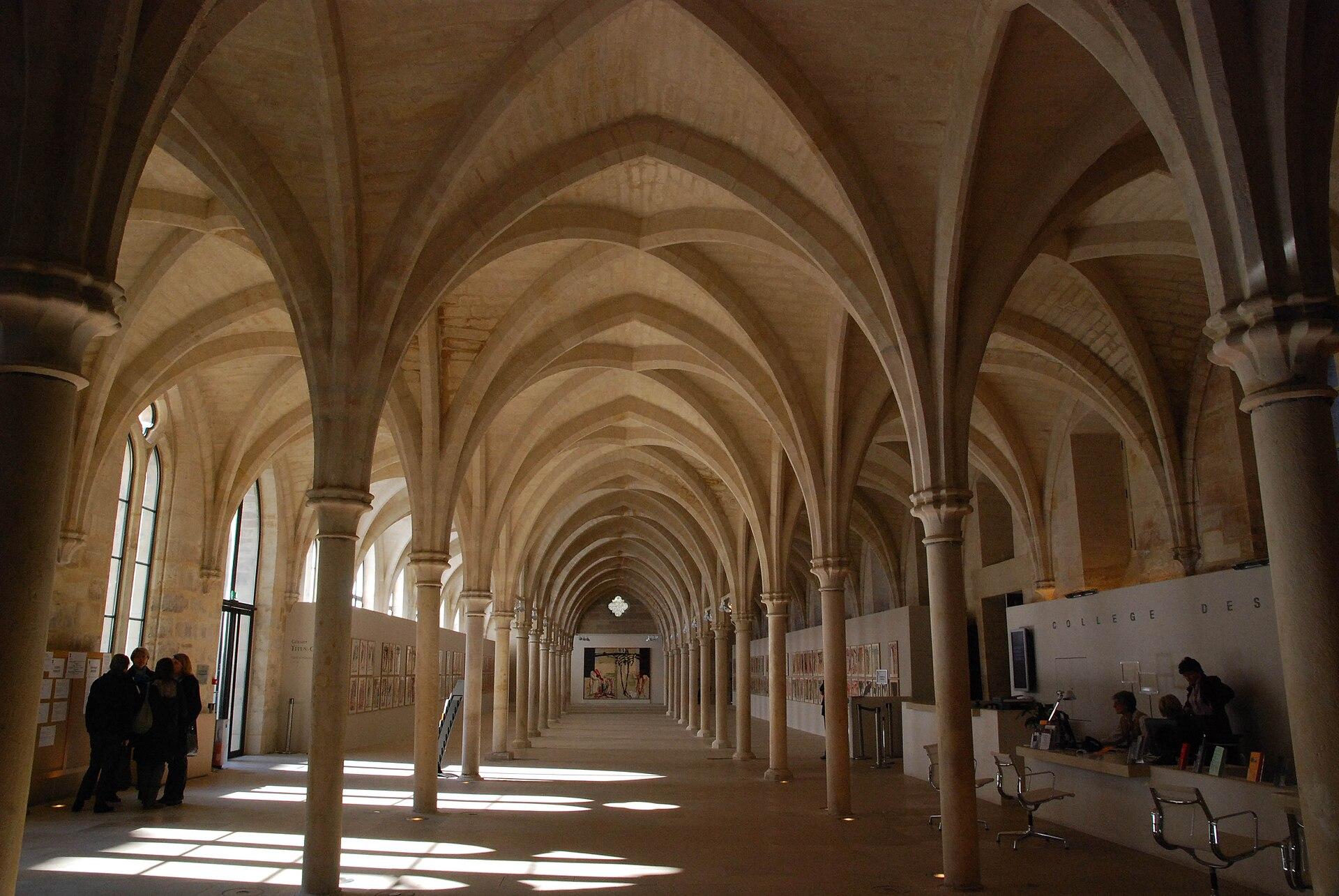
No statues, no paintings, no colour. From 1248 the built a college where monks from all over Europe came to study, and the plainness you see inside was a deliberate stance, because over at the abbeys of they did everything in gold. What they put up was a hall seventy metres long, split into three aisles by two rows of columns, with and nothing more.
After the building was taken from the church and handed one job after another. It was a grain store, a prison, a fire station and a police school, and right up into the nineties there were cars parked in the medieval hall. The vaulting survived all of it, simply because nobody bothered to pull it down.
The diocese bought it back, spent six years restoring it and reopened it in 2008 as a place for debate, art and teaching. That means you can walk into a thirteenth-century hall here for free, a space where nothing distracts you from the room itself, usually with an exhibition or an installation set among the columns.
At the far end lies the old sacristy, which emerged from under the rubble during the restoration.
Outside, we take the Rue des Écoles east and then head up the Rue Monge, until a gateway appears on the left in an ordinary row of houses.
Sources. Story: Collège des Bernardins, histoire du bâtiment; Ville de Paris, patrimoine Photos: Collège des Bernardins (CC BY-SA), via Wikimedia Commons