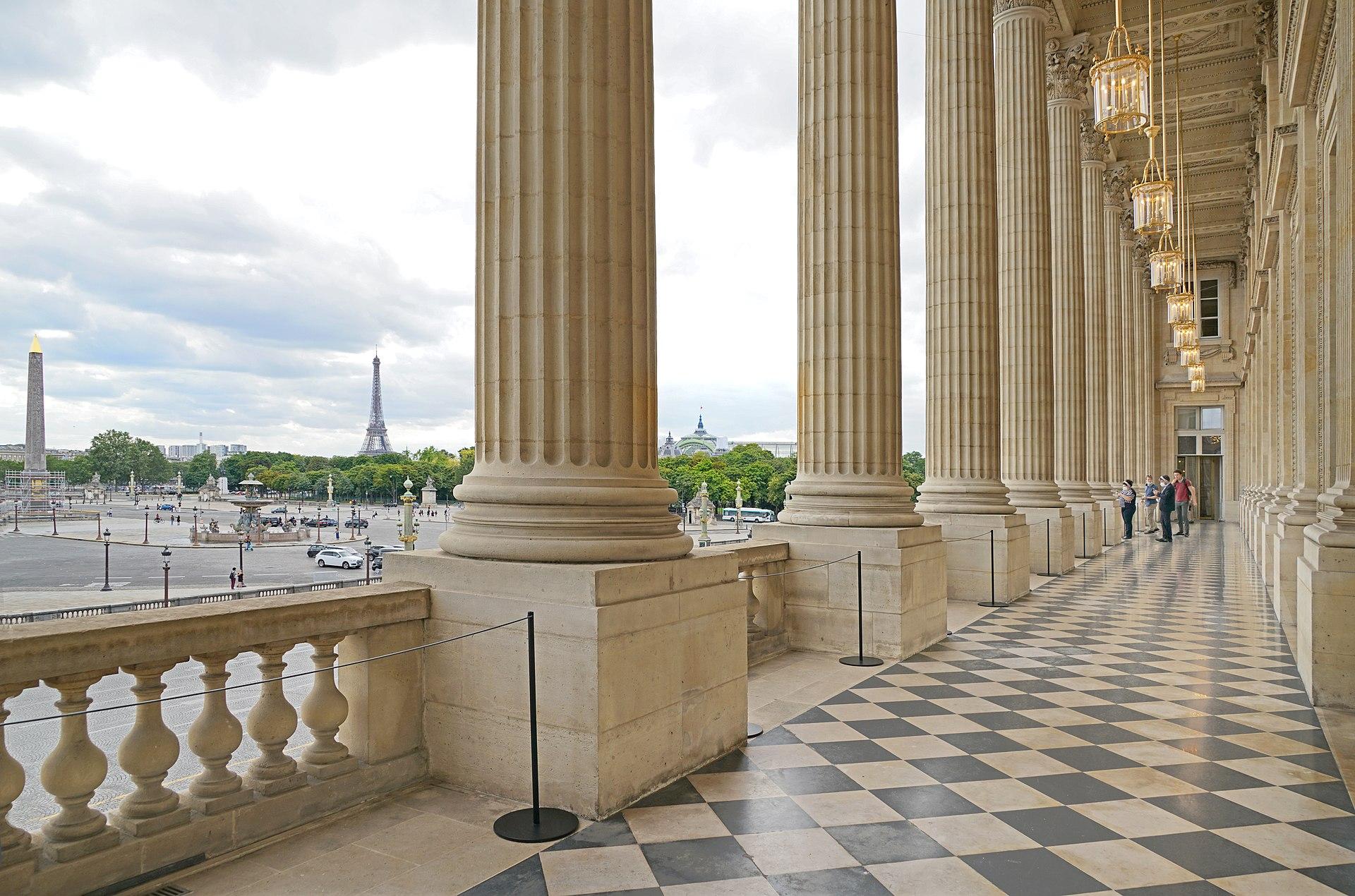
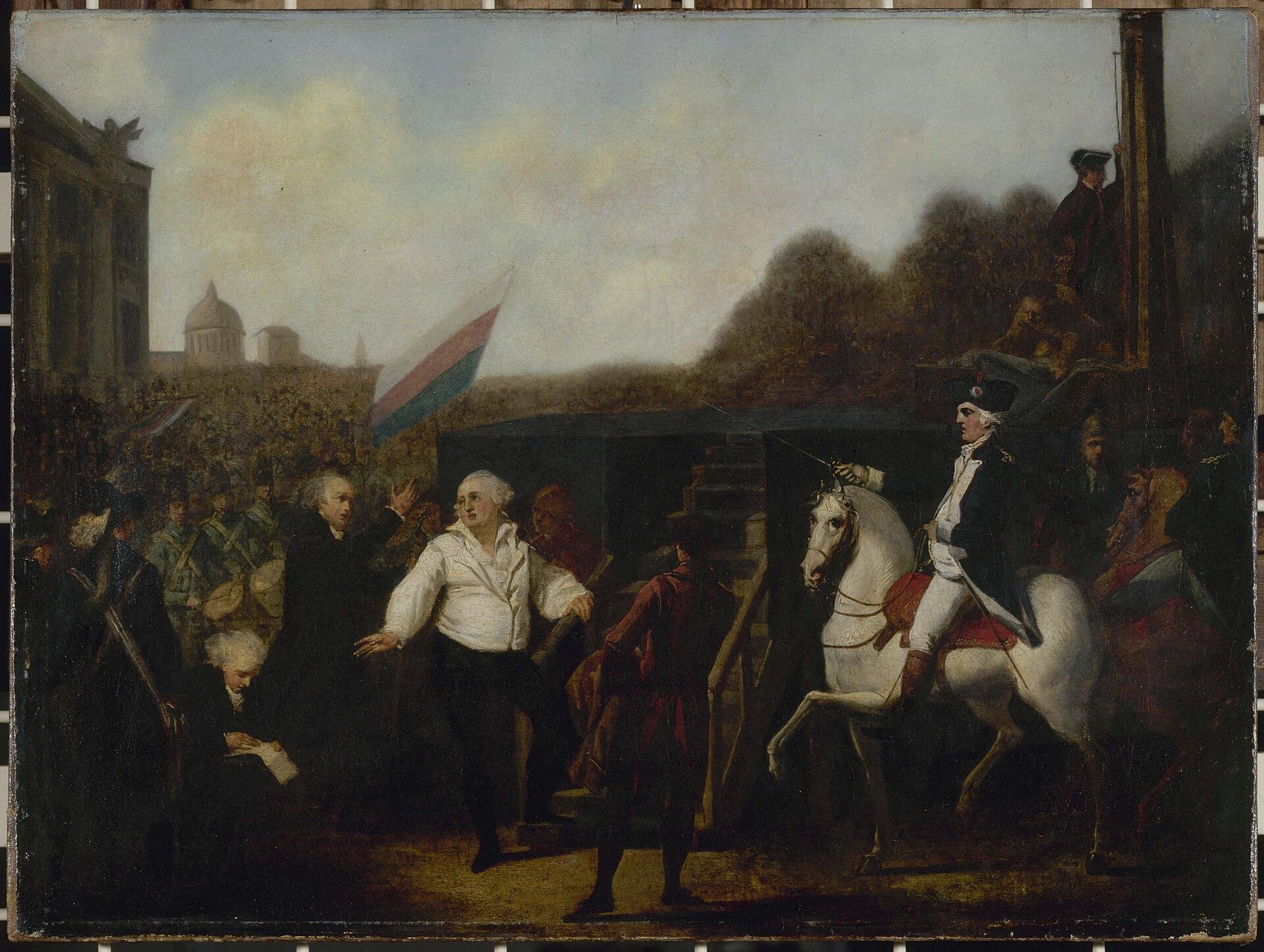
The guillotine once stood here. On 21 January 1793, Louis XVI was executed on the spot where the statue of Brest now stands, on the side, and onlookers dipped their handkerchiefs in his blood. Nine months later Marie-Antoinette followed, and in total more than a thousand people lost their heads here, among them, eventually, and too.
The square was first named after Louis XV, then became Place de la Révolution, and after it was given the name Concorde, meaning harmony, an invitation to forget. That worked only moderately well, so in the nineteenth century the government went looking for a monument with no connection to any French faction. That turned out to be the obelisk of Luxor, three thousand years old, a gift from the viceroy of Egypt, raised on this square in 1836. An object with no French history, and chosen for exactly that reason.
On the pedestal, golden drawings show how the enormous thing was brought here and set upright, which at the time was a feat of engineering.
This is the end of our walk. If you want to carry on, our walk across the hill of the painters sets off from Montmartre, and in the east of the city you will find the route about , the uprising that reduced the palace behind you to ashes. Enjoy your day in Paris!

Sources. Story: Ville de Paris; Centre des monuments nationaux; Musée Carnavalet, place de la Révolution Photos: Charles Benazech, Exécution de Louis XVI (1793), Musée Carnavalet, public domain, via Wikimedia Commons