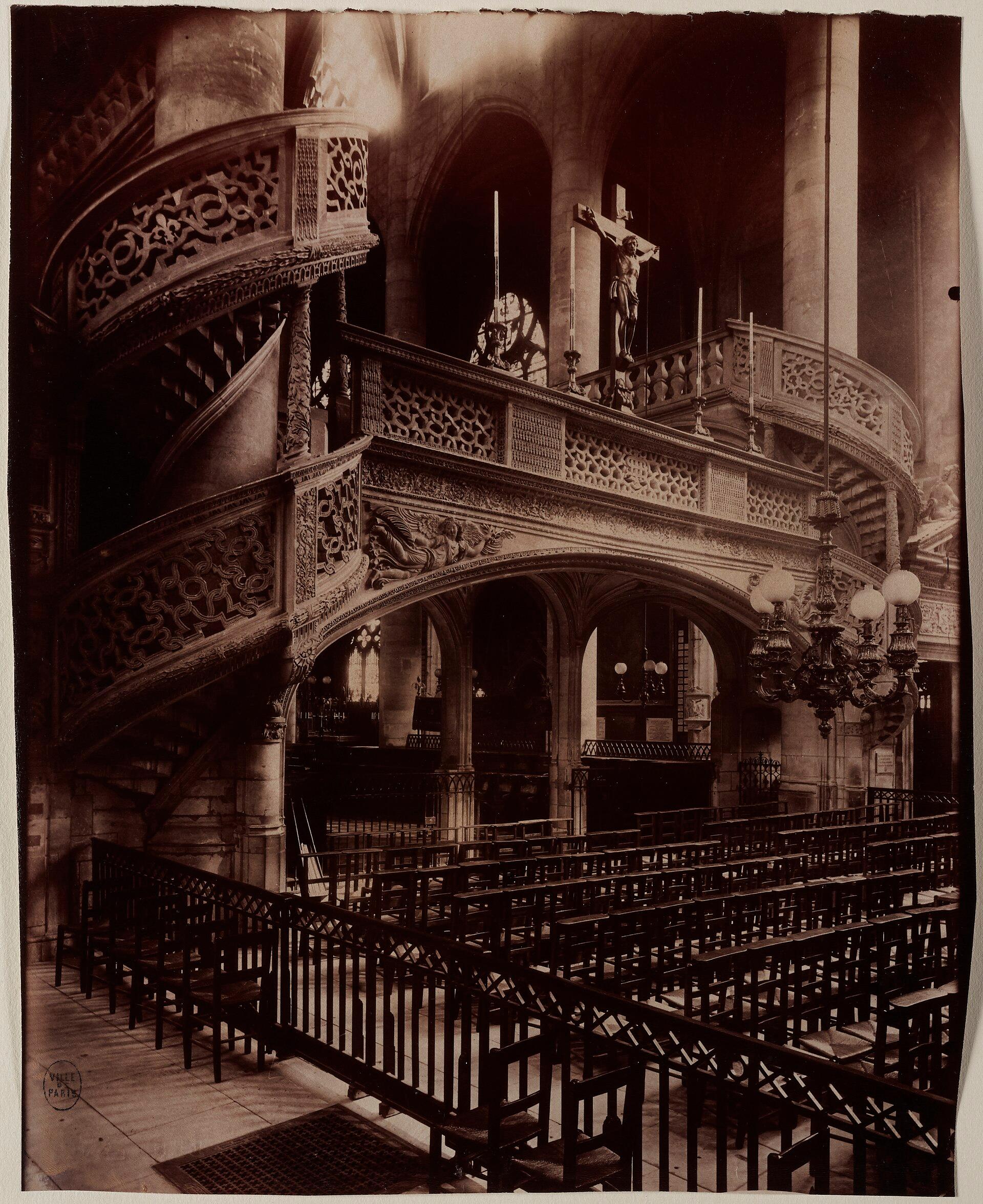
Inside hangs something you'll find nowhere else in France: a , the stone bridge that separates the choir from the nave, with a spiral staircase on either side. In most French churches these were torn down in the seventeenth century because they blocked the view of the altar. Here it stayed, carved from stone into something that looks like lace from a distance.
This is also the church of , who in 451 convinced Paris not to flee from , and sure enough the Huns turned away. Her tomb was venerated for centuries, until revolutionaries burned her relics on the in 1793 and threw the ashes into the Seine. What lies here now is the stone of her sarcophagus, surrounded by candles.
and lie beneath the floor, and outside you'll find a plaque for the archbishop who was stabbed to death on this threshold in 1857 by a suspended priest.
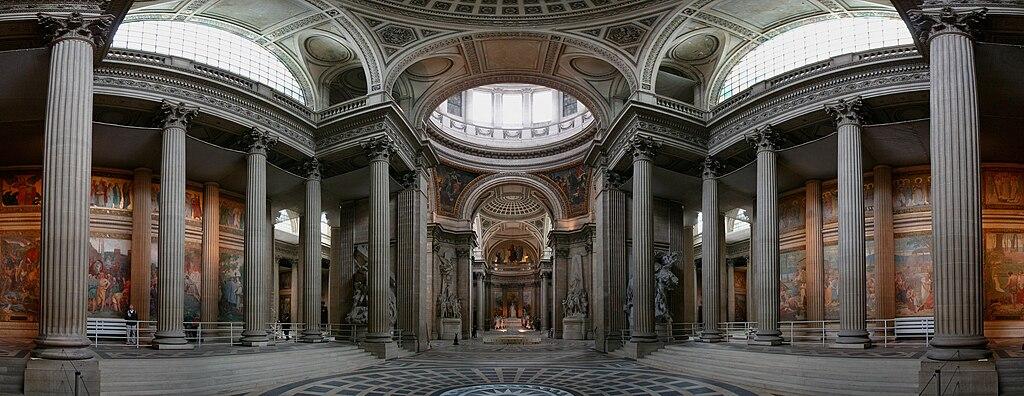
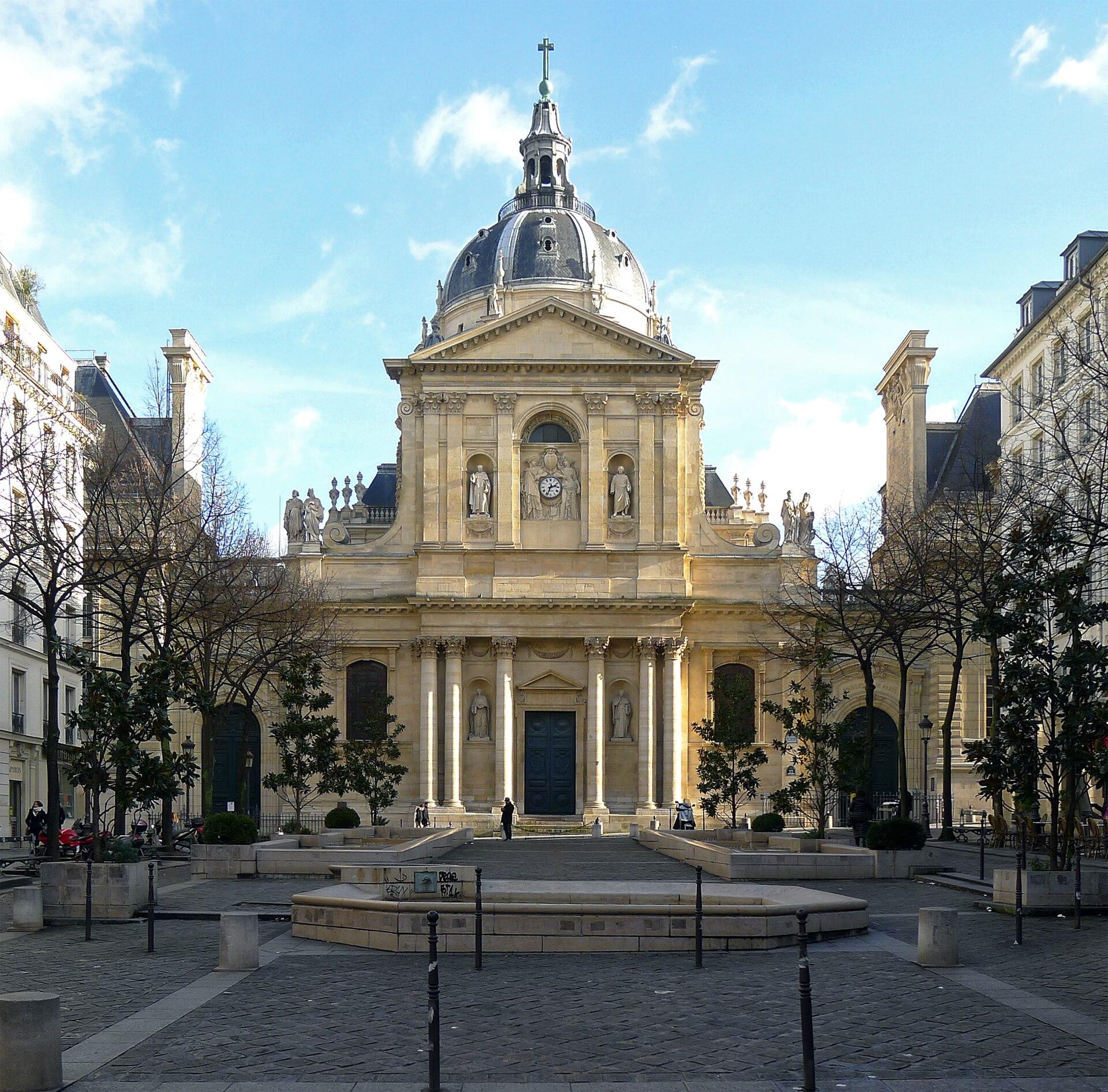
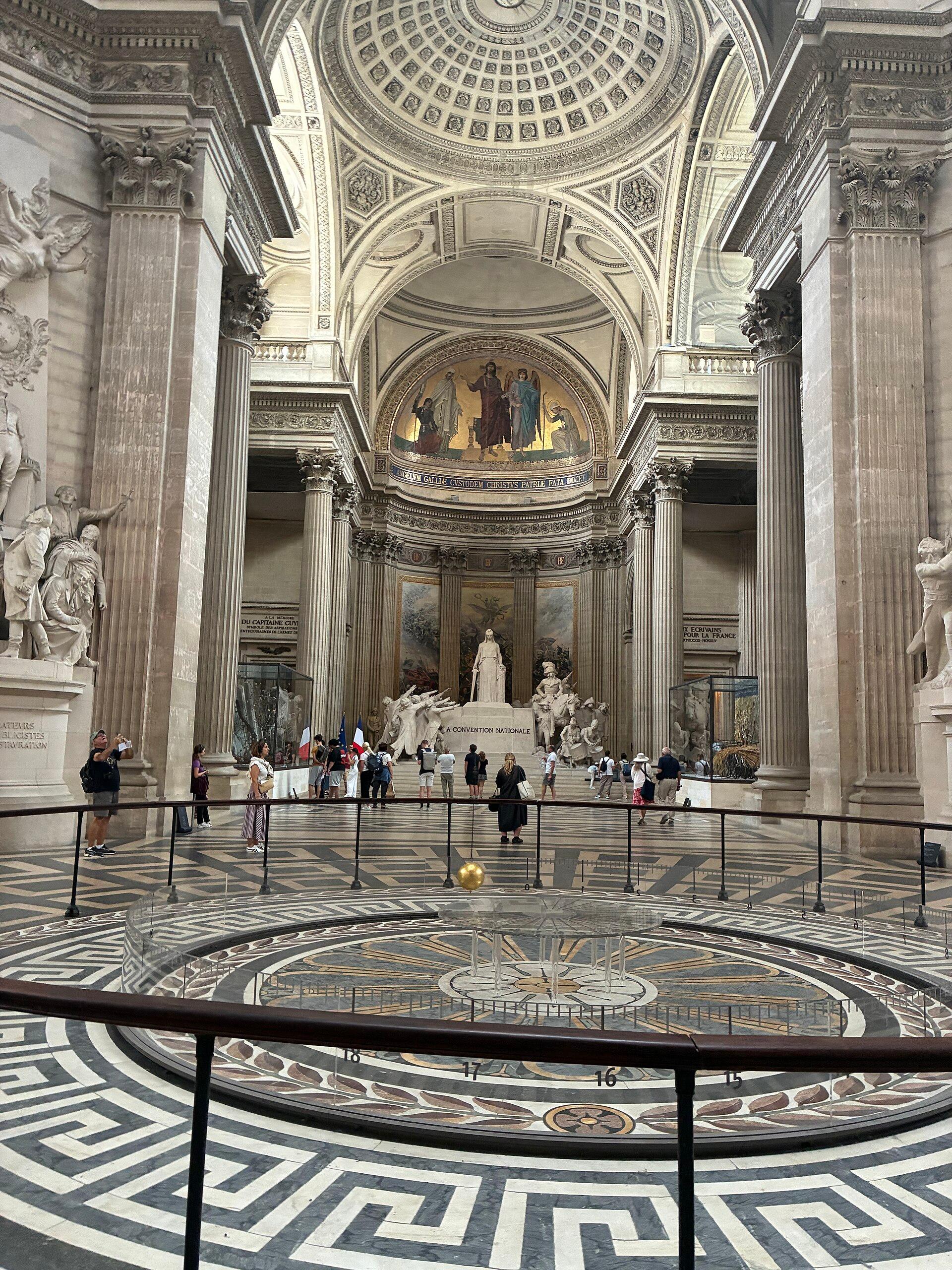
Next to it rises the building with the columns and the dome, the , which dominates the whole quarter.
Sources. Story: Ville de Paris, patrimoine; Musée Carnavalet, Histoire de Paris Photos: Jubé, église Saint-Étienne-du-Mont, 1912, Paris Musées collection (CC0), via Wikimedia Commons